 When contemplating the task of writing this, which was originally meant just to centre round the schooling area of Glenholme, I realised that that seemed pointless. A comprehensive study of the whole southern area being settled about the same era, seemed worthwhile, but somewhat daunting.
So, after much trepidation, I approached those people whom I knew from my Rotorua High Co-Educ. Sch. days in the 1930s. From then on I just followed a trail set by whatever was suggested. I made a personal rule that I would miss no-one whom others said could be informative. I had hoped to complete this within the year – 1992, not 1996! However, despite giving up club meetings or contacting friends I found that only late night typing and sorting information allowed the necessary concentration, as caring for my invalid husband caused distractions during the day. Now I realise the value of a longer time period as some very wonderful people would not have been brought to my attention.
It has been a privilege to meet or talk over the phone with such personalities who have fascinating snippets of our history, or amaze one with their exploits. Most of all, it is the emerging history that comes through by contact with people from all walks of life in our community, that gives the true sense of Rotorua’s history. It has been most pleasing to observe how many of my contacts, after sharing the fun of family research with me, have gone on to extend the knowledge of their family tree, deriving excitement, stimulation and satisfaction.
 I regret that, at times, I have had to précis information, abbreviate words, or overfill lines, in order to complete one family story by the end of a page. This has been necessary because finally these separate tales had to be slotted into book form wherever it seems most suitable, according to era or perhaps area. That has been the most difficult part but seemed my only solution. It meant that I had to do my own typing to work out space as I went along. This makes the book unsuitable to go to publishers so will be printed from my own master copy locally and made into book form.
Street names
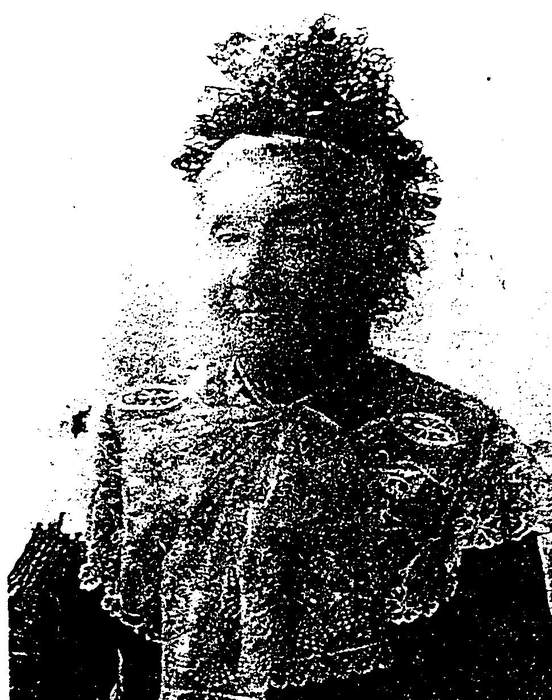
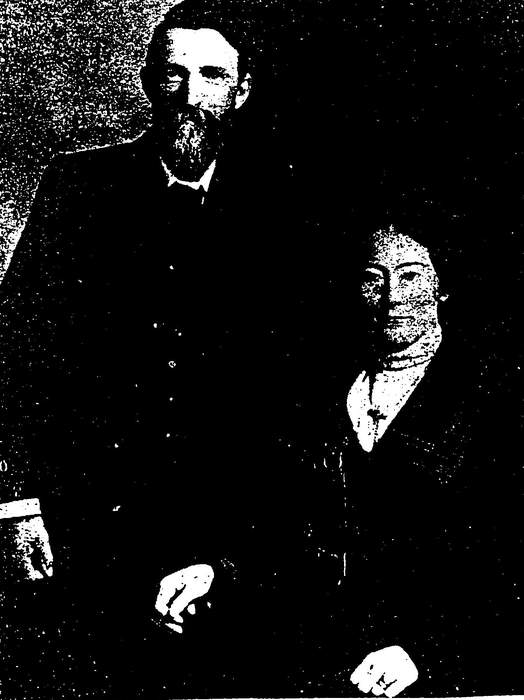
Many Rotorua street names are in honour of people who helped pioneer the Rotorua district. Among them was Edwin Robertson, pictured here with his wife Elizabeth.
Elizabeth Street was named for Edwin’s wife, who had been an Australian missionary till she was sent to Rotorua from her Melbourne home to help in mission work among the Maori people. Edwin married her after he retired. Only then did he begin to raise a family, some of whom still live in Rotorua today.
Robertson Street is named after Rotorua’s greatest coaching pioneer, Edwin Robertson, whose career almost ended shortly after it began. In 1870 as a boy of about 13 he was leading a team of pack horses through the rugged bush at the back of Kaharoa, on the early route between Tauranga and Rotorua. One of his horses strayed from his pack train, and Edwin himself became lost in his attempt to find it. He struggled for about a week to find his way in the bush, but it was hopeless because of the difficult streams and terrain.
Edwin Robertson Snr. – B. 23-8-1857, Australia. D. 18-8-1931. Both parents came from Scotland – Ann West & James Robert Robertson.
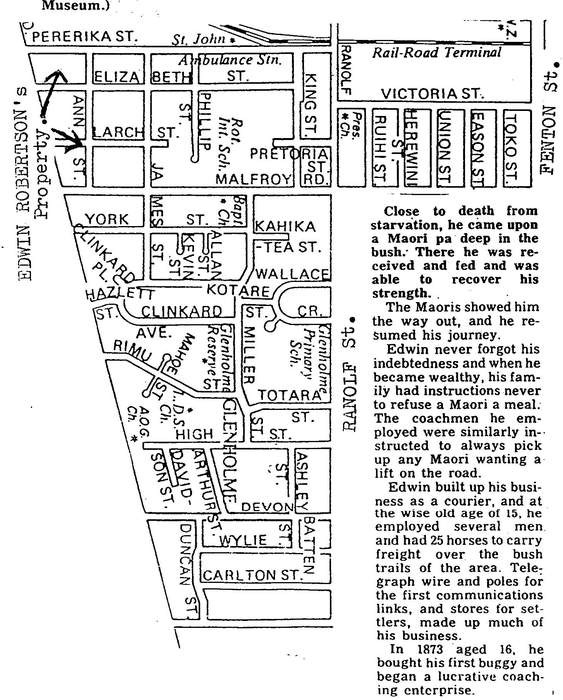
Rotorua’s street names
Rotorua’s street names provide a link with early settlement in the area and here Roger Steele relates the history of our streets.
|
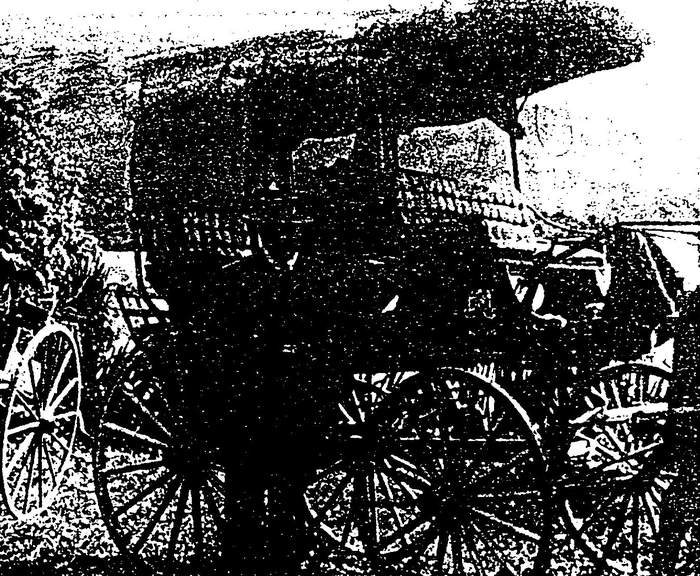
Transport in and out of Rotorua was a slow and dusty affair in early years of settlement in the district and here one of the coaches from the Edwin Robertson era is pictured, operated by the Rotorua Motor Transport Company. (All pictures by courtesy Rotorua Museum.) |
 |
|---|
When Edwin Robertson was aged 13 amd close to death from starvation, he came upon a Maori pa deep in the bush. There he was received and fed and was able to recover his strength.
The Maoris showed him the way out, and he resumed his journey.
Edwin never forgot his indebtedness and when he became wealthy, his family had instructions never to refuse a Maori a meal. The coachmen he employed were similarly instructed to always pick up any Maori wanting a lift on the road.
Edwin built up his business as a courier, and at the wise old age of 15, he employed several men and had 25 horses to carry freight over the bush trails of the area. Telegraph wire and poles for the first communications links, and stores for settlers, made up much of his business.
In 1873, aged 16, he bought his first buggy and began a lucrative coaching enterprise.
Though Edwin never drank, smoked, nor swore at his horses, he had one vice — cock fighting. Often he would take a fighting cock with him on a packhorse trek, and would send his rooster into battle with any challenger.
Tourism meant more money for the transport operator, and Robertson plied tourists to and from the Pink and White Terraces. After the eruption, he made even more, carting the curious to the Buried Village and to Waimangu.
With the advent of the motor car, Robertson saw that his days in the transport industry were numbered. He retired in 1902, aged 45.
From Edwin Robertson’s family come three names of streets, which run across land once owned by his family. James Robertson was Edwin’s father. Ann was his mother and was a powerful woman. She invested family money in land at Ohinemutu, but had no title to it and was declared bankrupt. She fought the case doggedly and eventually won substantial compensation from the Government, after becoming the first woman to address parliament.