
In this part:
- The Brown Family of Victoria Street
- Jack Stafford, DFC — Fighter Pilot
- The Quinlan Family of Herewini Street — Brian Quinlan, DFC
- Rex Norman
- Rex Norman's Parents — Arthur Henry and Mabel Norman
- Te Arawa in the Maori Wars — the Mair Brothers
- W. Rex Norman and the Fraser–Mair Family
- Rex Norman and the Rotorua Volunteer Fire Brigade
The Brown Family of Victoria Street
Edith Stafford – nee Brown, grew up in Victoria St., 3rd. from Fenton St. Jack, her husband, and Andrew Brown her brother, were Fighter Pilots WW2, both in 486 Squadron with Typhoons. Andy was shot down over the English Channel, without trace. He was a gentlemanly, very kind person. One of his closest school mates, living near Victoria St., Pat Farren, also a pilot, was shot down over Malta and is buried in a cemetery there.
1905, J.A. Brown, Edie’s father, came to Rotorua, later marrying an Auckland lady. 1912, they went to Victoria St. and before WW1 he had established his Gun Shop in Fenton St., as gun-smith, lock-smith and a bike shop.
Edith, and her brother Andrew who was 8 yrs. older, went through Rotorua Prim. School, taking shortcuts through the Railway Plantation of giant bluegums, interspersed here and there with other fine old trees. The Railway Station in the middle and the long stretch of railway lines divided this big area into two plantations, mainly gums, by Victoria St.. Close by the trees, on that side and the rail lines, ran a private Railway’s road with an entrance only off Fenton St. serving the goods-yard, then, past the middle, to the great work shop and, closer to the Ranolf St. end (which had no entrance), a huge turntable for the engines. Near the Fenton St. end were great concrete buffers. It was an exciting place for trespassing children, with thunderous shunting, roaring steam, hissing and spouting from the engine, the screeching & clanging of metals. The Ranolf-Pererika Sts. entrance to tracks leading to Amohau St. was by inching one’s feet along the cattle-stops (where trains went over), well-spaced wood rails, V shaped, but pointed at the top. (When very small, I (Peggy Ford Allen) fell between these and bore the scar of that gash for most of my life, just under the chin). Adults also loved the beauty of these short-cuts. Edith continued using these when she worked with the Daily Post. In her last year at Rot. High Sch. she was House Capt., Prefect, and won the Girls’ General Excellence cup.
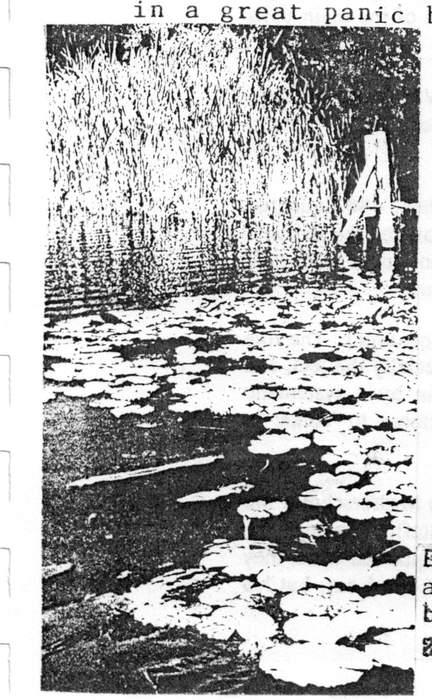
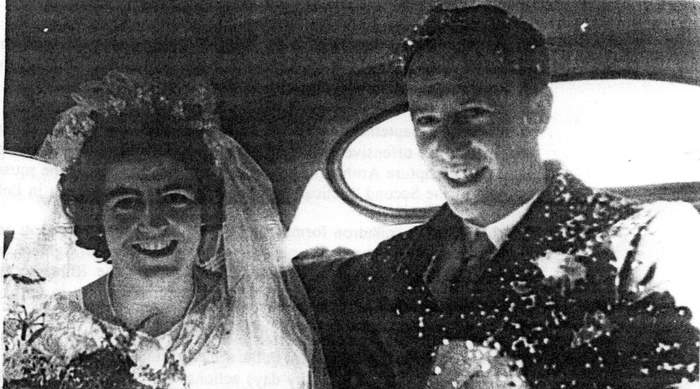
Water lilies, Lake Okareka. Edith Brown marries Jack Stafford, Fighter Pilot DFC, after WW2. After many years in High St. they now live by lakeside at Okareka where masses of water lilies grow. Jack’s business is ‘J.H. Stafford, Real Estate.’
Victoria St. close neighbours for the Browns, on Fenton St. side were, Ray Boord on cnr. – bought from Danseys, then Dr. Keith Park next door. Opposite these houses were several ‘Railway Houses’ on very big sections which now have 3 houses on each. Donaldsons had one, & Neesons. On the Amohia St. side of the station from Fenton St. cnr. Service Station, owned by Tiny Wells (his daughter June Colebrook, son a doctor), there were several more railway houses before Herd Shepherd & Ellis Timber & Hardware.
Railway Plantation of gum trees was burnt down by Dick Devantier with another man in the contract. His son, John Devantier, still Peace St., was 5 or 6 yrs. old then & now is 55 yrs. in 1995. He saw the great spectacle as flames leapt skywards, clouds of smoke, the roaring and crackling of it all. Reid & Mills were opposite, Fenton St. – Te Ngae Rd. cnr. Petrol Station and in a great panic because the heat was so intense and frightening.
Jack Stafford, DFC — Fighter Pilot
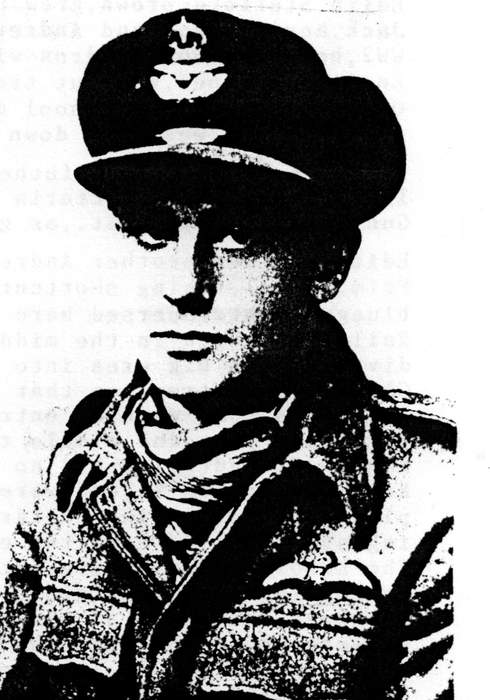 John H. Stafford (Jack) and Edie his wife moved to Lake Okareka after bringing up their 3 sons in High St., attending Glenholme Sch. before going on to complete High Sch. in Rotorua. Jack’s parents retired to Sophia St.. His father, in 1930s, had his clothing outfitters store in lower Tutanekai St. as well as a Kaharoa farm. Jack himself went through Rot. High Sch. representing it in football, became a Prefect before going on to Kings College in Auckland, where again – Prefect & football.
WW2 solved his problem of choosing a career. He joined the Airforce and began training for a Pilot in the RNZAF.
Jack became a Fighter Pilot of outstanding ability, based in England, with No 486 Squadron (NZ) fighting over the English Channel & Europe. He was promoted to Flight Lieut. He received the DFC.
Feb. 1945, Jack Stafford became a Flight Commander of No 486 Sqdn..
‘Jack’ Stafford was born on 19 August 1922 in New Lynn, Auckland. He joined the RNZAF in March 1942, training on Tiger Moths at Bell Block and Harvards at Woodbourne.
Leaving for the UK in January 1943, Stafford converted to Hurricanes with an OTU at Annan before being posted to 486 (New Zealand) Squadron in November 1943 as a Sergeant Pilot. Based at Tangmere with Hawker Typhoons, 486 Squadron were engaged in dive-bombing and ground attack operations over France in preparation for the invasion of Europe the following year.
In January 1944, 486 Squadron were re-equipped with the latest fighter in the RAF inventory, the Hawker Tempest. In February 1944 ‘Staff’ was posted to the de Havilland Aircraft Company at Hatfield as a test pilot in the Propeller Test Division. By April he was back with 486 Squadron at Castle Camps in Cambridgeshire, shifting south in late April to No. 150 Airfield at Newchurch on the Romney Downs. The squadron flew fighter sweeps, shipping strikes and ground attack prior to D-Day, before becoming one of the main units involved in the V-1 Flying Bomb campaign.
During the period 19 June to 29 August Stafford shot down eight V1s over Southern England, including two on the 4th July. He was promoted from Flight Sergeant to Warrant Officer in June and commissioned the following month.
During early September, with the menace of the flying bomb diminished, 486 Squadron returned to the offensive again over Europe. In late September Stafford covered the airborne invasion to capture Arnhem and the Nijmegen Bridges before the squadron moved to Europe as part of the Second Tactical Air Force, based at Grimbergen in Belgium.
At this time the squadron formed part of 122 Wing with No’s 3 & 56 Squadrons. The role of the Tempest Wing was the neutralisation of the German fighters, especially the jets, and the paralysing of the Reich’s railway system from the Rhine to Berlin by a systematic onslaught on the locomotives. The squadron moved again in early October to Volkel in Holland.
The next two months were spent in the armed reconnaissance role, but the Messerschmitt Me 262 was also apparent in many days’ actions. On Christmas Day Jack Stafford, along with Flying Officer Bremner, shot down the first confirmed Me 262 for 486 Squadron when they intercepted two of the jets south of Arnhem in the afternoon. The pilot baled out, but his parachute was not seen to open.
The 23rd January was the most successful day for 122 Wing so far when 22 aircraft were destroyed in the air and 50 trains destroyed or damaged, Stafford sharing in a Bf 109 over Rheine. On the 2nd February he shared in the destruction of a Dornier Do-217 and on the 22nd, flying Tempest NV791, he shot down a Bf 109 south of Munster, part of a group of seven orbiting over a group of American P-47 Thunderbolts.
In February Stafford was promoted to Flight Lieutenant and made Flight Commander of A Flight, 486 Squadron. In April, following the Rhine crossing, No. 122 Wing moved to Rheine Hopsten, which was the previous base of their adversary – the Me 262.
On the 12th April Jack shot down a lone long-nosed Focke Wulf 190-D east of Ludwigslust, his last aircraft destroyed. Jack Stafford was posted to 83 Group H.Q. Mettingen, Germany on 15th May, receiving the DFC. On 15 May he was posted to 80 Squadron as a Flight Commander based at Fassberg, before moving to Copenhagen. He was repatriated to New Zealand in December 1945 and left the RNZAF in April 1946. Jack is now semi-retired, living at Okareka, near Rotorua.
Citation
STAFFORD, Flight Lieutenant John Henry, DFC.
(NZ421783); New Lynn, Auckland, 19 Aug 1922;
RNZAF 7 Mar 1942 to 16 Apr 1946;
DoA-(DFC) 6 May 1945; (Pilot).
Citation DFC: [No 486(NZ) Sqdn RAF (Tempest)] “This officer is a fighter pilot of outstanding ability, determination and courage. He has attacked a large variety of targets and during the period of flying bomb activity, he destroyed at least 8 of these missiles. On one occasion, whilst returning from a patrol over the Munster area, his aircraft was very badly damaged by anti-aircraft fire. Displaying superb airmanship Flight Lieutenant Stafford flew the crippled aircraft back to base. While flying on armed reconnaissance he has destroyed at least 1 enemy aircraft and damaged others. In addition he has inflicted considerable damage on the enemy’s locomotives, mechanical transport and rolling stock.”
Flt Lt Stafford was posted to 486 Sqdn in Nov 1943, but spending Mar/Apr 1944 with De Havilland propellor test division, before returning to his squadron. He carried out 230 operational sorties including dive-bombing attacks on V1 rocket sites; flying-bomb patrols during which he shot down at least 8; shipping reconnaissance sorties; assisted in providing air cover for the D-Day and Arnhem landings; carried out numerous ground attack sorties during which many vehicles, locomotives and railway rolling stock were destroyed or damaged; and supported the Rhine crossing during which he shot down 4 German barrage balloons. He also shared, with R D Bremner (q.v.), in the destruction of the first Me.262 jet aircraft destroyed by 486 Sqdn. In addition he destroyed 1 Me.109 and 1 Fw.190, shared in the destruction of a Do.217 and a Me.109, and damaged 2 Ju.52’s on the ground. The damage to his aircraft, referred to in the above citation, arose from a collision with high tension power lines over Germany closely followed by anti-aircraft cannon fire hits in the wing and fuselage. Notwithstanding the damage caused he was still able to fly his aircraft 200 miles back to his base in Holland. In Feb 1945 he became a Flight Commander of No 486 Sqdn before a posting to No 83 Group HQ followed by a further posting as Flight Commander No 80 Sqdn RAF (Tempest) in Denmark in May 1945.
The Quinlan Family of Herewini Street — Brian Quinlan, DFC
1920s-1930s, BRIAN QUINLAN grew up in Herewini St., off Victoria St. with the other children, JACK a little older and JUNE younger.
1920s RAY QUINLAN, their father, was a joiner in partnership with Lloyds, in the Joinery Factory for several years, cnr. Te Ngae & Fenton St.. 1920s, later, Ray established his own Te Ngae Rd. Joinery Factory. This property later became Winstone’s Glass Factory. The boys learnt joinery.
WW2 broke out in 1939 and the Quinlan young men joined the Forces. Jack went to Egypt in the army and suffered 4 yrs Prisoner-of-War. There is a photo of Jack and Ted Quinlan out in Egypt on the Desert Campaign with Rotorua mates, Billy Hill, Norm Gainsford, Rex Norman and Alwyn Robertson who was killed, so this photo is on page ‘Stuart Robertson’.
Brian Quinlan became a Fighter Pilot in RNZAF and RAF. He was awarded DFC for attacks on Krupps munition factory in Germany.
|
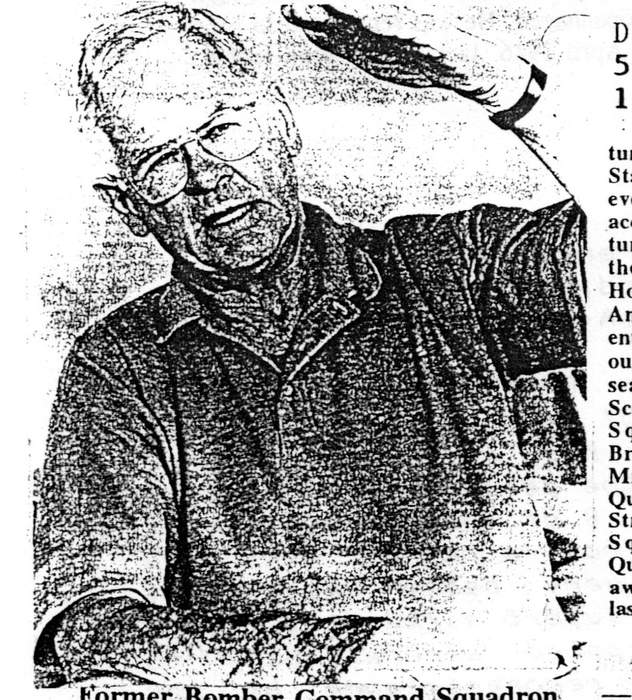
Former Bomber Command Squadron Leader Brian Quinlan. “We flew Coastal Command at 4000 feet, for 12 hour stretches,” says former Squadron Leader Brian Quinlan. |
Photo, Daily Post. Newspaper item, Daily Post, ’50 yrs. ago, 1-10-1943′: an interesting feature of broadcast by Station 2YA last evening was an account of the investiture by His Majesty the King at Holyrood Castle. Among many recipients who received honours at this historical seat of Kings in Scotland was Squadron-Leader Brian Quinlan, son of Mr. and Mrs. E. R. Quinlan, of Herewini Street, Rotorua. Squadron-Leader Quinlan received the award of the D.S.C. last October. | Rotorua Review, Tuesday, March 22 1994, headed ‘Bomber veterans’ reunion held’: about 260 ex-groundcrew and aircrew members attended the third national reunion of the New Zealand Bomber Command Association over the weekend. The total included visitors from Britain, Canada and Australia as well as several members and partners of the Women’s Auxiliary Air Force. The memorial service and laying of wreaths commemorates the 76 out of every 100 men who volunteered for Bomber Command flying duties during World War 2 who were killed in action, training, shot down, imprisoned, or lost to the Command. This loss rate included some 55,000 killed, of whom nearly 300 were groundcrew. His squadron suffered severe casualties – during the course of the war 821 were killed, 422 made prisoner of war and 150 aircraft lost. By Geoffrey Darling. The Daily Post, Wednesday, March 23, 1994 |
|---|
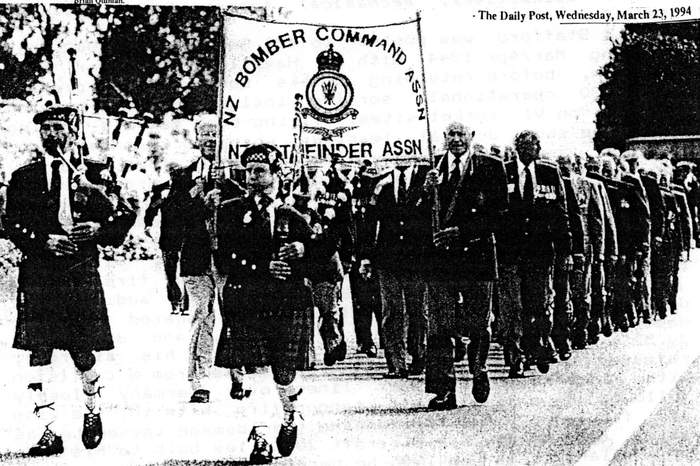
: Two pipers from the Rotorua City Highland Pipe Band keep in step the 200 Bomber Command veterans at their national reunion in Rotorua, as they march from a commemorative service at the lakefront war memorial. Carrying the banner are (left) Mr Geoff Pattenden, Nelson, and Alex Hansen, Canada, and behind them probably the largest collection of medals of bravery seen together in Rotorua, according to the association’s national president Mr Bill Simpson.
Rex Norman
REX NORMAN, born 1910, is still active at 1992. Rotorua has been home for 73 years, 46 of which in Glenholme area, Robertson St.. He and his wife, who was Val Culley of Hamilton, built there when they married after W.W.2. in 1946, there being only two other houses in Robertson St.. They remember how it flooded so badly.
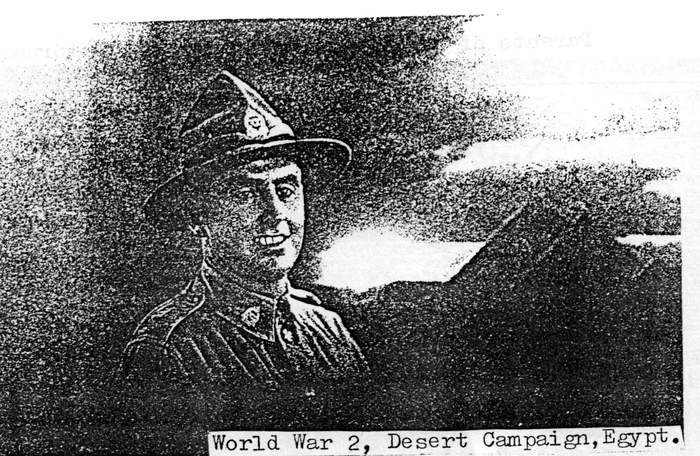
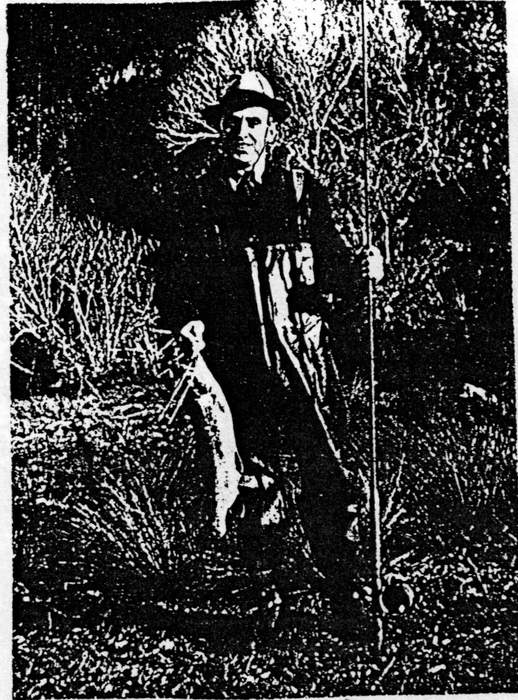
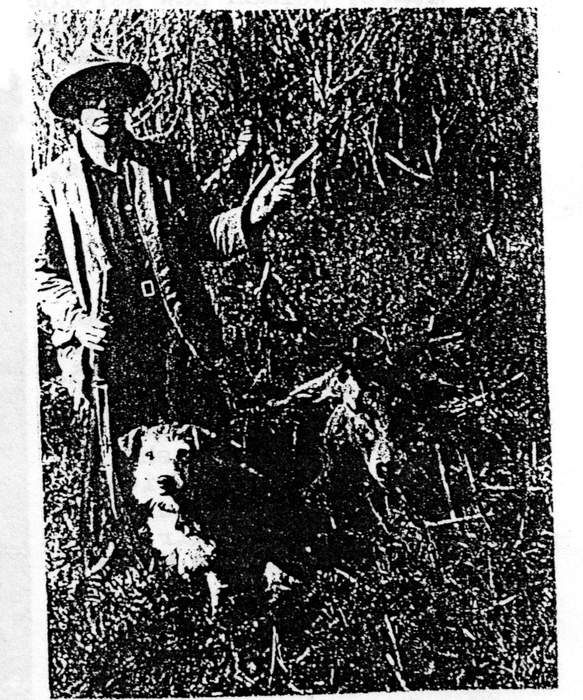
Left World War 2, Desert Campaign, Egypt. Rex, trout fishing pastime – one of Rotorua’s important tourist attractions. Rex, 1933: deer stalking, 11-point trophy, with Allen Ford’s dog Bob on Highland Station’s bush land
Rex, coming from an ancestry of military men on both sides of the family, has followed in their footsteps. His has been a life of a great deal of activity, alert to all opportunities, both spare time pleasures or for military training and being with his mates in active war service. In civilian life he had the same attitude. After completing his schooling, he joined the Vacuum Oil Company. On returning from four years active war service overseas, he took the Herald Agency business until retirement. In 1969 he was made Life member of Fire Brigade, after 41 years voluntary service!.
Rex Norman’s Parents — Arthur Henry and Mabel Norman
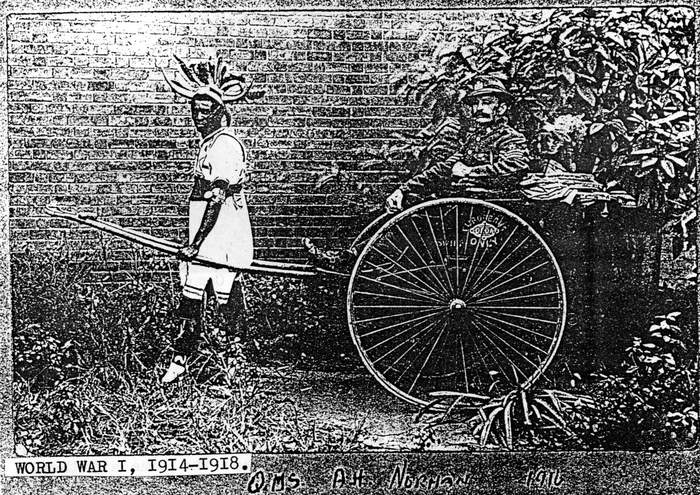 Parents of Rex Norman, Robertson St., Rotorua.
Q.M.S. Norman saw service in Egypt with 15th. Hussars and later in India. Then he came to N.Z. serving 4½ years with permanent Artillery and 5 years with the Mounted Police
World War I, 1914-1918. (Photo inscribed) ‘Q.M.S. A.H. Norman, 1916.’ His father, Arthur Henry Norman, in Capetown, Sth. Africa, en route to Europe, W.W.I. He died in France, Messines, 1917.
Mrs. Mabel Innes Norman, widow, lived in her Rot. Amohia St. home 1919-35. Here she is enjoying cherry blossom time in her wind-or-sun shelter at home with a friend. She was the niece of Capt. Gilbert Mair, friend of Te Arawas in the MaoriWars, 1860s – 1870s.
Te Arawa in the Maori Wars — the Mair Brothers
Te Arawa Maoris of Rotorua and Bay of Plenty had their ancestral base at Maketu. The Maori Wars of the 1860s and 1870s occurred when the Waikato Maori King Movement rebelled against the Crown. The Opotiki eastern branch of the Hauhaus (Taranaki Movement), sympathized with the Waikato Kingites. They hated the Arawas who remained loyal to the Crown and who helped defeat the Hauhaus in 1864 in the Tauranga – Maketu areas. The Hauhaus tried crossing, in 1865, the Arawa territory to join up with the Waikato Kingites so warfare broke out in the pumice plateau area. The Mair brothers played an important role in defeating the Hauhau uprising.
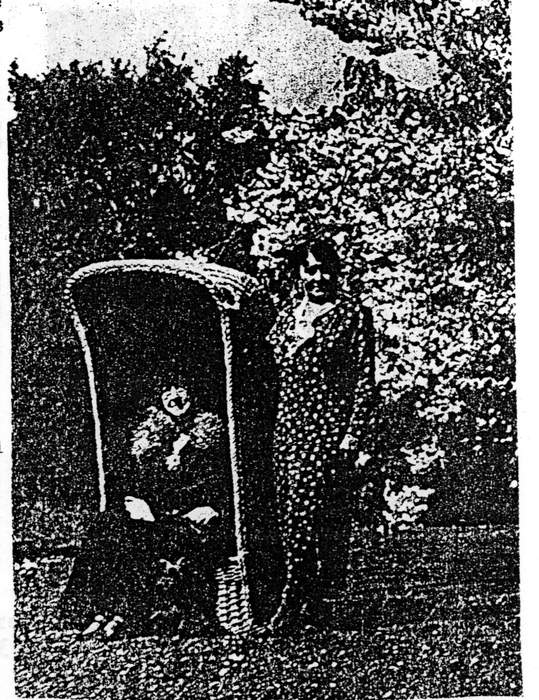 Major William Mair – Judge of Taupo, made great efforts to assist in getting material for making munitions available to the Arawas. As Judge, his work dealt with the Native Land Court business.
1870, Lieutenant Gilbert Mair (9yrs. jnr. to Wlm.) became famous for his leadership in helping the Arawas save their defenceless people at Ohinemutu on Rotorua lakeshore. Mair had been sent towards the Tauranga area by Colonel James Fraser (relation) who had believed Te Kooti’s cunningly spread rumour that he was planning an attack on Tauranga. Col. Fraser was later reprimanded for his leadership. Gilbert Mair, suspecting treachery, raced with a number of his best warriors – about 100 strong, known as the Arawa Flying Column, back at full speed over a great distance, reaching the foot of Ohinemutu just as Te Kooti was about to enter by trickery. With incredible bravery, Mair’s column put Te Kooti’s 3–400 warriors to flight over Tihi-Otonga hills and southwards where the rebels were decisively beaten.
Gilbert Mair was promoted to Captain. Later he was decorated with the N.Z. Victory Cross for valour in the field.
Te Kooti retreated to the Urewera mountain country, cleverly avoiding capture for 11 years. He was then pardoned and allowed to live at Ohiwa Harbour, later buried on a small island in the harbour.
1920, Rex Norman remembers Gilbert Mair visiting their home sometimes and taking his neice, Mrs. Mabel Norman and her children to the ‘Movies’, the black and white silent pictures at Lyric Theatre. 1935, Mrs Norman, widow of the late Arthur H. Norman died in Rotorua.
Newspaper clipping reporting on Mrs F. D. Pinfold, new Mayoress of Hamilton, daughter of Mrs A. H. Norman of Rotorua and the late Q.M.S. A. H. Norman.
|
Mrs F. D. Pinfold, the new Mayoress of Hamilton, is the daughter of Mrs A. H. Norman, of Rotorua, and the late Q.M.S. A. H. Norman, who died at Messines in 1917. The late Mrs. Norman was well known to the older residents of Rotorua. Her parents kept the old hotel at Taheke on the Te Puke road and as Miss Mabel Fraser, she took part in very many of the social and sporting activities in the early settlement. With the late Messrs J. W. Webber and A. W. Williams and Mr. R. Griffiths, of Arawa House, she was one of the foundation members of the old Rotorua Tennis Club and played on the first court established in Rotorua. This was laid down on the site of the present top bowling green in the Government Gardens. After her marriage to the late Mr. A. H. Norman, Mrs. Norman resided for a time at Te Puke and at Tauranga and again at Gisborne. She was a niece of the late Captain Gilbert Mair, well known in the early history of the colony. She spoke Maori fluently. |
Q.M.S. Norman saw service in Egypt with the 15th Hussars, and later in India (Lahore, the Punjab and Multan). Subsequently he went on an expedition to Thibet with his uncle Sir Louis Dane, I.C.S. After this he came to New Zealand, where he served four and a-half years with the Permanent Artillery and five years with the Mounted Police. Mrs Pinfold is a grand-daughter of the late Sir F. B. Norman, K.C.B., who rose to be Lieutenant-General in India and who died in 1901. She is a grand-niece of the late Field-Marshal Sir Henry Norman, who had the rare distinction of having refused the Vice-Royalty of India, and who was one-time Governor of Jamaica and Queensland. At the time of his death, he was Governor of Chelsea Hospital. Mrs Pinfold’s grandmother, Lady Norman, lives with her daughter, Lady Louis Dane, in Onslow Gardens, Kensington, and although over 80 years of age, she is an active worker for charity, and well-known for her benevolence. Mrs Pinfold’s mother is a niece of Sir Walter Buller, Major Gilbert Mair, and Captain William Gilbert Mair, all of whom have been closely connected with the building of New Zealand history. |
|---|
W. Rex Norman and the Fraser–Mair Family
W. Rex Norman, in 1919 came to Rotorua as a lad. His father, a Scot from Aberdeen had been teaching in Waipu, a Scottish settlement near Whangarei, but had been killed in 1917 in World War 2.
Mrs. Mabel Innes Norman, now widowed, decided to live in Rotorua in Amohia St., to be near relations. Her own father, J. Leith R. Fraser, had lived for many years as one of the earliest European identities of this Rotorua area.
Leith Fraser was a nephew of the renowned Capt. Gilbert Mair of the Maori Wars, 1860s – 1870s. When Leith was stationed at Te Awamutu as an orderly in a Native Contigent, he was in contact with the affairs of Rotorua and Gilbert Mair, at one time joining in one of the earliest race meetings, 1876. He competed in the hurdles event against a Maori and Roger Dansey but came a cropper at the first hurdle – this was the opening fun event with old horses. The race course was the flat area below Pukeroa Hill where Rotorua township now stands, at that time just rough scrub and manuku.
In 1878, Leith Fraser became one of the two earliest professional tourist guides for this Hot Lakes District. Before this people were shown the district by the military personnel, missionaries, early settlers or the Maoris. Leith obviously enjoyed the social events held at Ohinemutu – there was no Rotorua township in those days. In 1881 he attended a fancy dress ball to raise funds for a much needed hall, this proving most entertaining and very successful. In 1883–84, he became involved in ventures at Taheke near Okere. He was amongst those to make a speech at the opening of the first steam sawmill in the Hot Lakes District, ‘The Rotoiti Sawmill’ ten miles from Taheke on the lake shore, where Mr. Edward Butt had procured cutting rights for 600 acres of bush from Maoris. Auckland Messrs. Fraser and Tinne manufactured the 10 horse-powered engine. In 1884, J. Leith Fraser bought the hotel and store business at Taheke by Lake Rotoiti, built the previous year by Harry Taylor, an Ohinemutu store owner. Leith added a hall, this being also used as a school room for Rotoiti pupils. Fire destroyed the hotel and store only, in 1887, a year after the Tarawera Eruption. He shared in 1891, the Rotorua–Tauranga Coaching Run with Edwin Robertson. He did half way on to Tauranga, then Tauranga back to half way.
Mable Fraser, Leith’s daughter, married Arthur Henry Norman. Rex was a son, Heather (Mrs. Dr. Pinfold) a daughter who became Mayoress – Hamilton. Mrs. Mable Norman was related to the Mair family, renowned in N.Z.
Major William G. Mair and Capt. Gilbert Mair.
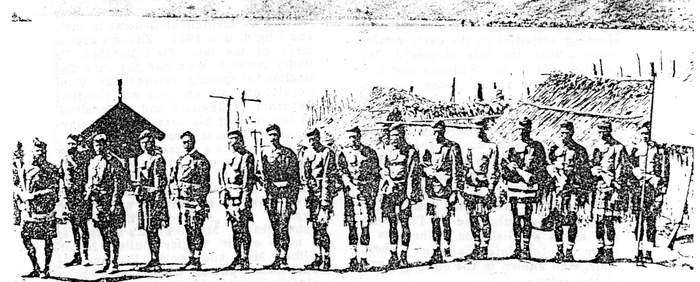
Capt. Gilbert Mair (2nd. left), 1870, with part of his Arawa Flying Column at Kaiteriria camp – Sth. end Green Lake, Rotorua.
Rex Norman and the Rotorua Volunteer Fire Brigade
Rex Norman served 41 years in voluntary Fire Brigade. He joined when 27 yrs. In 1969 he was made LIFE MEMBER.
Newspaper clipping — BARN DESTROYED, 12-2-1939: Hay and implements burned on Mr. H. Hardcastle’s property.
It was found necessary to back the engine down to a small stream flowing through the property, and take water from it by suction-hose. This was done expeditiously, but with the hold the fire had obtained, it was difficult to check its progress. One wall collapsed shortly after the arrival of the brigade, so fierce was the blaze.
In the barn were stored various implements, including a tractor, which was safely removed, and approximately 450 bales of hay, all of which were destroyed. It is not yet known what the total value of the damage was, but it is considerable. The building and some of its contents were covered by insurance.
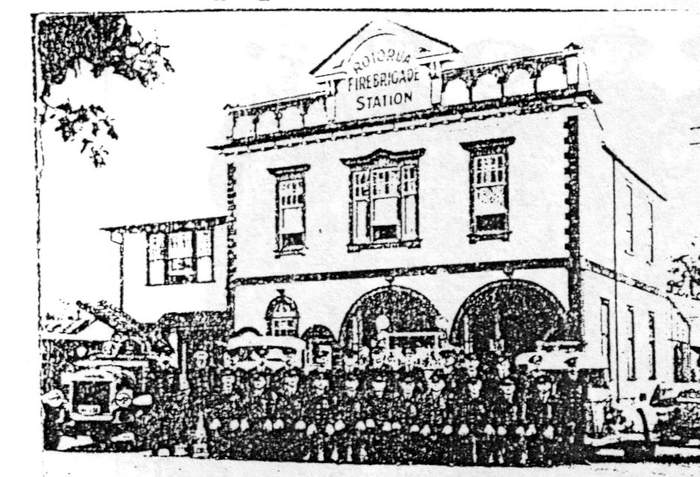
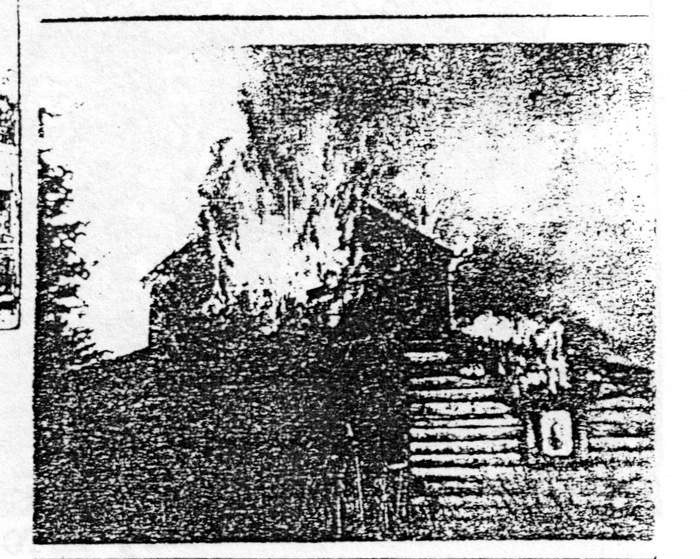
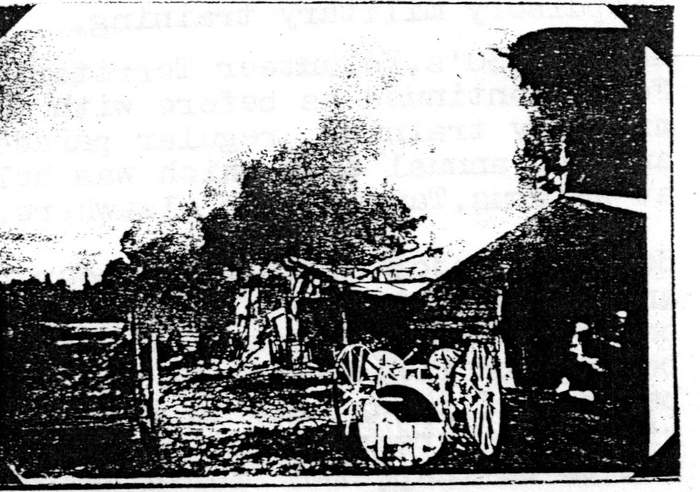
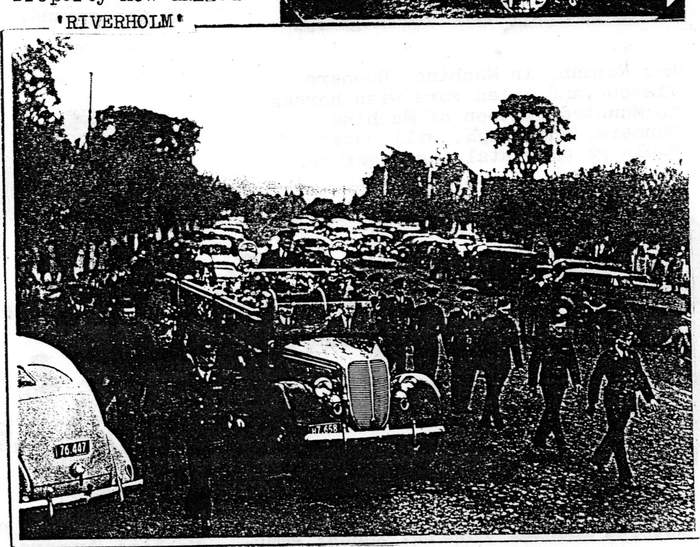
Fire Station, 1913–1956, Haupapa St. The barn fire on Mr H. Hardcastle’s property (now ‘Riverholm’). Below: funeral of a fellow fire-brigade member.