
In this part:
Albert and Myrtle Brown
ALBERT and MYRTLE BROWN, owned 113 Ranolf St. for 60 yrs., opp. Convent. 1927, Myrtle Bates came to Rotorua from Raglan at 19 years of age. She boarded with Mrs. Dowling of Thirwell House, Tutanekai St. where DEKA now stands and was happy with their chn. Mary, Jack and Tommy. 1932, Bert Brown, handsome local policeman, Australian, married Myrtle. 1933, moved into Ranolf St. with baby son Ray, after renting at TeNgae. 1938, were transferred for 21 yrs. to Dunedin peninsular, at Porto Bella with 3 week old son Neville. Their daughter was born there.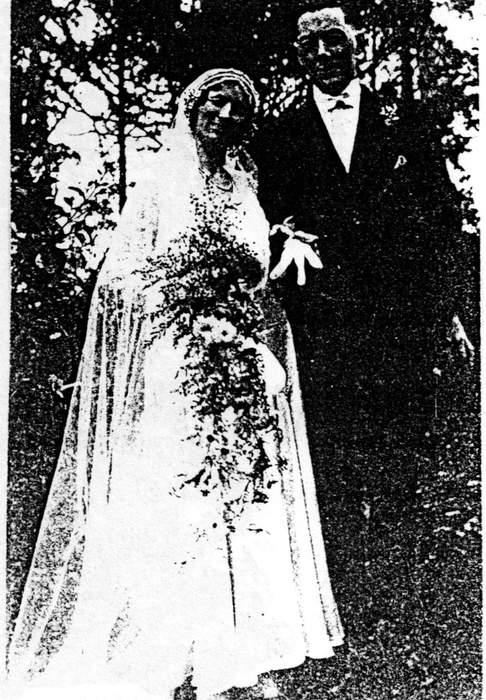
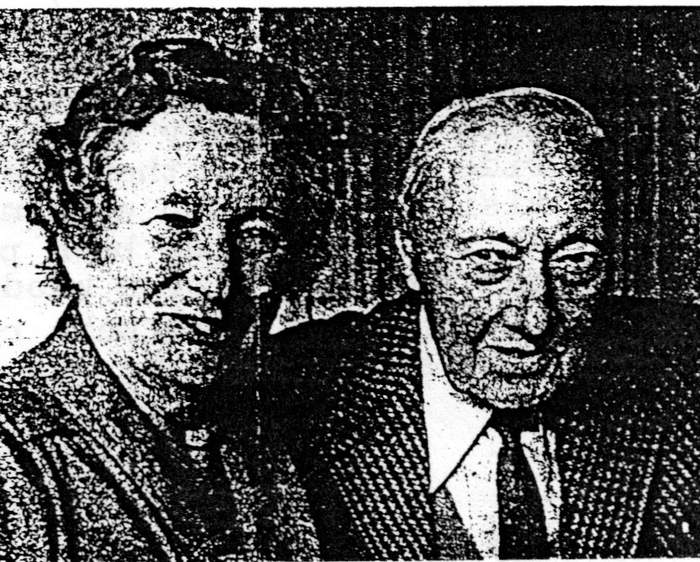
Myrtle and Bert celebrated their Golden Wedding back in Rotorua. Now widowed, Myrtle reflects on both sad and happy days in her life.
One of ten children, Myrtle was brought up with fine parents on a big dairy farm at Te Utu, near Raglan, where she helped in the six-bail milking shed with steam driven machines fueled with wood chopped by Dalmations, hired for their strength. They could saw through huge almost petrified tree trunks partially submerged in the swamp lands. Myrtle enjoyed trying to jump the wide 2 metre deep drains. Their neighbours, the Bailey family, had a two horse drawn waggon to take all the young ones 10 kms. to socials at Te Kawhia, with a chaperon!
In 1927, Myrtle found Rotorua to be just a village with steam rising in the streets from fumaroles, smelly! Bert Brown, the Aussie policeman was her dream come true and to this day his memory puts a sparkle in her eye. Wedding bells rang for joy, 1932! They had the Ranolf St. home built in 1933 near Hampson’s Malfroy Rd. corner. Just behind was Hill’s farm bought from Malfroys. Myrtle was horrified one day to see Ray, her toddler, through the fence in the paddock with a great bull nearby.
Bert Brown became Country Constable with his area stretching south as far as the Ureweras. Early in their marriage, Myrtle was lonely during Bert’s absences when riding horseback as far as Ruatahuna territory. He told her how the Maori horse tracks were worn so deep that it became a problem to keep legs safe.
Sister Annie, missionary, Murapara, on these occasions, invited them to stay with her. The rooms were tiny and their iron framed wire wove metre wide bed sagged so much that they felt lumpy things beneath. On investigation, they found lots of shoes all stuffed with money. Even the wooden bedroom stool with its cushion covered lid, when lifted also had money underneath. The Maori women loved Sister Annie and when leaving her sewing afternoons would kiss her goodbye, much to the surprise of her visiting Australian Sister.
Bert, in the course of duties into the Urewera Ruatahuna area, came to know quite well the Maori prophet, RUA KENANA TAPUNUI, settled at Maungapohatu. He was successor to Te Kooti in spiritual leadership for Maoris of central North Is. from Taranaki to Hawkes Bay. His father died fighting for Te Kooti at time of Rua’s birth, 1869.
|
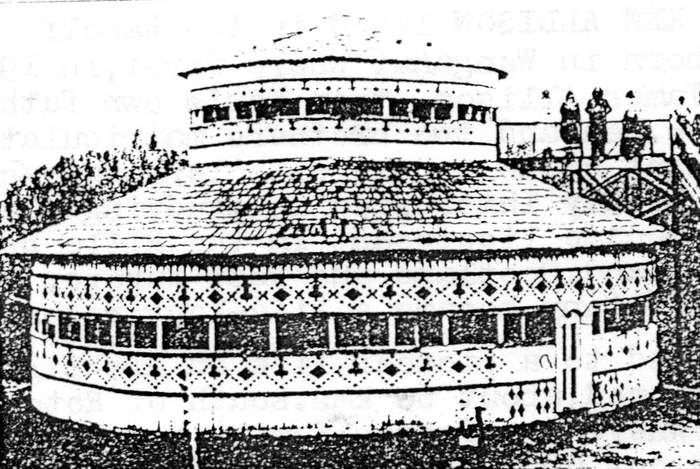
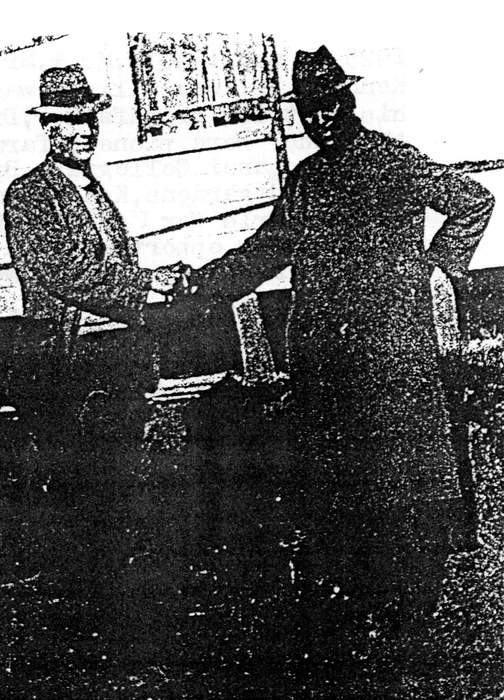
RUA’s circular Council house at Maungapohatu settlement known as New Jeruselem, supporting several hundred Maoris, many houses besides a temple and community buildings. His religion was based on Biblical teachings. He was a capable manager with good sense. His sons gave him their wages from work such as shearing. He only had 5 wives, 70 children in 1931 when Sgt. Brown and a 1/2 caste Maori tracker rode 28 miles into bush to arrest the man Black who assaulted RUA’s son. |
RUA shakes hands with Sgt. BROWN at Maungapohatu, July, 1931 |
|---|
 1938, Bert Brown, a senior sergeant with the Rotorua Police was transferred to the Dunedin Peninsular at Porta Bello. At the end of the peninsular was a large Maori settlement. At first Myrtle found this lonely as people did not visit you until first they had met you. With her 3 week old son Neville, this made it difficult for Myrtle. Later they enjoyed the life, becoming leaders in many activities such as drama circle, sports, institutes. In fact, when they left, people there wondered how they would manage without Bert’s acceptance of the many responsibilities he took on outside of his duties, and also Myrtle’s zest for making things enjoyable.
But later tragedy struck, leaving a life long heart ache for them. When their third child, a lovely daughter of five years contracted polio affecting her lungs, she spent six months in Dunedin Hospital in an iron lung. A young boy her age was also in one, beside her. They became great friends, using mirrors. Then the wee darling spent two weekends at home, loving being in pretty dresses. At nights she went back to her iron lung as daytime breathing was distressful. After the second weekend, the hospital rang to say that she had passed away. The little boy also missed her sadly and he too soon passed away.
After Bert’s retirement, they returned to their own Ranolf St. home which had been rented, to find their pine tree hedging had never been cut! They all had to be taken down. They were happy to be back. Their son Neville had begun teaching at Upper Atiamuri and boarded with Mrs. Milne who was a keen spinner. Through her, Myrtle became highly proficient in wool craft, still helping others in the Rotorua Spinners and Weavers Club, for which she now has the honour of being PATRON!
Ken and Olive Allison
1925-to mid 1940s, Mr. & Mrs. KEN ALLISON lived in 146 Ranolf St.. Kenneth Willway Allison was born in Wanganui where first, in 1941, his Scottish grandfather, Dr. James Allison, then Ken’s own father Alexander were pioneer farmers. Ken and two brothers matriculated from Wanganui Collegiate. Brought up in a home with large areas of trees and gardens, Ken became keenly interested in studying plants. During World War I service he became lieutenant in the Rifle Brigade, using every opportunity in England, Scotland and West Europe, to collect and name wild flowers. Botany became a life-long research.
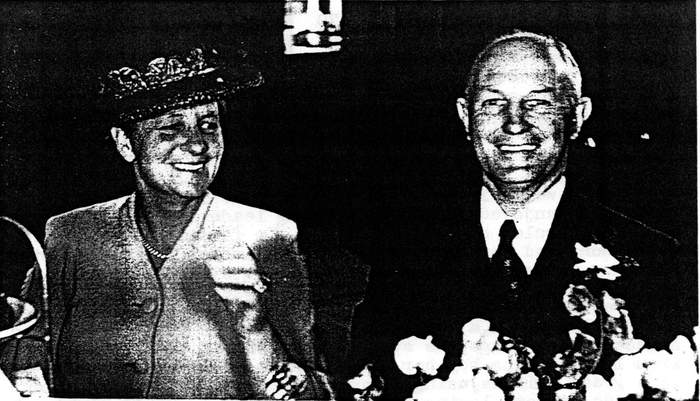 1919, after the W.W.I he returned to a pioneer life on his big block of tussock land, totally unimproved, about 60 kms. south of Rotorua. This was the Govt. owned land where the Coates family had had their flax mills and which the Govt. cut up into large blocks for settlers to lease. Ken’s 9000 acres (-20,000 hectares) was at Puaiti bush, near Orakei Korako. His brother Douglas Allison had another block at the foot of the Paeroa Mt. known as Waiwhakahihi. These blocks are now known as the Ngakura and Waikiti Valley basin.
1920 Ken married Olive Lawrie (Billy), making their home in lonely surroundings where there were no natural boundaries and fencing insufficient for the cattle and large flocks of sheep.
1925, they were forced to give up their Whirinaki block of land due to post-war recession, loss of stock from cobalt deficiency. They moved to Rotorua, their home being opposite Dr. Bertram’s gate. Ken found employment with the Nursery of the N.Z. Forest Service. Ona (Coatsworth of Hamilton), remembers how the area flooded and problems getting to school. Ona distinguished herself at High Sch. both academically and in the sports field. She recalls a long bike ride with her mother and Avis of about 60 odd kms. from Rotorua to visit Ken Allison working at Kaingaroa in the forestry camp called Wairapukao. Having been promoted to position of foreman there, he had the luxury of a wooden floor and half walls for his tent. Winter! Living conditions were rough and primitive and hard to endure in that severe climate but the back-breaking planting was even worse.
1976, when KEN ALLISON died, his obituary outlines his tremendous achievements in both the N.Z. Forestry Service from just a planter to a Ranger supervising the Dunedin District State Forest, and also Botanist of world acclaim through his catalogue of herbarium which shows that he began collecting mosses and hepatics in 1927 in the Atiamuri district south of Rotorua. An abbreviation of his works in both fields is set out below:
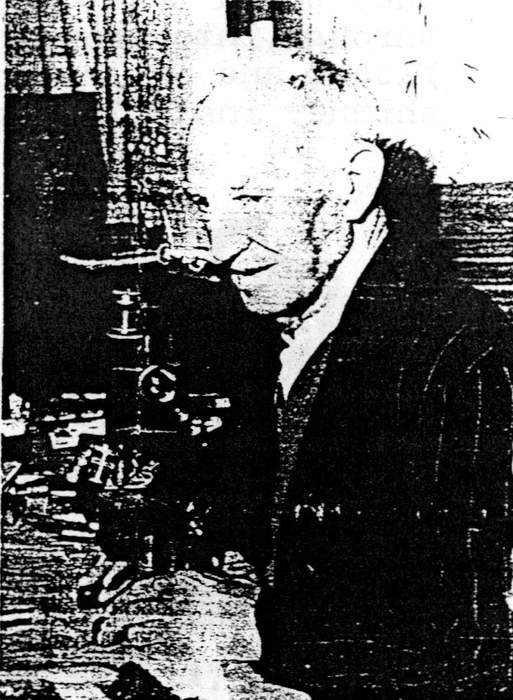 As BOTANIST:
1927, while cutting forestry firebreaks at Atiamuri, he discovered a curious moss, practically no leaves, Spaghnum Moss. This grew on tussock flats, in swamps and on damp banks.
1931 he published information on this moss and its environment.
1932. Published study of hepatics for Australian readers, a companion to one written by G. Sainsbury on mosses.
1945, now in Dunedin, his herbarium contained 800 packets each of mosses and hepatics chiefly from Central Nth. Is. and Waipoua Forest
1950. Collection about 5,000 hepatics, 3,500 mosses, many from Otago. He published also a key to 123 commoner genera of N.Z.
He gifted his bryophyte collection to Botany Division D.S.I.R. which was received 1975, comprising 10,300 moss packets and 7,900 hepatics, together with foreign material received in exchange.
(a) He also collected lichens from an earlier date, by 1936, 334 catalogued.
(b) Flowering plants, in 1952, 171 collections were catalogued.
1964, Revised key to moss genera, including all N.Z. genera. He had become the leading taxonomist in mosses since Sainsbury died.
1969. Began collaboration with Dunedin naturalist Dr. John Child, resulting in publication of two introductory books on mosses 1971 and liverworts in 1975.
1976, Ken Allison died..