
In this part:
- Thomas H. Sloane and the Tihiotonga Subdivision
- Tihi-O-Tonga Station — Managers and the Flood Family
Thomas H. Sloane and the Tihiotonga Subdivision
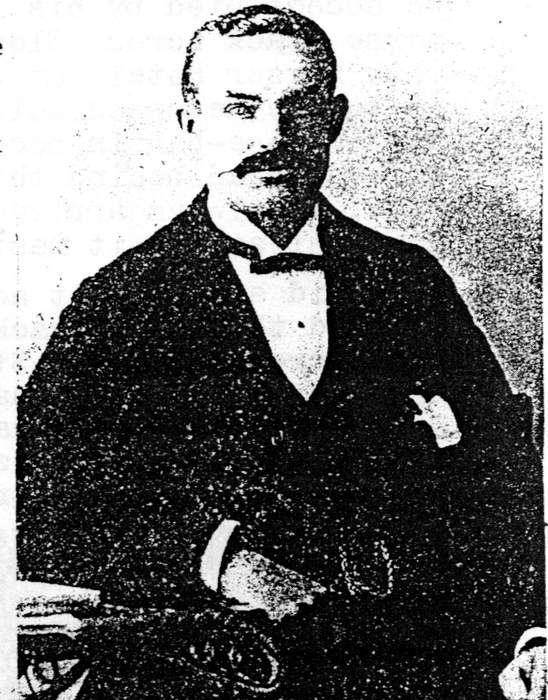 Thomas H. Sloane, by 1900, was a builder in Rotorua, by 1909 a member of Chamber of Commerce. He became a land agent, also bought up property. 1920, he owned what became in 1960s, the southern Tihiotonga Subdivision. Mr. Jack D. Davys first owned this. He came to Rotorua 1916 to join the Law firm of M. Hampson when the population of Rotorua was about 5,700.
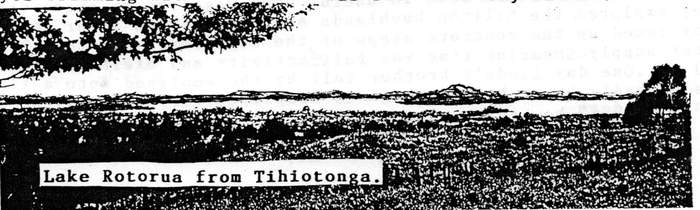
Mr. Sloane, after buying this land on the heights just above the Hemo Gorge road, extended this by leasing the land about down to Sophia St. which includes present Wairiki College & Recreational property. His 2 daughters inherited all this, but when the lease ran out, they subdivided their own free-hold southern heights. Gwen & her husband Des O’Flaherty built their family home, the first above Hemo Gorge, with a spectacular view of lake.
|
‘Farmers’ Forerunner’ (Bill Scott) Ill fared the land, to hastening ills a prey, Now visions green of grassland greet the eye, |
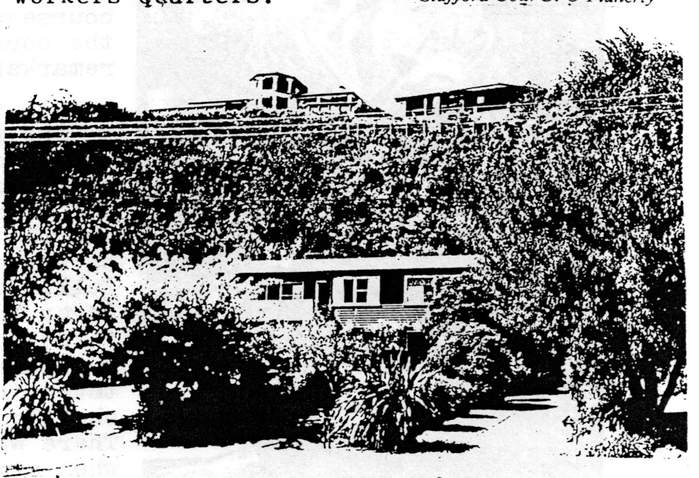
Figure Tihiotonga subdivision on southern heights, 1960s. This Tihiotonga suburb is sought after, making a fine backdrop for the town. Tihi — South Ridge. At the far end there is an entry to a long dirt road across paddocks to a manager’s house which over-looks the great expanse of hilly grasslands of the Ngati Whakaue Tribal Lands Incorporated. From the house another long drive leads to the main entrance at the top of Otonga Rd., passing stock yards, dwellings & workers’ quarters. 1922, Maori Land Tribal matters were settled with the Crown through negotiation with Te Arawa District Trust Board. 1929, Ngati Whakaue (Arawa) sub-tribes owned 34 different blocks, including Tihiotonga. They agreed to incorporation under one title. Bill Scott became Supervisor for managing the Wairiki Land Development at the request of Sir Apirana Ngata, Minister for Maori Affairs. This scheme covered Tihiotonga, Hora Hora with the Peka and Kapene Blocks, Ngakura, etc. |
|---|
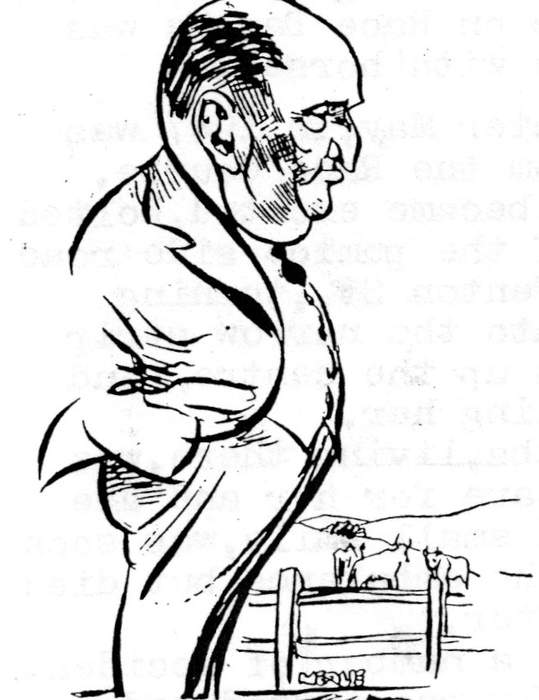
1955, Maori Affairs no longer had control as the Court ruled that the Tihi-O-Tonga Block was awarded to the full Ngati Whakaue hapu of the 800 owners. It was Raniera Kingi who worked so hard for the Court ruling. Under good management this has proved profitable to the owners.
Three Rotorua blocks of Ngati Whakaue land link: 1. Tihi-O-Tonga Block, 2. Wharenui (Owata area), 3. Ngongotaha Block, from Fairy Springs up above Valley Rd. and on to Mamaku.
Tihi-O-Tonga Station — Managers and the Flood Family
 Managers of Station. 1912, W.T. Scott (Bill), while in charge of development, lived at Troutbeck’s Malfroy Rd. home, as Mr. Troutbeck moved to Galatea Station. Bill Scott managed Pomare Block, a sub-tribe of Arawas — leased.
1918–28, Mort Jolly took over from Scott, living Malfroy Rd., then went to take over Galatea from Scott on Troutbeck’s Station.
1929, Charlie Doggett took over this lease land, living in Malfroy Rd., until these lands came under one Ngati Whakaue Tribal Incorporation. Managers now lived up on the heights at the top of Otonga Rd. round 1950s.
Mark Flood, manager round late 1940s–1950s, lived up on these heights. His daughter Linda, a mother to 4 chn. and a Community Care helper, has wonderful memories of life on the Station despite the loss of her mother. Her 4 brothers and 2 sisters were lively company. Her father was caring and proud of his family. He had a little Maori in him — he was related to old Hira Tapsel who was the teamster for the property back in Bill Scott’s days. He enjoyed his family but was strict with them and watchful of behavior. Linda laughs to remember his cure for stomach aches or unseemly burps — Epsom Salts! They soon learnt.
Managing farm hands, horses, cattle, sheep, dog teams etc. did not allow for the best of examples from himself, nevertheless they were expected to mind their language. There was a standard set in all things. The house was small, like many of that era. Linda feels things were different then, more simple. ‘We had two rooms, at night we simply curled up in bed together. During the day we did whatever jobs were expected of us. We were mainly self sufficient, vegetables, meat, firewood, fruit.’
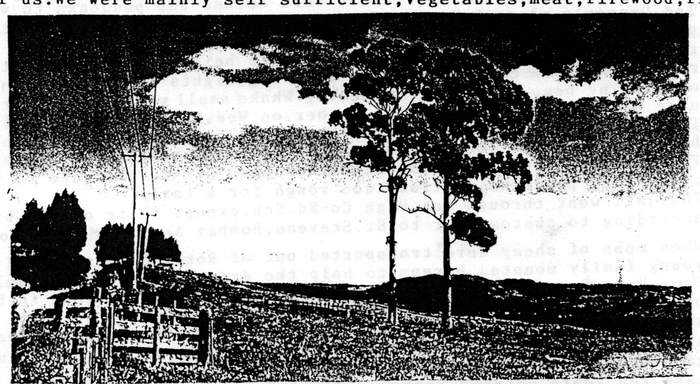
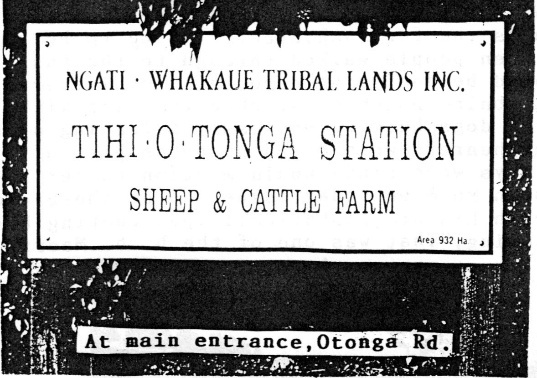
Sign, ‘Ngati Whakaue Tribal Lands Inc. — Tihi-O-Tonga Station — Sheep & Cattle Farm’, Area 932 Ha, at main entrance, Otonga Rd.
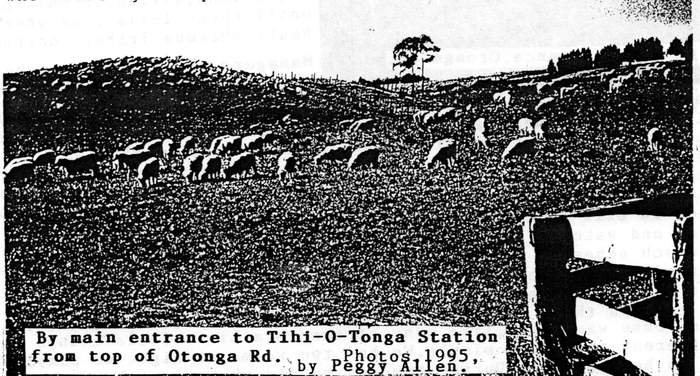 All Marks children enjoyed the freedom of wide open spaces, never at a loss for something to do. Riding horses gave them immense pleasure. Their skill in riding came in useful when required as extra drovers. They explored the hilltop bushlands and the Utahina river down below. They raced up the concrete steps of the huge reservoir for the town’s water supply. Shearing time was full of activity and excitement, racing and outs. One day Linda’s brother fell by the woolshed into a fire and was so badly burnt he had to go to hospital, leaving him with scars. Linda wonders why they did not have more accidents.
 The Station carried a lot of beef cattle, very often spread out over the huge paddocks back towards the far bush. Steers tended to be very curious & often excitable when people walked through to the bush. At times their bellowing could be deafening, especially at mustering. There was always such a hullabaloo going on at shearing time with men whistling and shouting at dogs, barking endlessly & leaping about.
The mobs of sheep were huge. Shearers were given sheep as part of their pay packet. In later days, when Linda would mention to her retired father that she had seen so & so today, maybe one of these old shearers, her dad would stretch his arm, emphatically punctuating his words with gesture while stating, ‘That was one of the b..b..Maoris who stole my sheep!’
Whaka Sch. was nearest. They would walk across the paddocks to where Ted Dansey’s place had a wonderful orchard to raid. This was at the present site of Waiariki Polytechnic. The road then took them past the long thermal area on both sides with boiling mud, water & steam to reach the Whaka Sch. Wednesdays were highlights for them as, instead of walking home, they went to nearby Whaka, a small village with its popular Geyser Hotel, where their father, on Wed. Pay Days, met his friends. They had great fun. Then their father would appear, beaming, with a big bag of sweets and looking so nice in his neat coat, and order a taxi. Their high spirits diminished when dropped off at the gate to walk across long paddocks, as the track was too rough for a taxi.
They all went through Rotorua High Co-Ed. Sch. except their eldest brother, who, according to custom, went to St. Stevens, Bombay, Auckland, then Massey College.
When mobs of sheep were transported out of Rotorua by rail, all the young family mounted horses to help the drovers through the thermal area. From Hemo Gorge to Whaka, at least one sheep was usually lost in hot mud or pools hidden by ti-tree or scrub. They would wander or panic from shouting or the loud barking of dogs. They went via Fenton St. to the railway yards.
At 70 yrs. Mark Flood fell from his horse breaking a leg and it never set well, turned gangrene, and was amputated. He died in 1976. He lived with Linda in his last few years, using 2 crutches. If Linda offered to assist him at times he would be determinedly independent: ‘I can b…well do it!’ Linda, recalling this, looked wistfully into the mirror of the past, her eyes brimming with tears. ‘He was such a lovely father.’