
In this part:
- Ken Heaton — Auto-Electrical Business, Old Taupo Road
- Ken Welch and the Griffiths Family — Arawa House
- The Beckett Family — Rotorua Fire Brigade
- The Beckett Family, 1916
- Early Families Near Glenholme School
- Southern Outlet Land — Hemo Gorge and Tihi-Otonga; The Willmotts
- Willmotts
- The Tarawera Eruption, 1886 — The Willmotts' Relief Effort
Ken Heaton — Auto-Electrical Business, Old Taupo Road
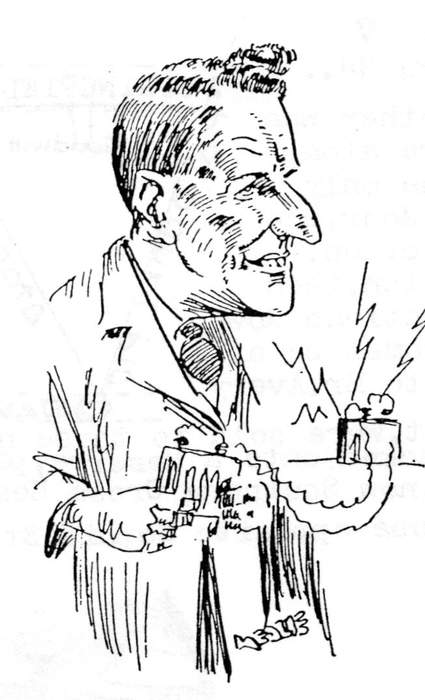 Ken Heaton, born 1906, came to Rotorua 1936, living from 1943 on Old Taupo Rd. opposite the foot of the Golf Course in the first home built in that block on west side of the road, belonging to land owner Mr. Goodwin. Ken was brought up on a Hawks Bay farm, Hastings. As he felt there was little money in farming and he had aspirations to get his own business, he worked for two Hastings firms. He felt his two bosses did not have the right angle in their dealings, Ken himself feeling that Customer Relationship was all important. He proved this most successfully in Rotorua when he established his Auto-Electrical Business, a trade hardly known then till 20 years on when by then he had trained others. By then families were getting cars. Ken is now a highly respected identity of Rotorua, a fine old gentleman who sadly lost his wife this year. However, he is proud of his son who carries on the ‘Heaton’ business maintaining a fine reputation. He always enjoys meeting old customers and sharing friendship. He recently moved to Glenbrae Home Units. He sold his old home (1st. Goodwin’s) to Ian McKenzie, Vet. Surgeon who is renovating it.
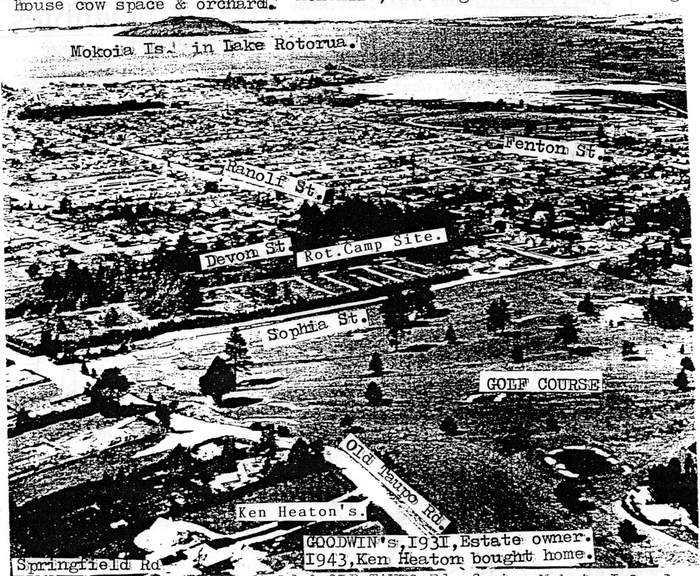 An aerial view from the corner of Springfield & Old Taupo Rds. facing Mokoia Island, with Mokoia Is. in Lake Rotorua, Ranolf St., Fenton St., Devon St., the Municipal Camp Site, Sophia St., the Golf Course, Old Taupo Rd. and Ken Heaton’s / Goodwin’s (1931 estate owner, 1943 Ken Heaton bought home) labelled.
Ken Welch and the Griffiths Family — Arawa House
Mr. Ken Welch, accountant, married Gwen Griffiths, building a home at corner of Springfield & Old Taupo Rds. on Goodwins Estate, in 1950s. Ken was from the Waikato, Gwen, one of Rotorua’s earliest identities. This big section was later subdivided into 3 along Springfield Rd., and they rebuilt on one, selling big home to Dr. Tyler.
 Gwen recalls 56 yrs. of happiness with her fine husband Ken, and three children, two girls and one boy. Ken died six years ago.
Ken was the founder accountant of the firm – Welch Nairn & Fisher. This firm, now just Nairn & Fisher moved recently into fine new bldgs. 112 Arawa St. besides the new solicitor bldgs., East & Brewster on cnr. Arawa & Amohia Sts. These are on the well known landmark property of a fine old bldg., ‘Arawa House’, reaching Haupapa St. & set in park-like grounds. Gwen grew up in Arawa House with her wonderful parents. As a friend of hers once said, “Gwen, you have the life of a princess”. As this was her parents Private Board-House, there was always company and entertainment with a tennis court, a big living room for dances, spacious grounds to enjoy.
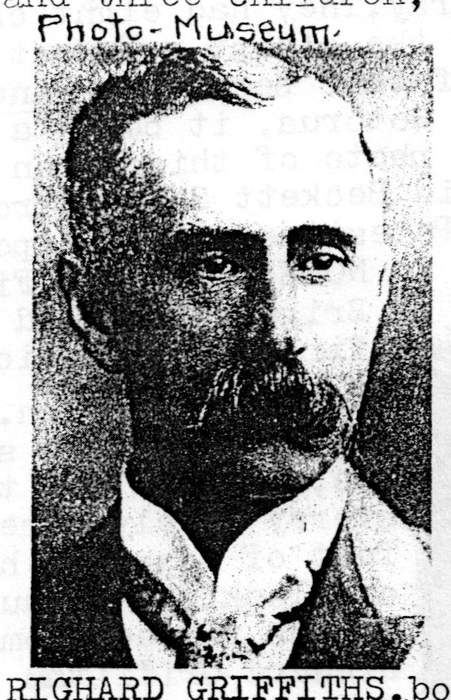
Richard Griffiths, her father, in retirement took great pride tending these grounds between visits to the Court House as J.P. He died 1947 at 90 yrs.
 Richard Griffiths, born 1856, came to N.Z. at 19 yrs. to farm with his parents at Te Puke 1876–1880s, came to manage Wriggley’s new store at Ohinemutu 1884, in 1886 owned his own store there very successfully, visited U.S.A. 1890–1897, returning to Rotorua to open coal & firewood yards in Hinemoa St. opposite Robertson’s stables before moving to Fenton St. operating a general contractor & carrier business. Richard had always been popular in the community, being a keen sportsman and very interested in the cultural life of Rotorua, being elected to committee such as Rotorua Public Library & Reading Room, which was founded 1889. As an Anglican, he had worshipped at St. Faiths, Ohinemutu, which opened 1885 but in 1889 he became the first ‘People’s Warden’ of the original St. Luke’s in Haupapa St..
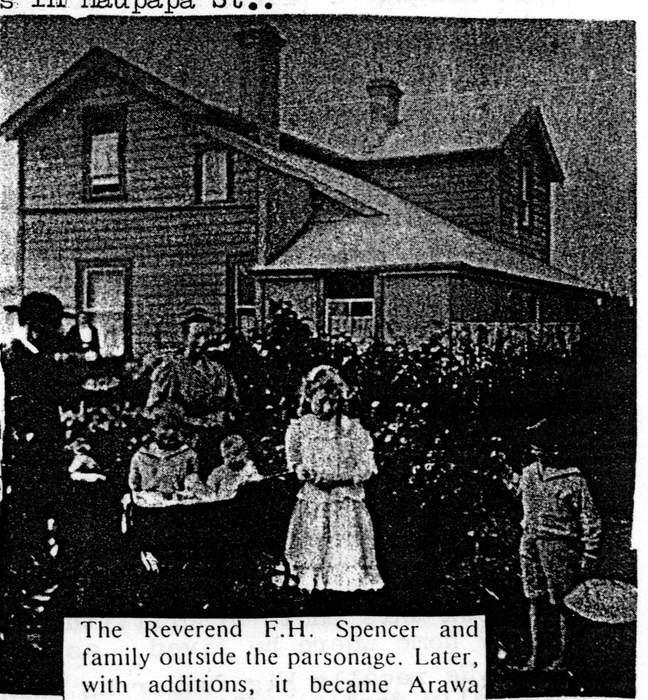
At 50 years of age, Richard returned to England to court his bride-to-be, having previously met her and her parents. Their first home, two storeyed, overlooked Kuirau Park and called ‘Highfields’ but later they took over ‘Arawa House’ from his brother who originally bought it from Rev. Frederick Spencer, son of Rev. S. M. Spencer the missionary. It was the Parsonage for Rev F. Spencer in 1889 when the Parish of Rotorua was established. In 1895 when he resigned it was sold to David Griffiths who later sold to Richard whose wife adored it. They up-graded it, making it attractive for tourists. When Richard died in 1947, the Waikato Hospital Bd. bought it for a Nurses Training Sch. but in early 1990s it was dismantled, property sold.
The Beckett Family — Rotorua Fire Brigade
David Beckett Sen. & family, 1914, came to Rotorua, living first in town, then near corner of Malfroy and Old Taupo Rds. 1928–1930s before moving to Ranolf St. during early 1940s in first house next to Devon St. shops and next door to the Phipps family. At 6 years of age he had arrived in N.Z. at Wellington, from London. When he married they went farming in Taranaki, later moving to Hamilton where he was employed delivering furniture by horse and dray. They had eight children when they settled in Rotorua 1914, George the eldest, Ernest six months old. When Ernest was 2½ years old, his father became permanent driver for the first motorised fire engine, Rotorua, it being a converted service-car with solid rubber tyres. A photo of this taken at the end of W.W.I celebrations 1918, shows David Beckett Sen. as proud driver with ribbons naming war zones, Egypt, Palestine and Gallipoli.
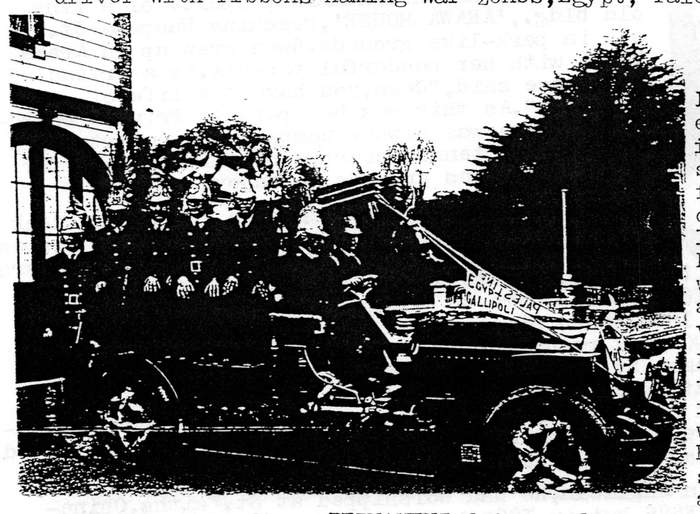 Note: 1915, the Fire Brigade received its first motor vehicle.
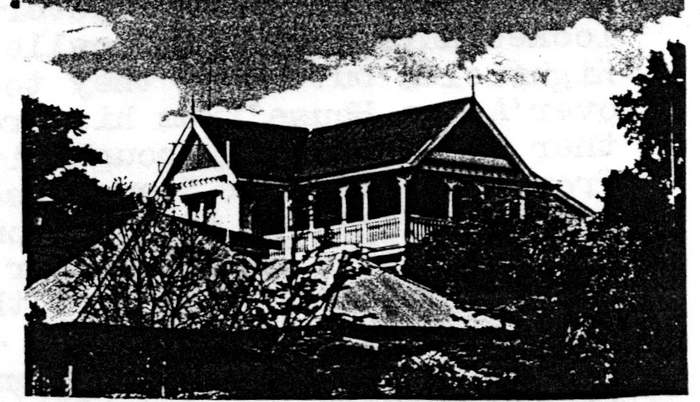 David Beckett Sen., now employed in fire service, moved into a two storey lovely home at foot of hospital hill overlooking Kuirau Park. It was rented from Mr. Richard Griffiths who was on the 1905 original reformed first real volunteer Fire Brigade Committee. Dave Beckett became the maintainance man for the King George V war hospital, Pukeroa Hill where wounded soldiers were known as ‘The Boys in Blue’ if seen in town. (W.W.I) Arthur Beckett W.W.2, a son, wounded, recuperated Rotorua hospital after returning to N.Z. on a Hospital Ship from Italy. George, during W.W.I. had his 19th. birthday in France – Machine Gunner. Arthur was also a Machine Gunner so George gave him his W.W.I badges.
Arthur Beckett is now 81 years of age. Louise Beckett at 16 years was waitressing at the old Govt. Gardens Teahouse. Now at 89 years of age, Louise attended on 12-12-1993, the re-opening ceremony for Rotorua’s historic Te Runanga Teahouse, 90 years after it opened 12-12-1903.
Ernest Beckett, now 79 years, also attended the opening of the Te Runanga Teahouse, where his cleverly turned Kauri wood clock, recently completed by himself, was presented. He lives in 58 Devon St. and helpfully enjoys recalling the past now that he is retired from his dry-cleaning business of Pukuatua St.. Ernie recently took this photo of Griffiths’s lovely home where he lived as a child. He recalls his father as being a capable intelligent man, especially dealing with anything to do with wheels.
The Beckett Family, 1916
BECKETT FAMILY, 1916, Rotorua. (Photo 1916.)
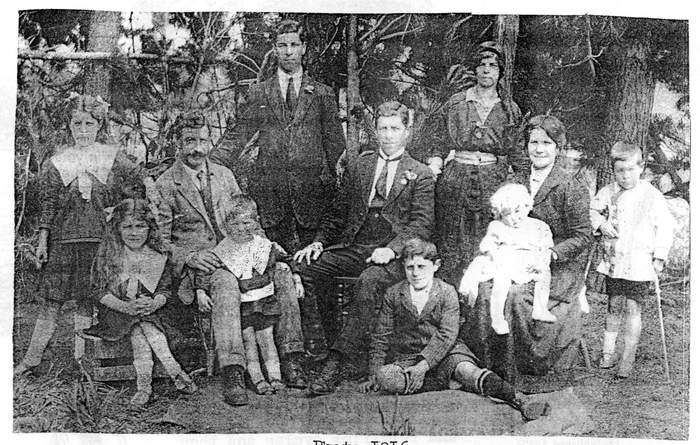 1914, Mr. & Mrs. David Beckett settled in Rotorua with eight children, living for many years in Malfroy Rd., Ranolf/Devon St. cnr. and town. They were well known for their active interest in community affairs.
1993, the three surviving children are:
1. Louise, left of photo, now 89.
2. Arthur, standing between his father’s knees, 81.
3. Baby Ernest, 79 yrs.
Transport vehicles influenced the careers of the Beckett men as well as pleasure activities. David Sen. was involved earlier with horse-power as well as bullock power before motorised trucks and taxis. His sons watched him working Jack Short’s bullock team as they hauled logs into position for the first low wooden bridge at Malfroy Rd. to cross the Utahina River to Harry and George Fords’ farms before 1920. His sons shared this ability and involvement in anything with wheels from passenger motor vehicles, motor bicycles and pedal push bicycles.
GEORGE BECKETT, eldest son, began his motor career with Rotorua Motor Coaching Company. Horse drawn coaches were still mainly used to the coast and Taupo up to 1917 because of the state of the roads, cars only when roads were suitable.
1916, before George was 18 yrs. to be able to go as Machine Gunner to W.W.I, he was selected to be driver for a secret police mission. He chose from R.M.C. Comp. a Cadillac and drove through Murupara, Te Whaiti, onto Ruatahuna to arrest the prophet Rua Kenana at Maungapohaku, but Rua refused the warrant so they returned. (The police later returned with Fred Goodson’s horse drawn vehicles for an assault.)
George began operating his own car service in opposition to R.M.C.C. as did also Ponto Painton and Sam Sewell, his car being a 1914 Cadillac. In 1923, George and David Jnr. strongly supported the inauguration of a Motor Cycling Association. In 1928, the Beckett brothers, with the other club members had the honour of escorting from the outskirts of Rotorua into town, Sir Kingsford Smith on a sight-seeing tour by car, after his famous trans-Tasman flight, Australia to N.Z. Beckett Bros., George & David, had a cycle & motor-cycle business.
|
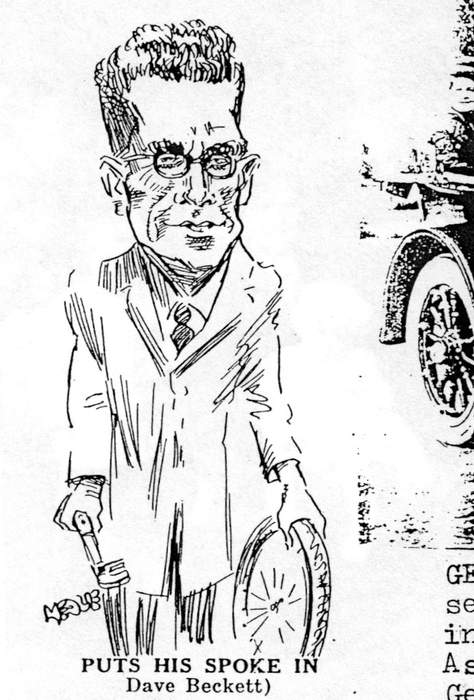
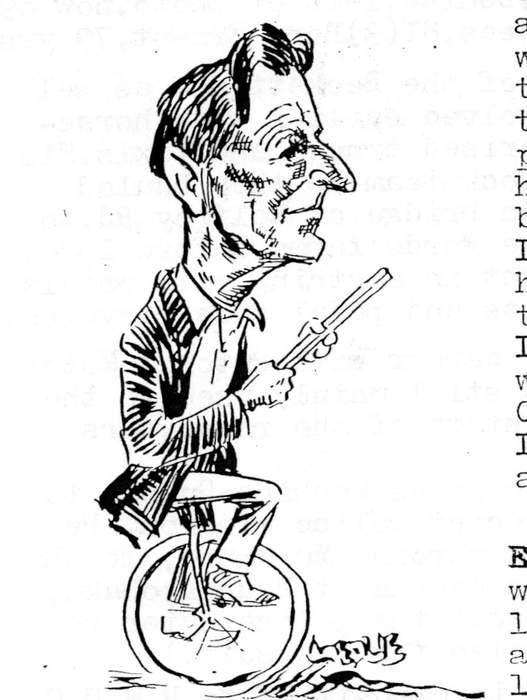
‘Puts His Spoke In’ (Dave Beckett); ‘Rider of the Turtle Age’; |
George Beckett’s 1914 Cadillac passenger service car |
|---|
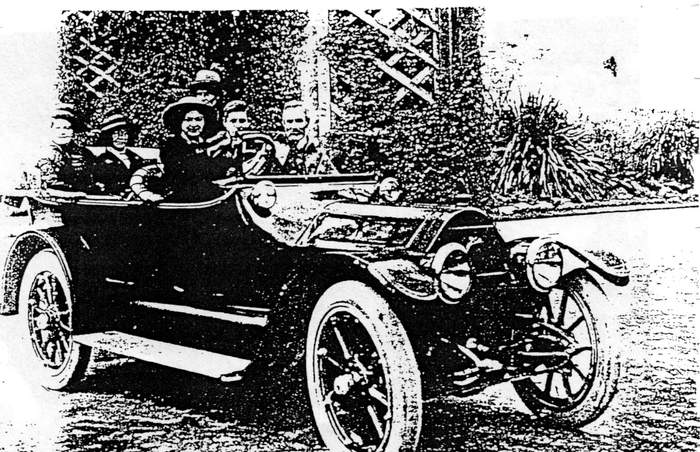
GEORGE BECKETT in his 1914 Cadillac passenger service car, seated between his wife Mabel, driving, and her father Mr. Smith of Rotorua. As well as his passenger work, George worked for many years with his brother Dave selling and repairing cycles and then motor cycles also.
DAVE BECKETT, 1917, established his cycle business known as ‘The Byko Shop’. As this was the most common mode of transport about the town in those days he was very well patronised and his friendly help appreciated especially by so many children. In 1954 he was recognized as having the BSA Agency longer than any other dealer in N.Z. 1928, Dave convened a meeting which formed the Rotorua Motor Cycle Club. 1984, David Beckett Jnr. died after 62 years in business.
ADOLPH. Ernie Adolph, Cycle Business, was also well known. Adolphs lived Fenton/Seddon St. cnr. and erected a ‘Byke Shop’ but later transferred to a large place in town. Rotorua Motor Cycle Club declined during the depression years but 1936 it reformed. Ernie Adolph — President. Dave Beckett — Secretary. Harold Adolph — Treasurer. Note: Mrs. Doris Snow is sister of the Adolphs.
Advertisement, ‘Dave Beckett’ (Established 1917): B.S.A., Humber and Raleigh Cycles. Boat Motors — All h.p.’s.
|
Advertisement, ‘E. C. Adolph, Fenton Street’ (Phone 129, P.O. Box 256): Rudge, New Hudson, Hercules and Leader Racing Cycles — ‘When you get a good thing, remember where you got it.’ Rotorua’s oldest established cycle firm. |
“‘Addy’ (Harold Adolph)”: I’m knitting a singlet for Cecil, |
|---|
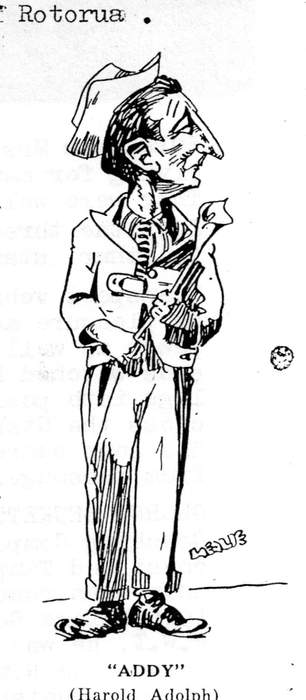 Verse accompanying the cartoon
 Early Families Near Glenholme School
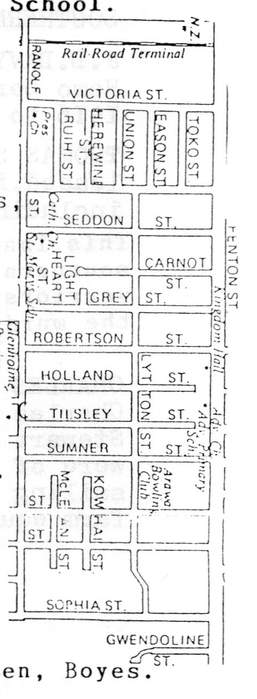
Some of the early families in streets near Glenholme School.
Map of streets near Glenholme School (Ranolf, Victoria, Seddon, Carnot, Robertson, Holland, Tilsley, Sumner, Lytton, Sophia and Gwendoline Streets, and the Rail Road Terminal
Seddon St: Greenheads (Bakery), Parlanes, Roach (Maori Land Court), Ludgates, Quinlands, Munro, cnr. Lytton St., McLean on opp. cnr. — daughter Stella. Then another McLean, Town Clerk but not related, Robertson, County Council Engineer, Carruthers, Harwards, Roper.
Grey St: Haggarts, Watts, Mansons, Worrels, Dawsons.
Carnot St: Carter, McGinley, Lee, Langguth, Holland-Judge, Ridings, Campney, Evans, Wright, McKenzie, Davis, Goodsons.
Robertson St: LeBeau, Normans, (swampy land).
Holland St: O’Connor (Charles) — St. flooded.
Tilsley St. Sumner St.
Lytton St: McDowells, Dr. Duncan, Mrs Crocker — daughter of nearby Munros of Rot. 1895. Mitchells.
Devon St., East of Ranolf St.: de Lacy Smiths, Capt. Knowles.
Sophia St: Urquhart, Herd, Leslie, Allen, Goudie, Hadley. St. Chads, built by Carter & Holland, 1920s.
Early 1900s. The land below Devon St. was mainly unoccupied, also land west of Ranolf St. due to swamps. What houses there were, were generally on Pukuatua & Pererika Sts. with large areas of land attached. Along Fenton St., Malfroy Rd. & Old Taupo Rd. were scattered houses where there was dairying or market gardening.
Gwendoline St: Smith family.
Devon St., West off Ranolf St., In Camp Ground area: Hayden, Boyes.
Opp. Camp & from Old Taupo Rd: Godlied, Hamilton, Geary, Groome, Young, Kingsland, Allens, Gainsfords, Russels.
Wylie St: Smiths — Dudley Smith remembers nearby people L….e Rathall (name partly illegible in original), Kooney, Cobbledicks, and further down, McHale, O’Connor, Inskeeps. Urquharts, at Sophia St., & Bertrams at Glenholme, could signal each other.
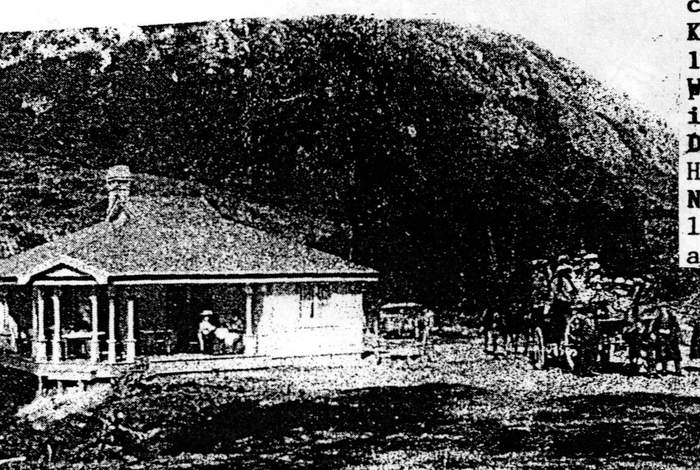 1914, Dudley Smith’s parents came to Rotorua. Dudley born King St. Hospital after WW1. 1931, Smiths bought the Te Wairoa Buried Village Tourist Centre from Cecil Way & Dudley was there for round 55 yrs. He died 1994 so his wife, Nora, now owner, has her family managing the tearooms etc. and ‘Dudley Smith Museum.’
 Neville Hopkins, in WW2, was electrical engineering instructor in Christchurch, meeting Rotorua’s Ray Spence, a trainee. After the war, Neville joined the staff of ‘Spences Appliances’, staying till retirement. His wife Margaret, was a renowned gardener, once on Ian Scarrow’s T.V. Programme for ‘A Collector of Unusual Plants.’ Their home was first of two near cnr. Otonga & Springfield Rds. in isolated country days. The store came later in 1950s, run by Hawkin family. Mrs Bond, opposite cnr., controlled the Council’s noisy water pump outside her place where also stood a row of letter boxes as roads too rough for postman’s bike. Mrs Carswell daily crossed the road by Hopkins with 2 buckets going to milk Dr. Hetherington’s cows on rise above Springfield Golf Course. On her way back she filled Hopkins’s milk billy for a few pence. Up at top of Otonga Rd. were Maori hill paddocks — Ngati Whakaue Estate.
Southern Outlet Land — Hemo Gorge and Tihi-Otonga; The Willmotts
Southern outlet land, towards the Hemo Gorge and Tihi-Otonga.
J.D. Davys first owned the land from the Maoris just above the Hemo Gorge, now Tihi-Otonga subdivision. He came to Rotorua in 1916 to join the law firm of Martin Hampson.
Thomas Sloane, in 1924, bought this land from J.D. Davys. He also leased, for a time, land beneath, probably as far as Sophia St. and including present day Wairiki College and Recreational Area.
This land up above the Hemo Gorge had Maori track routes leading to southern tribes as at Taupo. In 1870 it was used by Te Kooti and his warriors when fleeing from Gilbert Mair’s Arawa warriors who chased the murdering Peka Makarini to Tumunui Mt. before shooting him.
Willmotts
Charles Willmott, 1824–1902, with his wife Agnes and also his son Charles Willmott, 1865–1951, emigrated to N.Z. with the Vesey Stewart Settlement, taking up 150 acres of land in Te Puke. They were of a good established English family and brought on the sailing ship everything they would require to set up house and farm equipment, for breaking in new land with horses, in 1883.
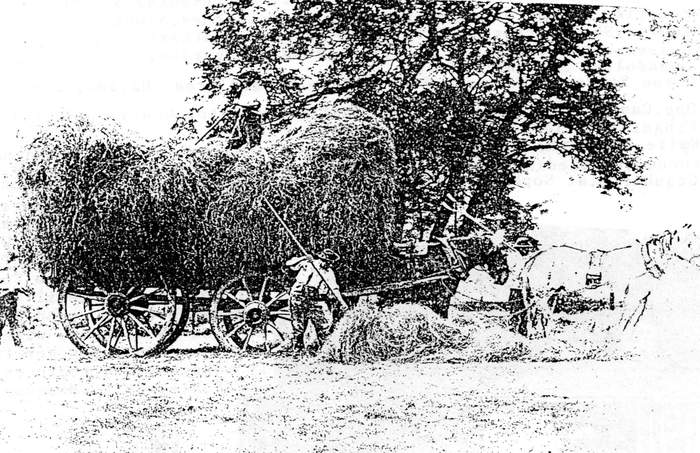
Willmotts hay-making, Te Puke.
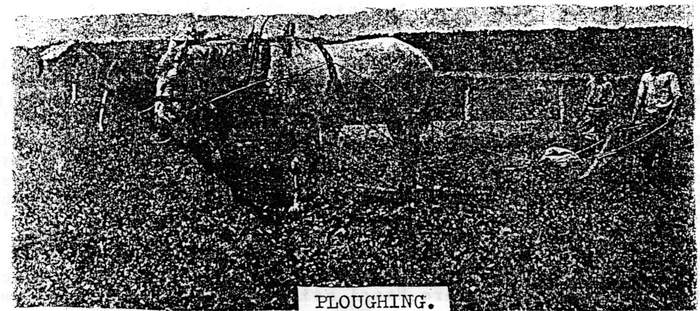
ploughing.
The Tarawera Eruption, 1886 — The Willmotts’ Relief Effort
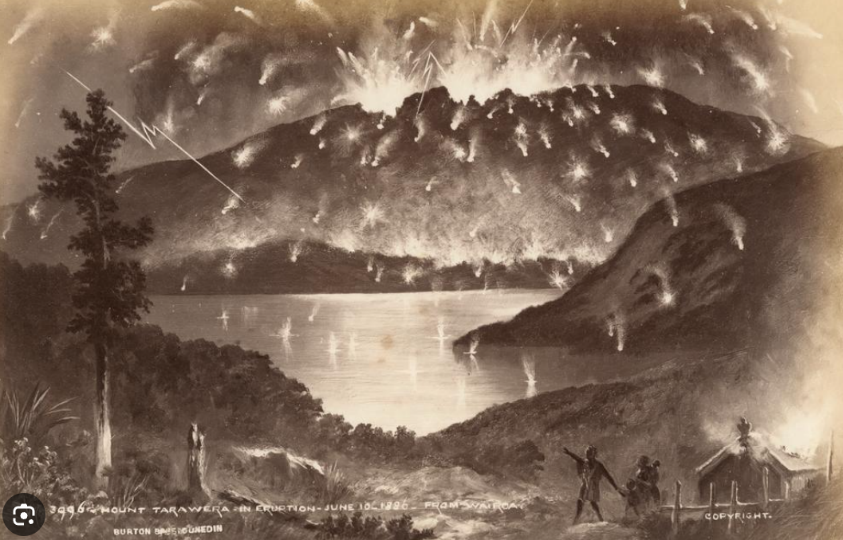
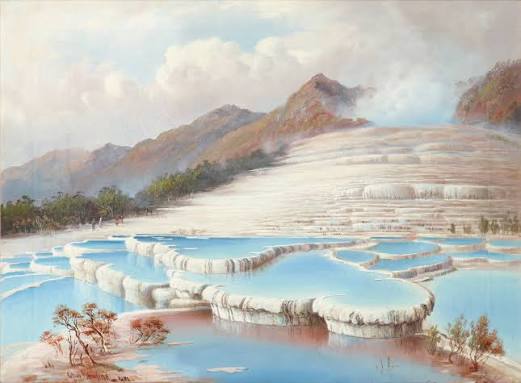
Mt. Tarawera eruption destroyed the Pink & White Terraces in 1886. Over 100 people were killed.
 Charles (Chas.) Willmott Jnr. settled in Rotorua in the early 1900s. He was renowned for his ability with horses and as a coach driver. His farm was by Hemo Gorge.
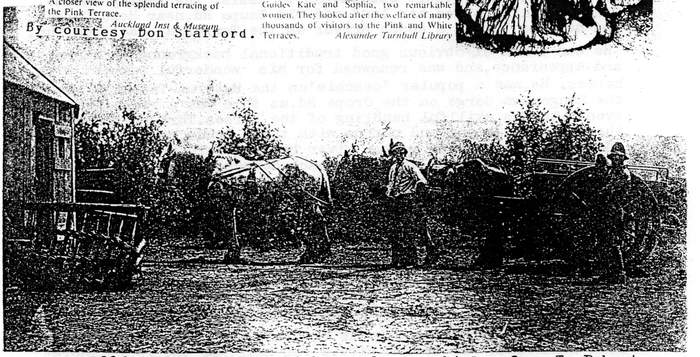
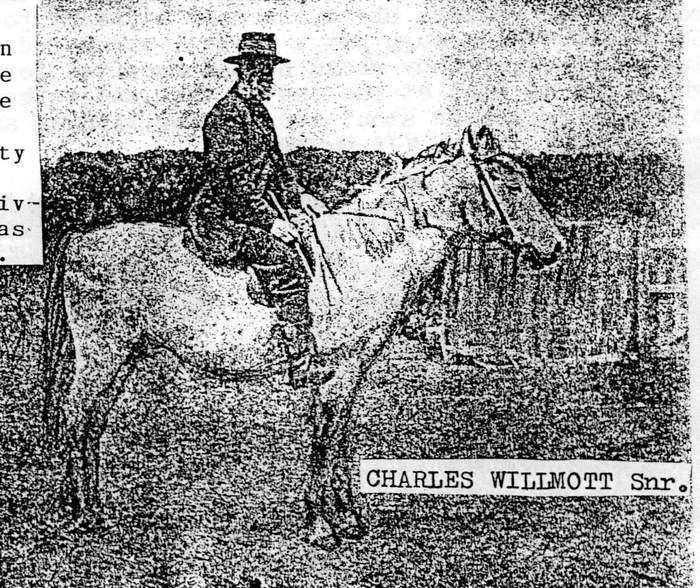
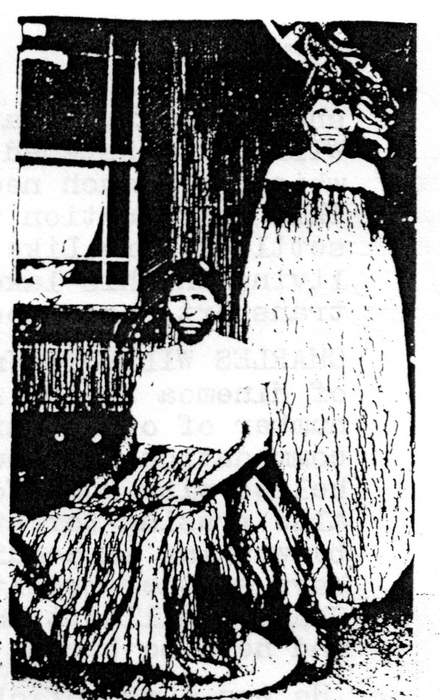
A closer view of the splendid terracing of the Pink Terrace (Auckland Inst. & Museum; by courtesy Don Stafford). Guides Kate and Sophia, two remarkable women who looked after the welfare of many thousands of visitors to the Pink and White Terraces (Alexander Turnbull Library). 1886, Willmotts brought horse drawn vehicles from Te Puke to Rotorua to assist displaced victims of the Tarawera eruption. Charles Willmott Snr., on horseback.
With the Tarawera eruption, there were great deeds of bravery shown by many in attempts to help victims and those in distress. Willmotts hastened from Te Puke with horse drawn cartage vehicles which were much needed in the shocked Te Wairoa–Rotorua area. This introduction to the Rotorua district resulted in Willmotts settling here. Like others of that era attempting to make their living in this lake-district, tourism offered an opportunity in transport, accommodation, food production, timber and services.
Charles Willmott Jnr., born 1865, built Armidale House on corner of Hinemoa St. and Amohia St., next present-day ‘Farmers’. Like a number of other married couples, the wife mainly managed the accommodation for tourists, as did Mrs. Willmott, while the husband helped with some food products like fruit, vegetables, meat and also grazing for stock and their necessary transport horses, by working an acquired small farmlet. Often the husband would have another profitable occupation to assist the family income. Charles Willmott had his land off Old Taupo Rd. near Hemo Gorge and he also became a coach driver on the Tauranga–Rotorua run.
He was a man of obvious good traditional background in manner and appearance, and was renowned for his wonderful rapport with horses. He was a popular ‘coachie’ on the Rotorua–Tauranga run via the Mangorewa Gorge on the Oropi Rd. as this was a rough journey even with his skillful handling of the horses. Through the gorge the route was steep and narrow with tight bends, towering cliffs above with deep drops to the river below. People remembered with great admiration that time his coach horses took fright, bolting round those bends down the gorge with passengers aboard. It was said that only Charlie could have got galloping horses like that safely down.
W.W.I 1914–1918, ‘The Great War’. World War I found Charlie too old for the forces but he enlisted for a vital service and was put in charge of horse transport on board ship for Egypt. Such was his ability in handling the horses that at the end of the war he could boast that, despite the long and dangerous journey, he did not lose one horse! The army transport services and the cavalry had been well served by him.
After W.W.I. his marriage broke up — both fine people but unsuited. Both remarried. His second wife, a red-hair, was the receptionist at ‘The Bath House’ and quite a dynamic person. She would recall how the young fun loving Prince of Wales, enjoying the baths, would dive from off the rafters above the main swimming pool! In the 1918 flu epidemic, although not a nurse, she cared for the ill and dying at the emergency Whaka School Hospital for three days and nights, only to find at the end of that, and to her horror, she had completely forgotten about her pet dog, tied up and unattended.
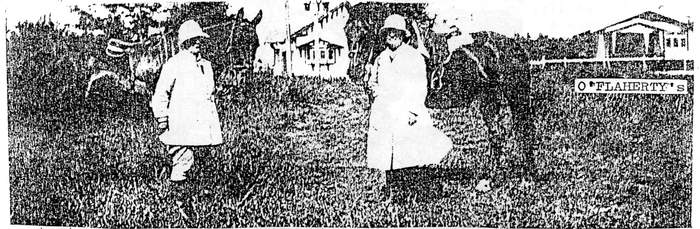
Ready for the Hunt — Mrs. Willmott & sister Smith, on ‘Glenholme’, Ranolf St.; Krough’s house between them — Scoffield & Krough, hardware merchants.
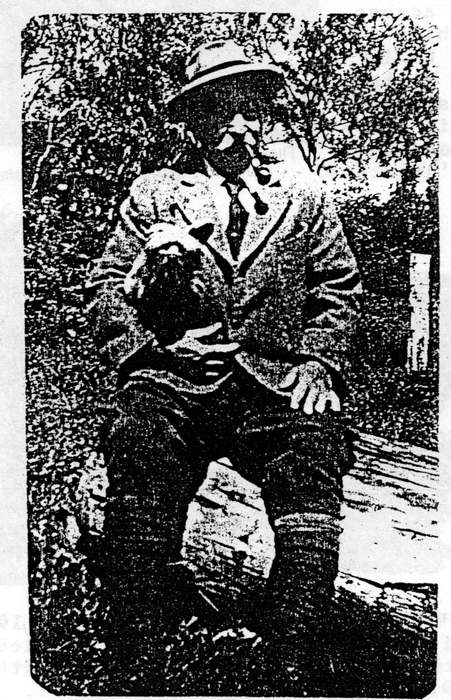
Charles Willmott was a well known identity of the area, always seen with riding horse or in his gig, with his wife. His dress was generally puttees wound from boots to riding pants, jacket, and always collar and tie. His pipe was always handy and he would be accompanied by his little pet dog ‘Topsy’. He had a well worn horse track across Sloane’s property as shortest route in line with Geyser Hotel at Whakarewarewa. On Friday nights he would go to the Returned Soldiers Assoc. in town by horse and gig. He kept a nose-bag in back of the gig to hold chaff which he hitched over head behind the horse’s ears and left it to its long wait. It always arrived safely back home, no matter how dark or how fast asleep its master may be.
To avoid a difficult access to his property via Old Taupo Road he used the Maori track leading from Ohinemutu over the southern hills, crossing Devon St. near St. Andrews, and so he himself formed the rough road which has now become Otonga Rd. Sister Smith of Rotorua Hospital shared with Mrs Willmott a great love for riding so needed grazing land for her horses. Mr. Willmott sold her 6 acres and she had stables built.
 June Hadley (nee Woollacot) was also a keen riding friend of the Willmotts. Her horse was hard mouthed and inclined to bolt, yet it behaved perfectly for Charles the day he rode it all day about the race course when acting as clerk of the course on Race Day. He was remarkable with horses.
June’s sister May, in 1947, was riding from the Race Course. Her horse became excited, bolted coming off the pumice side road out onto Fenton St., turning sharply onto the narrow strip of asphalt up the centre, and fell, killing her. Roger Kusabs, living there, was first to care for her and she gave him a small smile, was soon taken in the ambulance but died shortly after. There were a number of accidents when asphalt was introduced.
The Willmott property of 20 acres bordered Sloane’s land on Old Taupo Rd. over to Otonga Rd., including Wychwood Cres., down near to Kiwi St. His name is marked by ‘Willmott Pl.’ off Wychwood Cres., the subdivision made in 1971 by Les Hadley who bought it in 1954.
Les Hadley, now retired there, had owned the fine Wychwood Nursery, with his wife June, and Noel Pachoud who lives in Willmott Place, who managed their florist shop in town. These three had formed a partnership after W.W.2. when they bought out Mrs. George Urquhart’s Nursery, cnr. Sophia & Lytton Sts. near Fenton St., and after that they became Willmotts’ neighbours when they established the Nursery. Goudie Bros. Nursery down at Kiwi St. entrance extended down to the border of Moncur Av., an extensive area on both sides of Kiwi St. which has two huge Sequoia trees at the Otonga Rd. entrance.