
In this part:
- Ted Atkinson, W.W.2 — the Delegation to Buchenwald
- V-E Day, 1945 — Reported in the Rotorua Morning Post
- Millions celebrate end of the war.
- Ella Jane Shaw and Early Families of Victoria and Ranolf Streets
- William Wallace, 1908 — Farmer and First Rotorua Borough Councillor
- William Wallace, 1908 — Farmer and First Rotorua Borough Councillor
Ted Atkinson, W.W.2 — the Delegation to Buchenwald
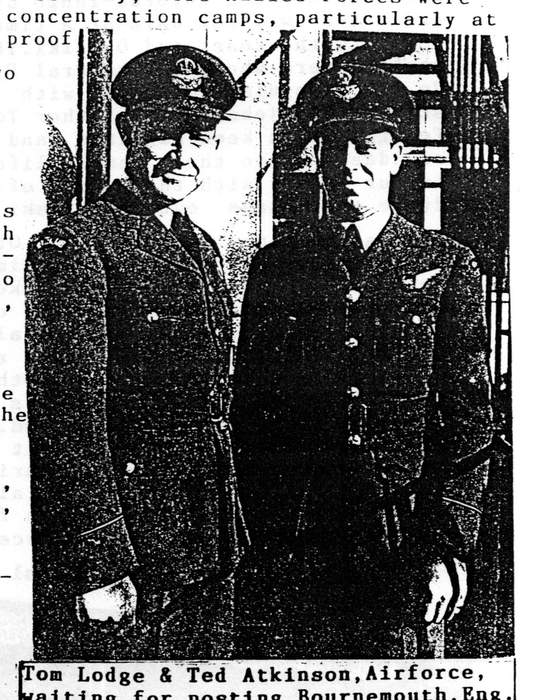
Ted Atkinson, W.W.2, was accepted for the Airforce, which meant that he had to go back to school for pre-entry training for 8 months in Canada and then 12 mths. in England for his United Kingdom Squadron No. Throughout his war service he was flying all over the various war zones as Wireless Operator, Europe, Middle East, Italy, then Burma and Pacific until the W.W.2 finished with the Japanese in the Pacific.
 General Eisenhower, Supreme Commander of the British & American Forces at the time of their victorious invasion of Europe against Germans, on 19th. April, 1945, urged the Prime Minister of Britain, Mr. Winstone Churchill to send a delegation to Germany, where Allied Forces were exposing shocking atrocities in concentration camps, particularly at Weimar, and thus have first hand proof.
A delegation of 10 were sent, two from the House of Lords, Earl Stanhope & Lord Addison, leaders, 8 from the House of Commons. Ted Atkinson was chosen by the Transport Command as one of the crew to fly the Dakotas. Ted says they left from Hendon, well north of London, flew to Brussels, stopped overnight, flew into Weimar to see if they could get in safely, then flew back to France where the Delegation had spent night, then flew back with them into Weimar, Germany, where Ted and the crew accompanied them through the horrendous sights of notorious Buchenwald Camp.
Ted has his photos at this time, some aerial, of these atrocities, which would haunt them always. This was not a Prisoner of War Camp, but where Hitler’s Nazis interned political prisoners and Jews from Germany and as the Third Reich expanded, internees from Austria, Czechosslovaka and Poland etc. where they were under a policy of steady starvation and inhuman brutality. Many had died or were killed or removed to extermination camps.
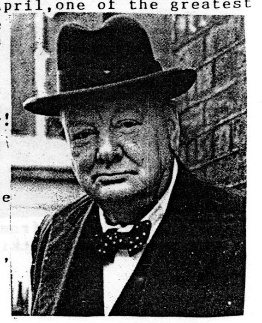 Inspection over, they had a meal with the Americans, then flew back to England. At Hendon, Lord Stanhope, the leader, said to the crew, “You boys are invited to lunch at the House of Commons.” The invitation for the lunch turned out to be 28th April, one of the greatest days in our history, V-E DAY, Victory Europe (V-E Celebration Day in N.Z. is May 9th when German unconditional surrender was signed.) While Ted & crew were in the Galary of the House of Commons, that great wartime British Prime Minister, Mr. Winstone Churchill came in and announced, “The War in Europe is over! We will adjourn to attend the Thanks-giving Service at Westminster Cathedral.”
Ted & Crew therefore left central London to return to Hendon soon after lunch, taking the incredible time till 11 o’clock that night as London went wild celebrating V-E Day!
These are Ted Atkinson’s pictures, as he says, “Taken by our navigation,” when he was sent as one of the chosen crew to fly the highly important British Parliamentary Delegation to Buchenwald Camp in Germany, just before V.E. Day, ‘To Find Out The Truth.’
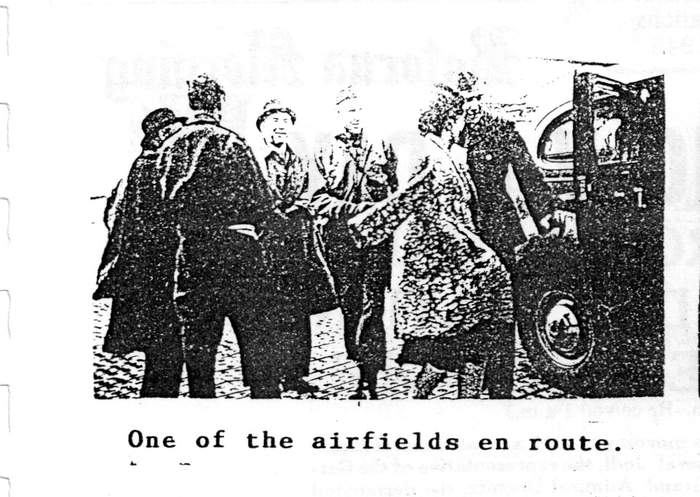
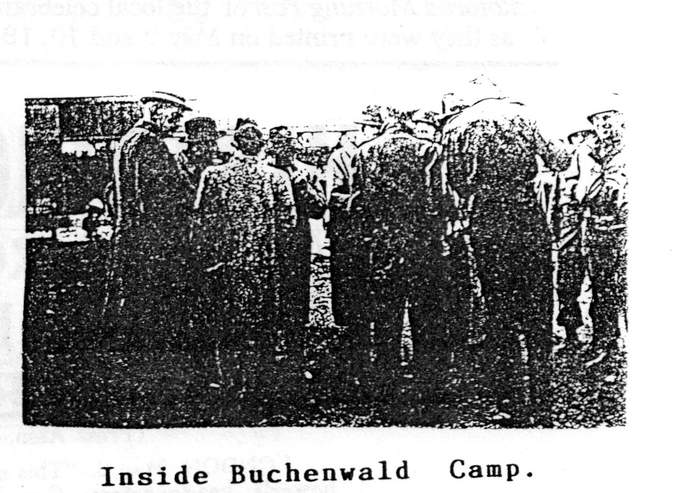
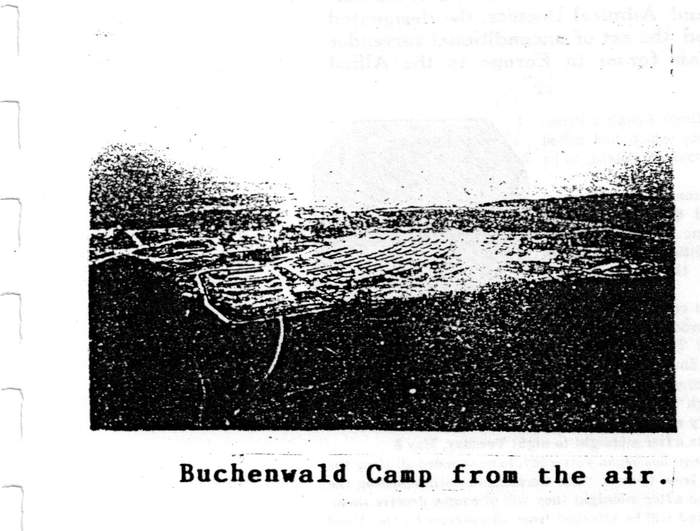
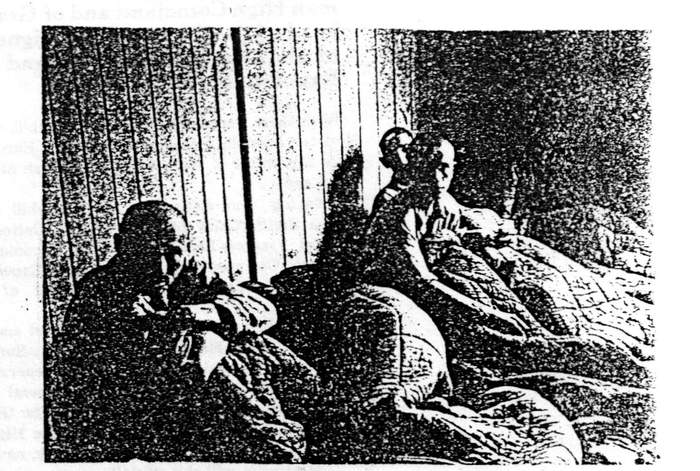
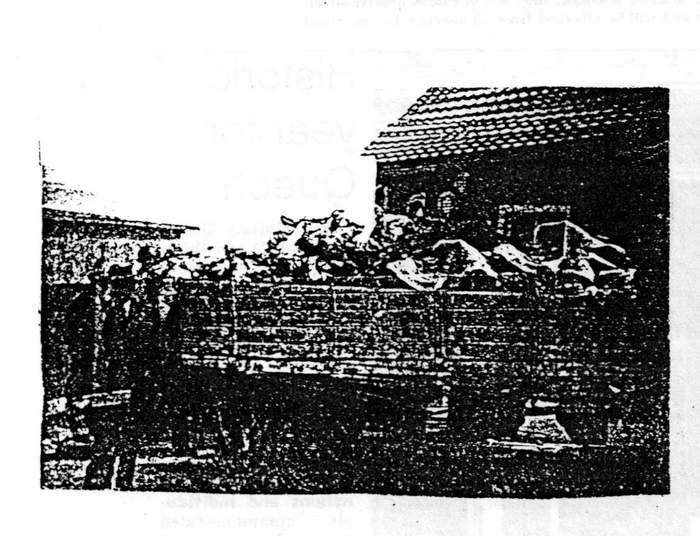
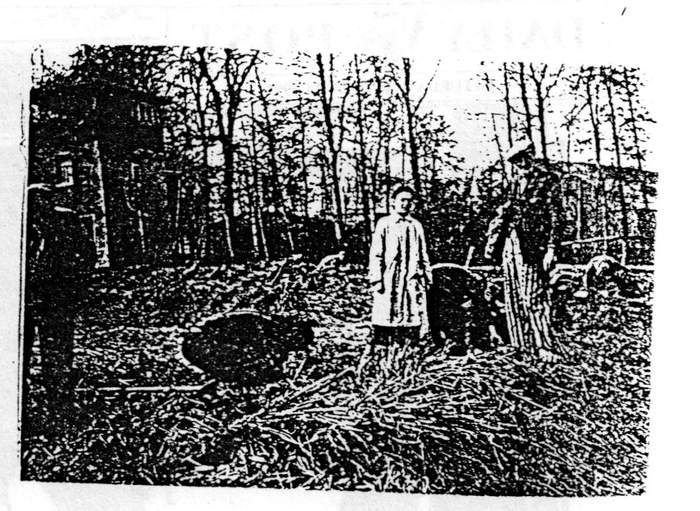
Photographs from Ted Atkinson’s navigator: one of the airfields en route; inside Buchenwald Camp; Buchenwald Camp from the air; inside one of the huts — “some people we saw were too weak to even speak or raise their arms”; a photograph, twice exposed, showing a high-sided, well-loaded truck; and people “searching remains of a potato dump” — in England, potatoes were stored in long heaps covered with straw in thick layers, similar to this.
V-E Day, 1945 — Reported in the Rotorua Morning Post
On Tuesday, a commemoration service will be held at Rotorua’s War Memorial Gates at 10.45am to mark the 50th anniversary of VE Day, the end of the Second World War in Europe. Today the Daily Post features the reports in the Rotorua Morning Post of the local celebrations as they were printed on May 9 and 10, 1945.
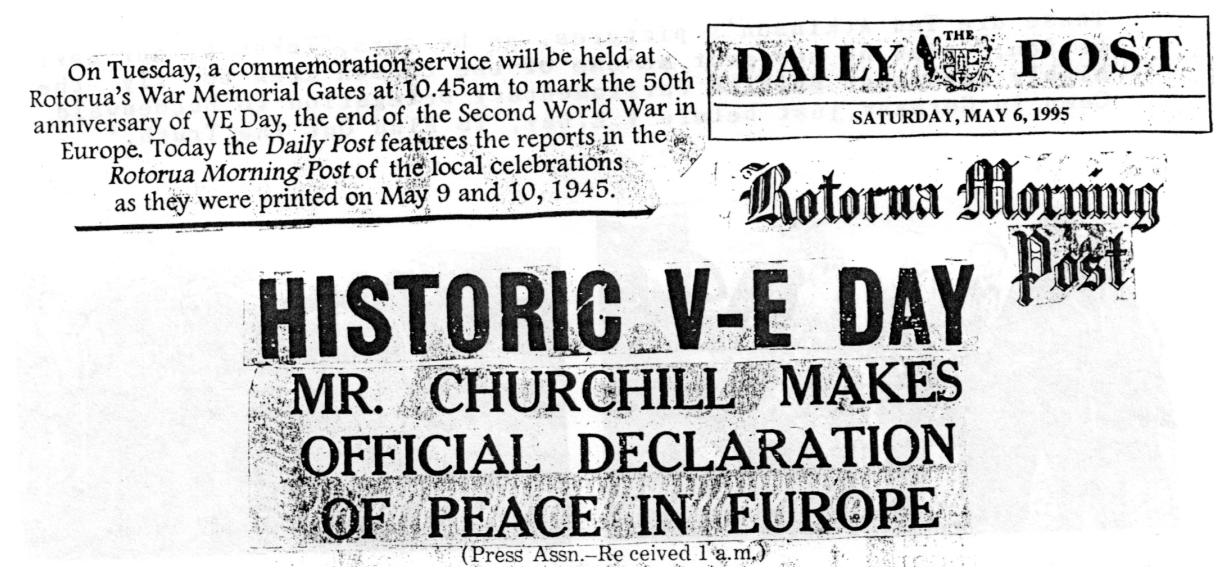
HISTORIC V-E DAY — MR. CHURCHILL MAKES OFFICIAL DECLARATION OF PEACE IN EUROPE (Press Assn. – Received 1 a.m.)
Daily Post, Saturday May 6, 1995, reprinting the Rotorua Morning Post’s ‘Historic V-E Day’ front page of May 1945; and the Daily Post, Saturday August 26, 1995, marking the Queen’s historic year, with a photograph of Queen Elizabeth II.
LONDON, May 8. — “This morning at 2.41 a.m. at General Eisenhower’s headquarters, General Jodl, the representative of the German High Command and of Grand Admiral Doenitz, the designated head of the German State, signed the act of unconditional surrender of all German land, sea and air forces in Europe to the Allied Expeditionary Force.”
With these words, Mr. Winston Churchill, Great Britain’s Prime Minister formally declared the war in Europe which had lasted since September 1, 1939, with the German attack on Poland, to be at an end.
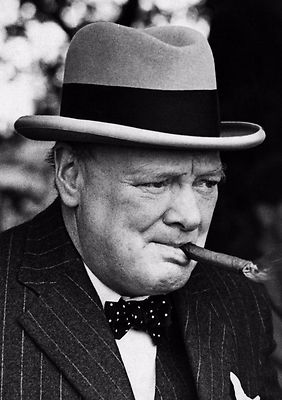 Speaking very distinctly, Mr. Churchill continued: “General Beedle Smith, Chief of Staff of the United States’ Army and General Francois Sevez, signed the document on behalf of the Supreme Commander of the Allied Expeditionary Force and General Suslapatoff signed on behalf of the Russian High Command.
“To-day this agreement will be ratified and confirmed in Berlin where Air Chief Marshal Tedder, deputy-Supreme Commander of the Allied Expeditionary Force and General Tassigny will sign on behalf of General Eisenhower. General Zhukov will sign on behalf of the Soviet High Command. The German representative will be Field-Marshal Keitel, Chief of the High Command and the commanders-in-chief of the German army, navy and air force.
“Hostilities will end officially at one minute after midnight to-night Tuesday, May 8.
“But, in the interests of saving lives the cease fire began yesterday, to be sounded all along the front and our Channel islands are also to be free to-day. The Germans are still resisting the Russian armies, but if they continue to do so after midnight they will of course deprive themselves of the protection of the laws of war and will be attacked from all quarters by the Allied troops.”
|
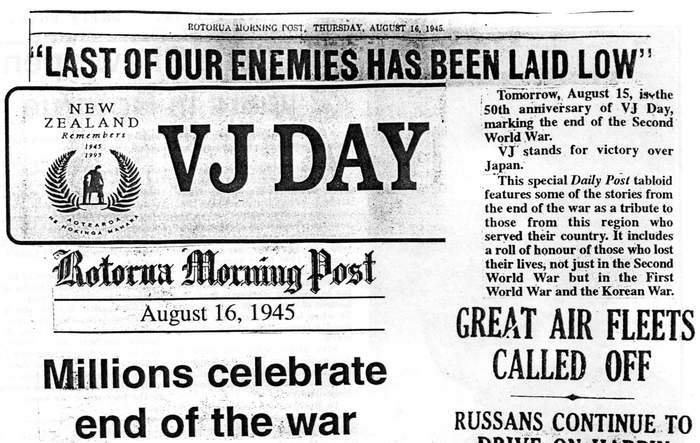
Historic year for Queen. Her Majesty Queen Elizabeth II and thousands of soldiers worldwide celebrated the 50th anniversary of the end of the Second World War this year. The Second World War ended in 1945, first in Europe in May and finally in Japan in August. All around the world nations and individuals commemorated the end the second Great War of the century. An historic year for the Queen, her engagements have included visits to Russia and South Africa. She also participated in celebrations of the 50th anniversary of the D-Day landings. |
 |
|---|
V-J Day, 1945
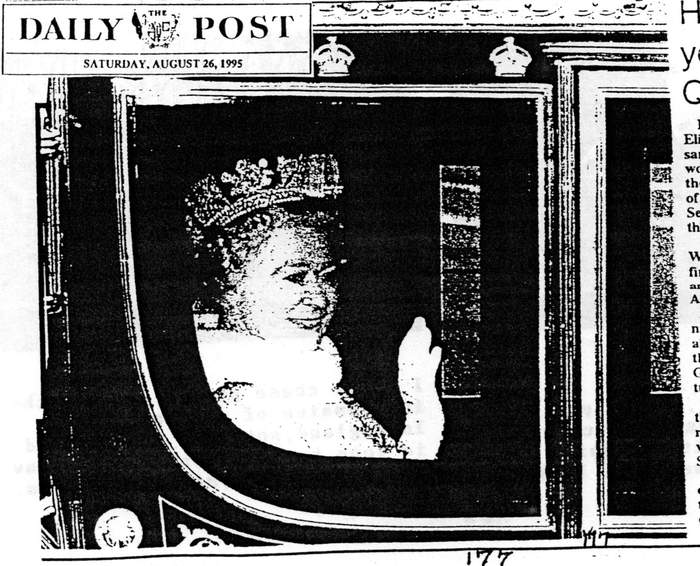
Rotorua Morning Post, Thursday, August 16, 1945 —
Tomorrow, August 15, is the 50th anniversary of VJ Day, marking the end of the Second World War. VJ stands for victory over Japan. This special Daily Post tabloid features some of the stories from the end of the war as a tribute to those from this region who served their country. It includes a roll of honour of those who lost their lives, not just in the Second World War but in the First World War and the Korean War.
Millions celebrate end of the war.
With the exception of what is euphemistically called “mopping up” the Second World War is over.
Millions of people in a world habituated to war will find the bald statement strangely difficult to evaluate. War, with its hardships, its terrors and its excitements has been for so long the background to living that the mere business of living without it is a matter for considerable readjustment.
This war has been, in every sense, a world war. As the years of travail and suffering have dragged their slow length along, few countries and few of the world’s population have escaped its effects in greater or lesser measure.
Epoch-making and terrifying discoveries have emerged from it, the age of speed has been accelerated, man’s power of destruction has intensified beyond all measure; the heights of glory have been scaled, and the furthest and uttermost depths of suffering and degradation have been plumbed. It is in his hour of trial that man discloses his best and his worst qualities and during the past six years and more the world has seen a great deal of both.
The British peoples, who have fought the war from first to last, are the only large nation among the victors, with the exception of the Chinese, who have the full perspective. For the second time within a quarter century British lives and British treasure have been spilled across the face of the earth in order that the British may continue as a people. Only now, when the first of the war clouds begin to roll back, is it possible to begin to reckon the price that the British have paid for freedom and to begin to realise that this price is only a first instalment of what may yet be required to secure the full victory. As the stresses of danger and of war are removed, the much more insidious stresses of weariness, disillusionment, irritation and distrust begin to manifest themselves. A shattered world faces gigantic problems of relief, rehabilitation and reconstruction and faces them with depleted spiritual and physical reserves. That is why, though there will be celebrations to mark the end of the war, it is unlikely that any substantial body of the people will feel that celebration need go any further than earnest thankfulness.
Ella Jane Shaw and Early Families of Victoria and Ranolf Streets
29-1-1994, Daily Post — Ella Jane Shaw spent 72 years in Rotorua.
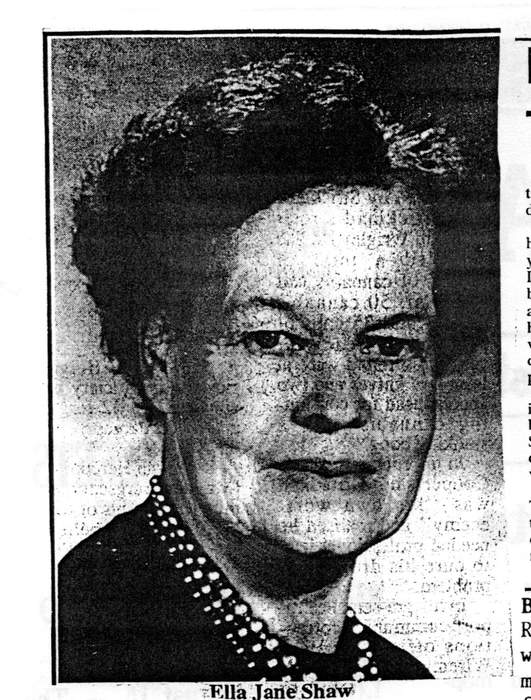 A woman who was one of Rotorua’s longest term residents has died. She was Mrs Ella Jane Shaw who had lived in the city for 72 of her 94 years, much of them in the same Devon St house in which she brought up five children. It was also a property which was regarded as home to the many who boarded with Mrs Shaw after her husband’s death in 1948 from hydrogen sulphide poisoning. Mr Ben Shaw had been attempting to rescue a workmate from the bottom of a man hole in Hinemaru St when he was overcome by the deadly fumes. His colleague survived.
Mrs Shaw, who was born in Tonga the great grand-daughter of the Island’s first British consul, was closely connected with the Tongan royal family. In Rotorua she was deeply involved in Rotorua church and community organisations.
She was a foundation member and held several offices with the St Andrew’s branch of the League of Mothers and remained a league advisory officer until she was 91. She was an office holder in the womens’ section of the RSA and a life member of the Association of Anglican Women through the St Luke’s Fellowship.
In 1990 150 members of her extended family gathered in the city to celebrate her 90th birthday. “Throughout her life she maintained an unfailing interest and pride in each and everyone of her family members and in Rotorua,” said her granddaughter Helen Tane. “After travelling much of the world while in her 60s she wrote of the wonderful feeling she had returning to the best place she knew — Rotorua.”
Ben Shaw’s death occurred at time that Reg Henderson was sent down a hole with gas mask & ropes to bring Ben and mate up when 3 chn. died in the hole from hydrogen sulphide poisoning.
(Frank) Mr. & Mrs. Newmarch, lost 2 grandchildren in the thermal pool outside, which he had built, in Toko St. Fumes were considered the reason. Mr. Newmarch had a thermal bore in the 1900s, before 1920 till 1930s. He was inventive, having the 1st. heated glass-house for tomatoes.
Other early families remembered, adjoining Victoria Street. Toko St; Savage family, chn. – Glad, Les, Nancy, Mabel & a boy. Luxtons. David Ford traffic officer, chn; Yvonne, Joan, Gus & young brother. Eason St; The Downeys, Dicksons, Martins, Malcolms, Grants. Union St, Butler, electrician-radio, Locks, Keans, Miss Benner librarian. Herewini St; Quinlans, Richards – daughter Gwyn, train accident, died. Ruihi St; Bullins – worked at railway. Railway huts opposite, on railway land, track entrance off Ranolf St.
Early families Ranolf St. from Victoria St. to Malfroy Rd. corner. By early 1920s several nice villa type homes from Pererika St. cnr. to Pretoria were built. Amongst these residents were WW1 veterans like Major Sumner after whom a street off Ranolf St. has been named. Also Mr. Burton, referred to as ‘a walking miracle’, was severely wounded and taken prisoner by the Germans who did extensive surgery. Rotorua sch. children passing this chimney-sweep with his long brushes, whispered to each other, “He has a steel plate in his scalp under that dark hair and wires in his arms and legs that make him walk funny like that.” Mr. Dale, WW1 veteran also, an English solicitor, remained shell-shocked. Late 1920s, he lived in a shed between Dawsons and Aubertins, Ranolf St. near Holland St. Joyce Mason (now Cresswell) lived next to Aubertins and tells how Mr Dale kept to himself, was independent, hard to get to know.
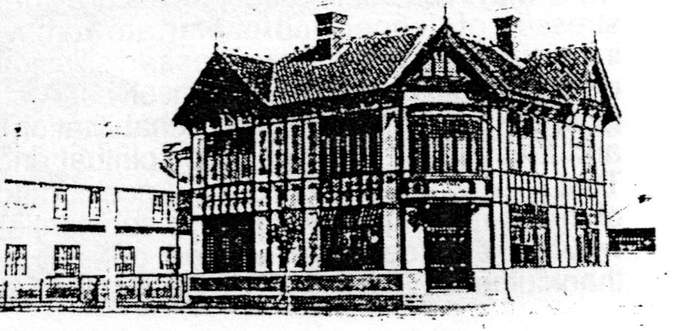 Joyce’s parents, concerned to see him so disturbed, walking along then sit to do his keep-fit exercises, tried to help especially after seeing pot of potatoes & grass boiling. They asked him to Xmas dinner, got R.S.A. relief, help & board in town. He continued exercising. (Daily Post 29-2-1992.)
1922, Henry Aubertin came to Rotorua. He had 5 chn. Grandson Ross, City Councillor. 1920s, Bank N.Z. Manager, Mr. Roberts, wife & 2 girls lived above B.N.Z. until move to Ranolf St. 1930s, near cnr. Seddon St.
William Wallace, 1908 — Farmer and First Rotorua Borough Councillor
William Wallace, 1908, Rotorua. Wallace Cres. next to Glenholme Sch. 1908, he came to Rotorua from Te Puke with his wife and five children, Athol, Arthur, Tracey, Barbara, Lindsay, later Peggy was born.
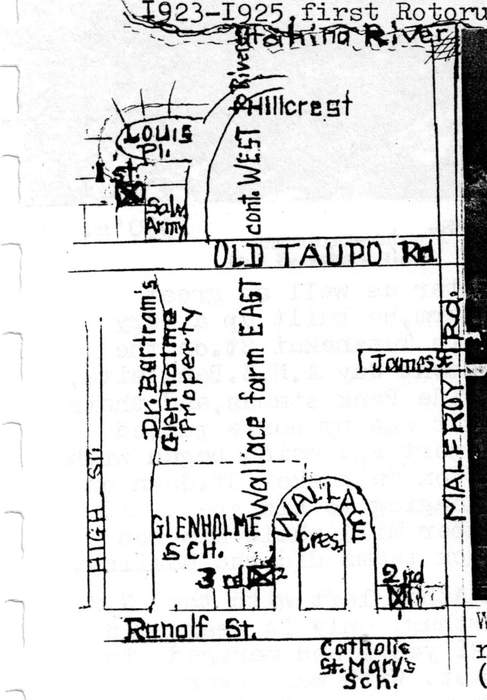
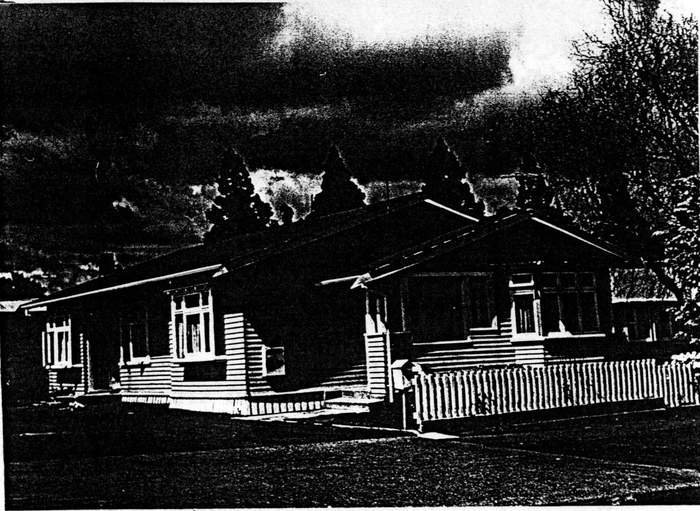
Sketch map of the Wallace farmland between Old Taupo Rd., Ranolf St., Malfroy Rd. and High St., showing Glenholme School, Wallace Cres., Dr. Bertram’s property and Louis Pl., Hillcrest. Photo: Wallace’s 3rd. home, Ranolf St. area, behind the shops round the corner into Wallace Cres. — once on farmland. (a) 3rd. home, (b) 2nd. home, (c) 1st. home, Louis Pl., Hillcrest.
William married Elizabeth Kennedy of Tauranga whose father came to N.Z. at the time of the Maori Wars. He was a sergeant in the battle of Gate Pa, Tauranga. He used to tell his family how he had fought in 8 wars in the Imperial Forces of the British Empire in the period which included the Indian Mutiny, Egypt for the Suez Canal, Africa. At Gate Pa he was the only one who could read and write so he was frequently called upon to assist in these matters. When the battle of Gate Pa was over he was granted 30 acres (60 odd hectares) of land there. Lindsay Wallace remembers his grandmother’s (Eliz. Kennedy) stories about her Gate Pa days. Once she was desperately called upon by others to use her influence to stop a chap called Reeves who was out of control with a gun. He called out as she approached, “Get away, I’m going to shoot myself!” In her wisdom she replied, “Before you do that, give me a lock of your hair.” Laughter disarmed him!
When William and Elizabeth came to Rotorua they bought land either side of Old Taupo Rd. partly on the rise below Dr. Bertram’s Glenholme. He also established Wallace’s Wood and Coal Merchant business in town. Their first country home was on the west farm, now Hillcrest – Louis Place. The second on Ranolf St. by Wallace Cres., third, behind the shops. Farm to the east, finally in Louis Pl. off Hillcrest Av. west farmland. 1923–1925, first Rotorua Borough Council, William Wallace elected.
William Wallace bought a long strip of farmland from Ranolf St. to Old Taupo Rd., this 40 acres bordering Dr. Bertram’s on the rise, (now the Glenholme Sch. down on his flats), and touched the end of James St. near which they had their milking shed for the dairy herd and where they kept farm machinery such as hay-making implements. One of the Worrel Bros. – iron foundry business in town, lived near on Malfroy Rd. This East farmland only flooded badly towards Ranolf St. as the rest was up on the hill slope. They had a big home area section to have a couple of house milking cows handy. This first Ranolf St. home was sold to Nurse Naumann who had the Private Maternity Home.
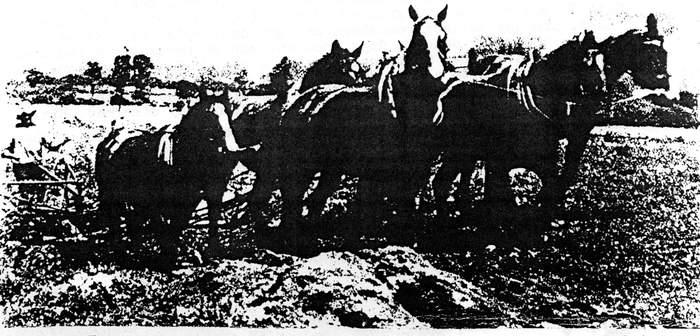
Farming. Draught-horse team, ploughing. 1930s. Photo – Museum, Phil Andrews Coll.
William Wallace’s East farm extended across Old Taupo Rd. to what was called the West farm up on the rise now known as Hillcrest Ave. then down to the Utanina River where Charles Kusabs built a lovely big home which burnt down a few years later. William Wallace built his last home on his West farmland near Old Taupo Rd. and it is still there, just behind the Salvation Hall at the corner of Hillcrest Ave., in Louis Place. For the late afternoon milking, the cows were moved back from the west to the east for milking, then after the morning they were moved back across the road. The family who could, all helped on the farm. Billy Kusabs was employed also, (Charles & Roger bros.)
William Wallace was a man of strong character as well as great physical strength. Before establishing his farm, he built up a very successful Wood and Coal Merchant business in Tutanekai St. on the corners of Hinemoa St., the yards on the present day A.N.Z. Bank site, the business across the road where Countrywide Bank stands, and their home dwelling alongside. His haulage at first was by horse pulled drays and carts followed by the motor transport age which began with the first hard rubber tyred truck. Opposite on Tutanekai St. down on Eruera St. corner, were the Timber Yards belonging to his great old friend Walter Steele who ran the Mamaku Timber Mill while his son Duncan managed the town timber yards. Bullock teams did the hauling.
When World War I broke out, his eldest son Athol left with the N.Z. Forces for the Middle East. His next son Arthur, only 14 years old, was so keen to go that he gave his age as 21 years and managed to see about 3 years fighting in the Middle East. With war over he returned to N.Z. and became quite a hero in the eyes of his Rotorua associates as being the only returned soldier to be just 18 yrs. old. This hero worship went to Arthur’s head somewhat, for one day when his father told him to take the horse and cart to collect coal from the railway station, he refused such a menial task, making it clear that he was a tough fighting man – a war hero! His powerfully built father soon settled that by heaving his son onto the cart and telling him to get going or else! This Arthur was an indefatigable optimist, nothing worried him, his attitude being, let the other fellow worry. This cheerful vitality carried him through life, especially in sports.
William Wallace, 1908 — Farmer and First Rotorua Borough Councillor
William Wallace offered his two returned-soldier sons £500 each to set themselves up in business. When questioned how they would use it, Athol the eldest decided on a carrier business in Tauranga, so he received the money and did well. Arthur said he would buy a race horse so he did not get the 500 pounds! He went to Wellington in the Ministry of Works, Tauranga, moved about engineering and did well. Nothing bothered or worried him, if he had an accident to his car, somehow he always came out of it with a new one!
Wallace drivers received £1 (pound) a week and could live on that. Their horse drawn vehicles were the spring-carts, the one horse drays which were for strength and were also heavier than the big five horse much lighter waggons. Their mare Kate, won many prizes. After horses they went into big trucks for transport heavy goods. When vehicles broke springs in such rough road conditions they had to improvise with putting in boards tied up with wire.
During the influenza epidemic following the war, young Lindsay Wallace and his mate Norm Steele, did a great deal of work with the spring cart carrying food to the sanitorium.
|
Junction of Tutanekai/Hinemoa Sts. – looking E. Building first part of ‘Hinemoa Bldg.’ ‘The Fountain Tea Rooms’ (Museum) |
Hauling heavy waggon load along Whaka Road, now called Fenton St. Photo – Museum, Don Stafford Coll |
|---|
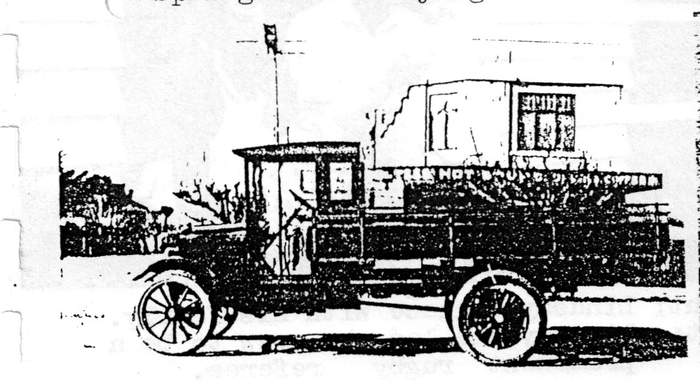
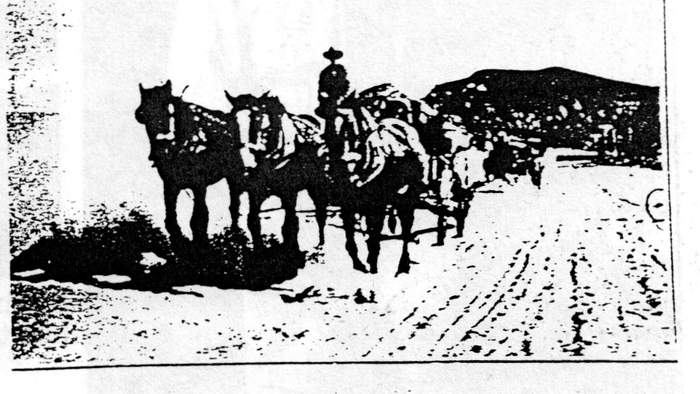
Lindsay Wallace, youngest son, had his daily task with these horses when living in their town house by their business, and going to school. There were thirty working horses to be attended to each night and morning. Lindsay took them out to their Ranolf St. land at night where they were put in the stables. Very early in the mornings he would return to feed them before the men working came to harness them. He then took them back to the Tutanekai St. yards, always apprehensive about the early train in case he did not get them across the lines before the loud tooting could be heard. They were seldom haltered for leading as there was little traffic in those days. Sometimes they were left under the big trees in the long railway plantation along the south side of Amohau St., and without halters.
Wallace’s draught horses were often used for the heavy work on road formation in the area, such as soil removal. Lindsay grew up in this hard challenging life style and stayed with it throughout his life, at first helping in the business, getting outside work like digging drains for George Ford on Fairy Springs Rd. for £2 (pounds) a week which was good money then. He then gained permanent employment with the County Council on road construction until his retirement. He had a tall strong athletic build which he used enthusiastically on the rugby field where he became renowned for his ability. Even now in his 80s he has a straight athletic appearance and happy grin. He has tremendous admiration for Arthur Bellingham, his County Clerk.
Lindsay Wallace was born 1908, his family being Mary, Ann, and Bob. He married first the daughter of Mr. Warn who was the 2nd. headmaster of Rot. Prim. School. His second wife was Ruby, daughter of the Bells who owned Fairy Springs and whose daughters became guides.
Lindsay was an outstanding rugby player, was in representative teams for the Bay of Plenty and was captain of Rotorua teams. He became a Referee in 1930, later being made a Life Member, and now Patron. An old friend, Ray Spence, says of him, “Ginger Wallace, a fine gentleman. Was a prominent football Referee.” His brother was the secretary of the Rugby Union so Lindsay sometimes had the chance to accompany him, visiting other clubs like Gisbourne, Palmerston North.
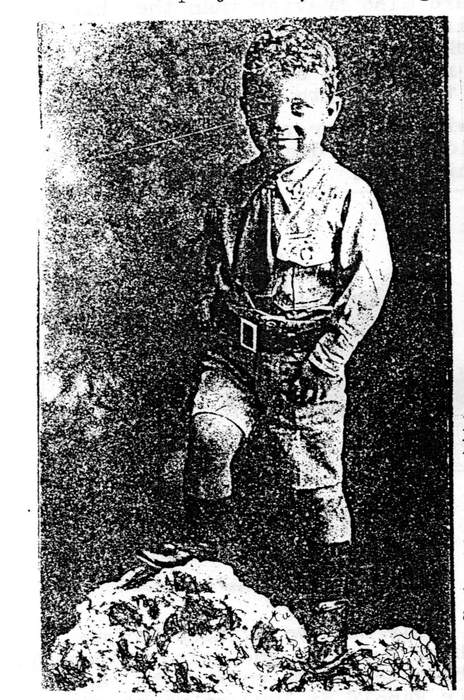
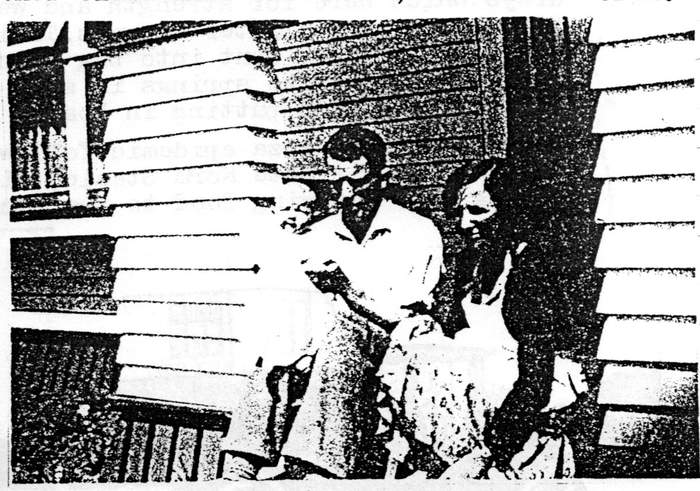
Left: Lindsay, the lad who grew to be a prominent rugby referee. Right: Lindsay Wallace with his family.