
In this part:
- Military Camp, Rotorua, February 1935
- 1st Echelon Leaves New Zealand, January 1940
- W.W.2 — Desert Campaign in Africa, 27th Machine Gun Battalin
- World War 2, 1939–1945 — the Desert Campaign under Montgomery
- Rotorua Soldiers at Port Said
- Stuart Robertson, Rotorua County Council Engineer
- Reg and Chris Henderson
- The Guadalcanal Campaign — 50th Anniversary
- Arthur (Sonny) Atkinson — Early Coach Driver
- Coaching in Rotorua — Robertson, Atkinson and the First Motor Cars
- Ted Atkinson Marries Betty Wood — the Wood Family of Waimunga
- The Atkinson Family of Glenholme
Military Camp, Rotorua, February 1935
Early 1930s, Government abolished compulsory military training.
Later 1930s, Volunteer Territorial Force continued as before with the military training, regular parades and the annual camp which was held at Rotorua, Tauranga, or elsewhere.
Sergeant Major Bates was encouraging and comradeship was strong. They had competitions in bayonet fighting, boxing, and rifle shooting with the benefit of being able to keep the rifle for personal hunting but it had to be inspected fortnightly.
Rex Norman, in Machine Gunners Platoon, and Allen Ford with horses in Mounted Platoon of Machine Gunners, and Sgt. M. Bill Bates would go deer stalking together.
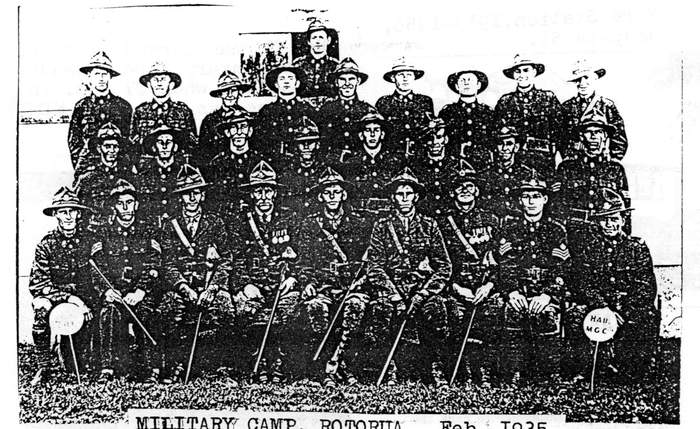
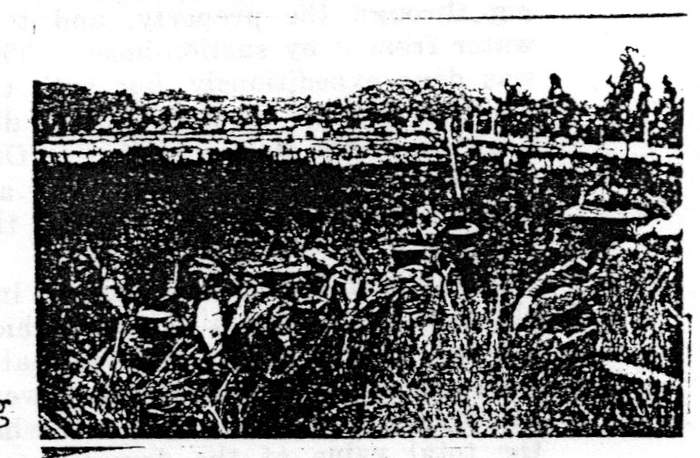
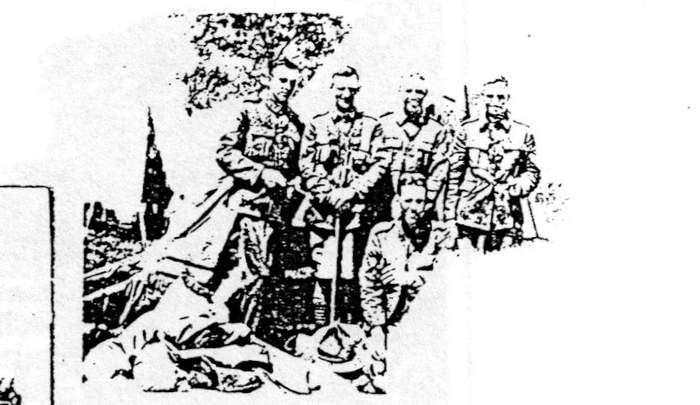
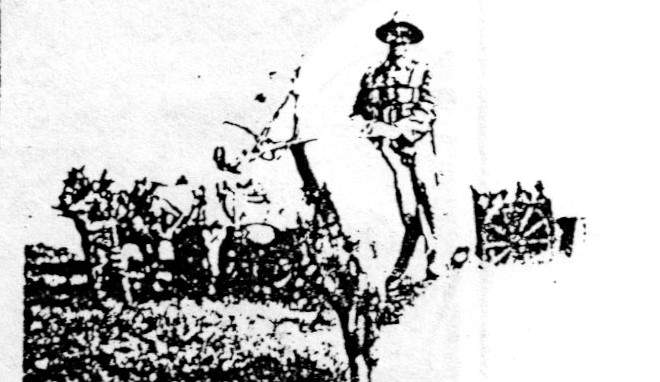
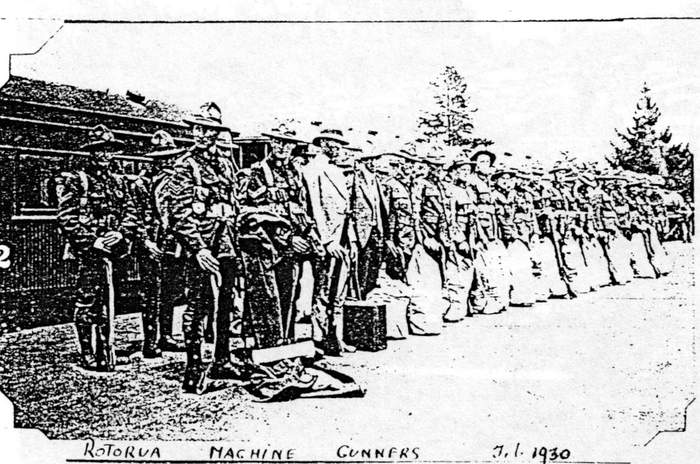
Military Camp, Rotorua, Feb. 1935. Training camp, Machine Gunners semi-hidden in foreground. Rotorua Machine Gunners, Annual Camp, 1.1.1930. Camp — Rex on left. Mounted Platoon of Machine Gunners.
1st Echelon Leaves New Zealand, January 1940
1st. Echelon leaves N.Z. On board are a number of Rotorua soldiers. In the 27th. Machine Gunners Battalion are Rex Norman and mates.
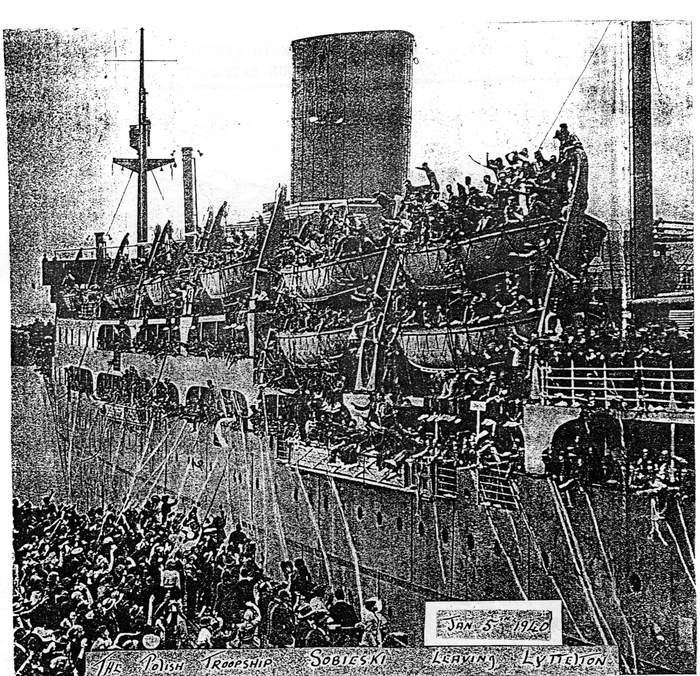
Figure The Polish troopship Sobieski leaving Lyttelton, 5 January 1940
|
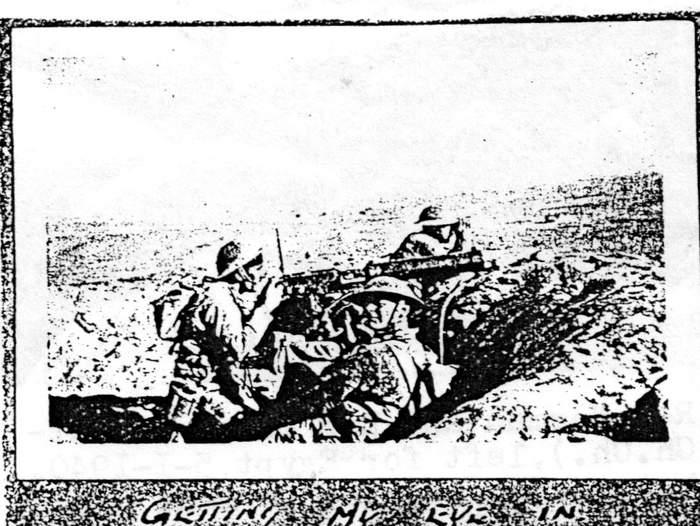
‘Getting my eye in’, |
Machine Gunners in action, Egypt |
|---|
W.W.2 — Desert Campaign in Africa, 27th Machine Gun Battalin
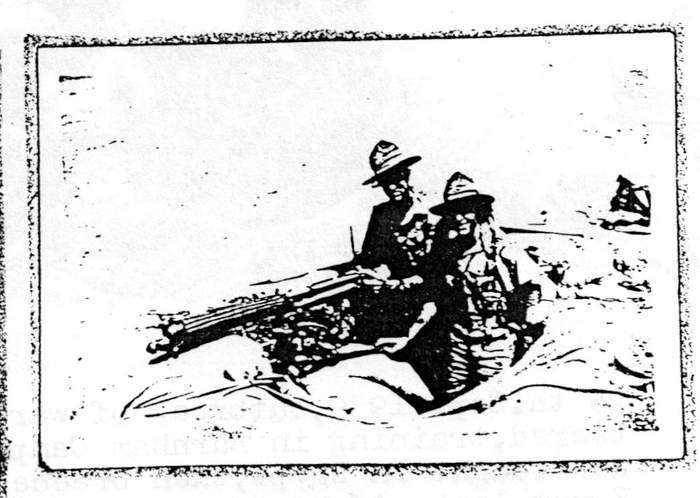
Digging machine gun positions. Once they hit something hard, so dug round it, to find a huge tree trunk fossilised like rock.
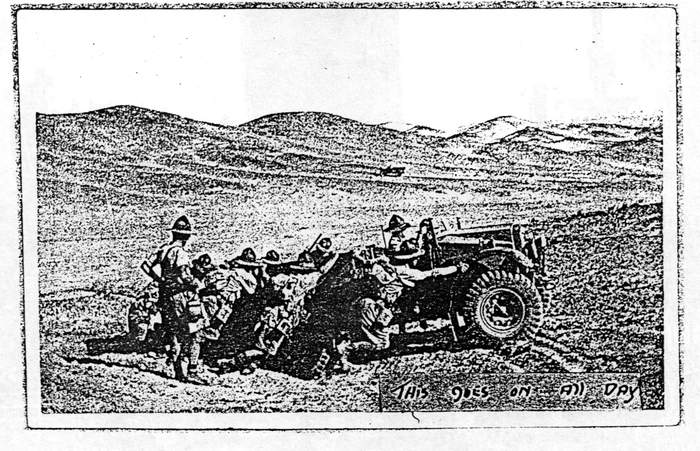
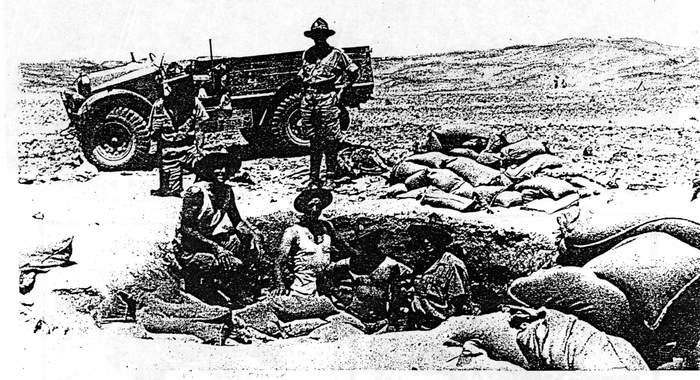
‘This goes on all day’ — digging machine-gun positions during the Desert Campaign in Africa, 27th. Machine Gun Battalion. Below: a machine-gun post dug into the desert among sandbags.
25th. Sept. 1939, outbreak of war, Rex Norman and his mates volunteered, training in Burnham Camp (Ch.Ch.), left for Egypt 5-1-1940. Rex fought in Egypt, then Greece but pushed back by Germans to Egypt, captured by Germans and Italians at Bardia so prisoner for five weeks under extreme hardships until rescued by British before time to be declared P.O.W. so continued fighting in Desert Campaign till final victory, returning N.Z. 10-2-1944, 4yrs. service.
World War 2, 1939–1945 — the Desert Campaign under Montgomery
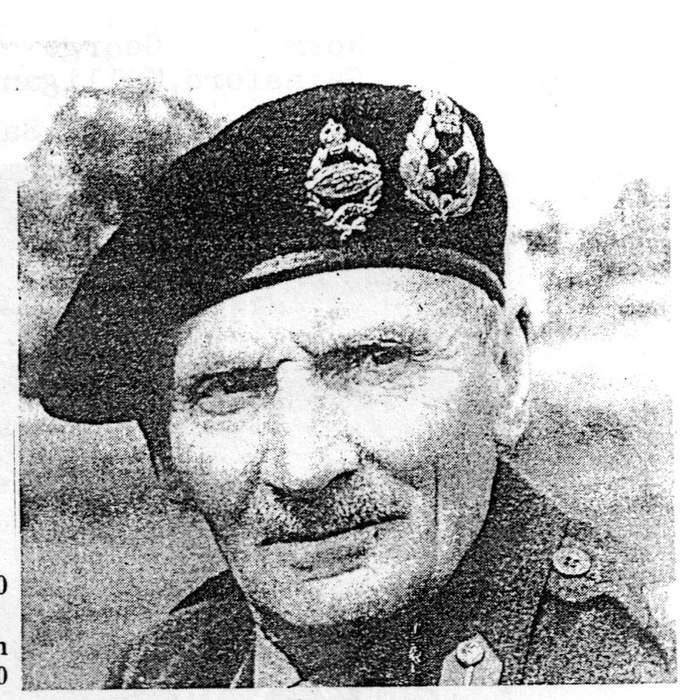 Desert Campaign where Rex and Rotorua mates fought under Montgomery.
Course of war changed at El Alamein.
LONDON. — The battle was joined at 9.40 p.m. on October 23, 1942, under a full moon. More than 1000 British guns opened fire on surprised Nazi artillery positions and 20 minutes later, four divisions of General Montgomery’s “Desert Rats” attacked behind the barrage.
Twelve days later, the crack Afrika Korps of Field Marshal Rommel, the “Desert Fox”, was in full retreat, and the battle that proved to be the turning point for Allied victory in World War II had been won at El Alamein.
“Monty” had taken over the beleaguered Eighth Army just two months previously and immediately scrapped contingency plans for further British retreat.
west of El Alamein, with British and allied infantry overrunning German positions at bayonet point, enabling the massed armoured forces to break out. A final attack by the 51st Highland division on the night of November 3-4 routed the Germans and the “Desert Rats” began the pursuit that would end three months later with the defeat of the Nazi forces in Africa.
On October 23, 1942, after a strong air and artillery preparation, the British launched a night assault from their positions in front of El Alamein. By November 7 they had broken through and the world rang with the news of the desert victory. Montgomery was made a full general and knighted. The Eighth Army, directed from Cairo by General Sir Harold Alexander and in the field by Montgomery.
At the time of the desert fighting in Africa, the men of Montgomery’s eighth army saw him in swirls of dust, waving to them from command cars or from an open tank turret. Sometimes he wore the beret of the Royal Tank Corps with two badges pinned to it — one of a regimental unit and the other his general’s badge. Again he would appear in an Australian slouch hat covered with badges. Usually he wore an old turtle-neck sweater. To his men, and to a good part of the world, he became “Monty.” At his retirement in September 1958, Montgomery had completed 50 years of active duty. No British army officer since 1855 is known to have had a longer unbroken period of active duty.
Montgomery’s victory over the Germans and Italians at El Alamein in November, 1942, was a major and decisive battle in history. Before it, the Germans had not lost a major battle in World War II.
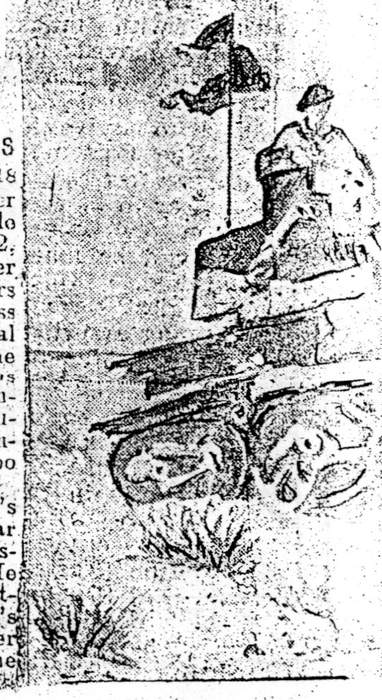
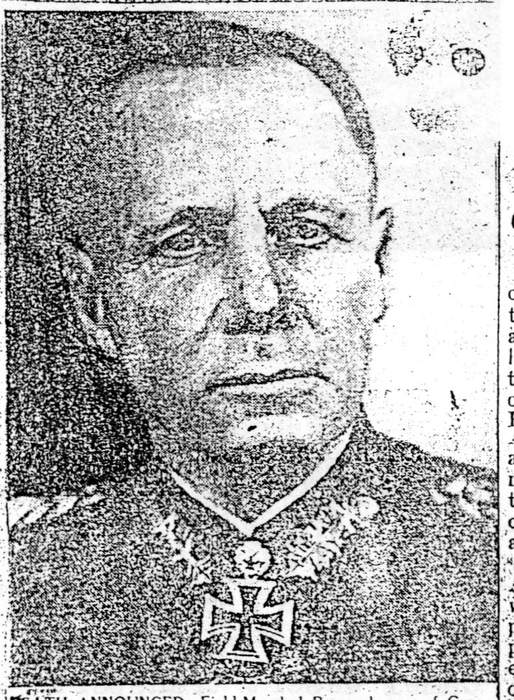 ROMMEL’S ANGER — ORDER TO KILL COMMANDOS. NUREMBERG, June 18. General Erich Rommel, Commander of the Afrika Corps, standing outside the ruins of Sidi Barrani in 1942, angrily tore to shreds, ten minutes after he had received them, Hitler’s orders to kill all British commandos regardless of the rules of warfare, said General Kurt Westphal, Chief of Staff to the Afrika Corps, in evidence today. He was appearing before the five-member commission which is preparing for prosecutions against German organisations, including the General Staff, the Gestapo and the S.S. General Westphal said that Rommel’s Army fought a “professional” war within the Geneva Convention and respected the rights of prisoners. He pointed out that Rommel, in the Western Desert, was able to ignore Hitler’s orders, but Army commanders nearer home in Europe were not in the same position.
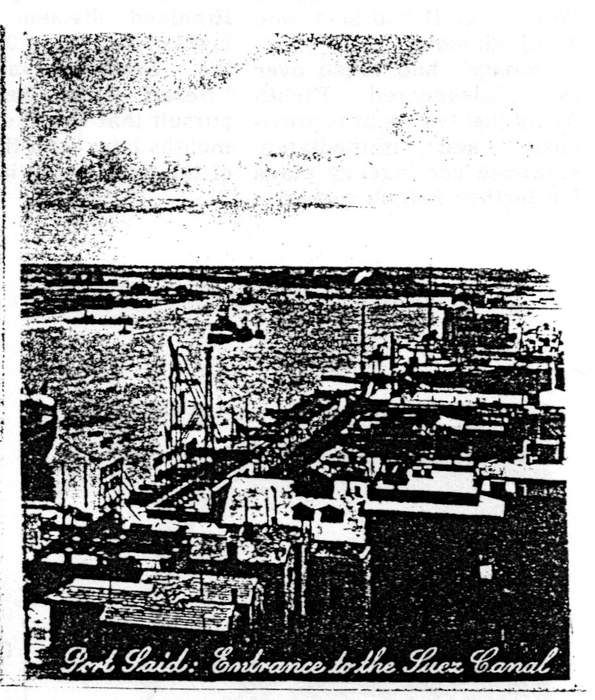
Rotorua Soldiers at Port Said
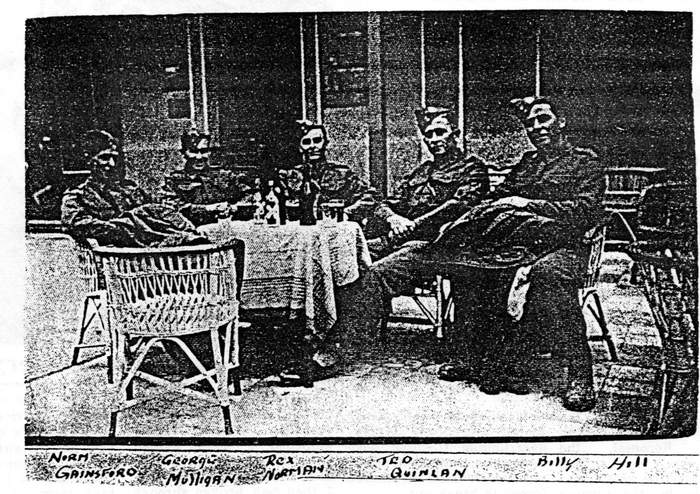
Norm Gainsford, George Mulligan, Rex Norman, Ted Quinlan, Billy Hill. Taken in Port Said. Rotorua soldiers.
|
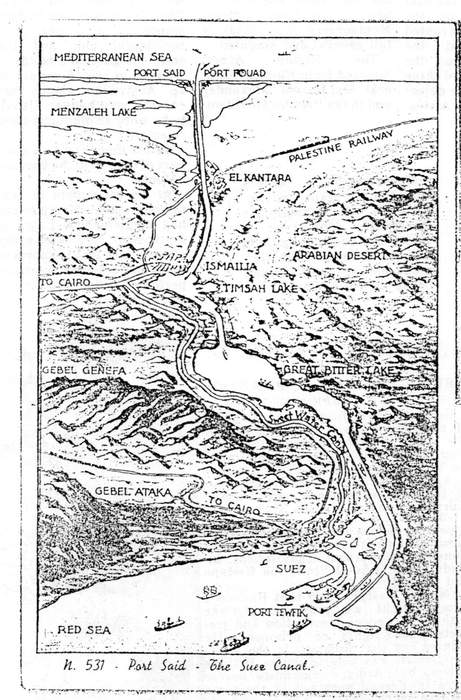
Map: Port Said – the Suez Canal, showing Port Said, Port Fouad, Menzaleh Lake, the Palestine Railway, El Kantara, Ismailia, Timsah Lake, the Great Bitter Lake, Gebel Geneifa, Gebel Ataka, Suez and Port Tewfik |
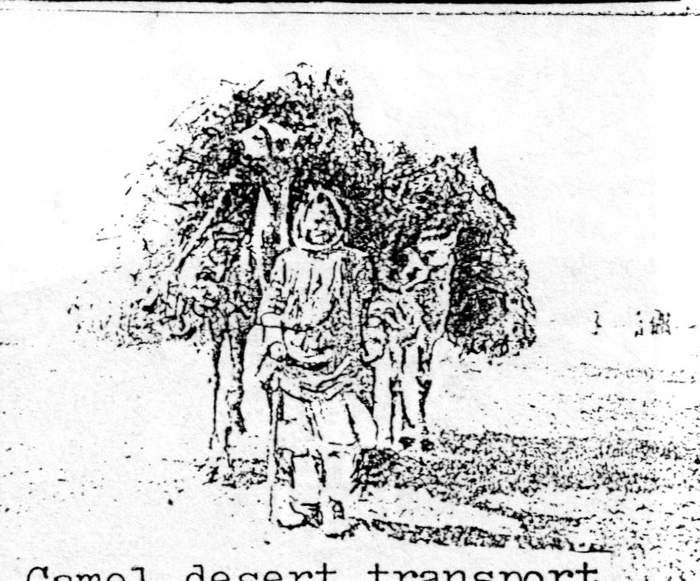
‘Camel desert transport’.
‘Port Said: entrance to the Suez Canal’, |
|---|
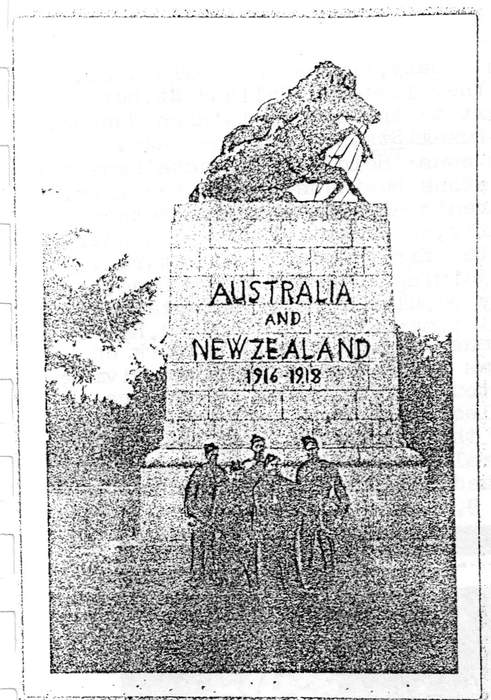
Stuart Robertson, Rotorua County Council Engineer
Stuart Robertson, 1928, Engineer Rotorua County Council until his retirement. He was an able pleasant man, working in well with the chairman Mr. H.P. Ford and County clerk Mr. Bellingham over a long period forming a stable capable team.
He and his wife, son Alwyn and young 7yr. old Joan, first lived in house behind the Ranolf St. Glenholme shops. Previously he had been engineer for Paparoa County. He had an unusual birthplace – Chatam Is. where his father was surveyor for a time.
 Folk remember still the often shocking state of the roads, pumice dust, pot-holes, deep mud, slips and wash-outs. Constant inspections and re-allocating the pick and wheel-barrow work-gangs went on. Poverty in the rural sector due to the depression and poor soil condition kept rates at a minimum. Modernization came after the war.
Mr. Robertson was a keen sports supporter in an official capacity and organizer for the town as well as his son’s High Sch. teams. He felt it deeply when his son & these lads left N.Z. in the 1st. Echelon for the Middle East in World War 2. He himself had fought in W.W.1 trenches.
His son Alwyn (Robbie) was wounded in Greece, and spent several years in a Prisoner of War Camp in Germany, returning to N.Z. at end of war.
His daughter Joan married Norm Gainsford after the war and Joan Kingsland m. Percy Gainsford, whose father was a surveyor in Rotorua. Robertsons soon moved from Ranolf St. to cnr. Lytton St.–Carnot St. Joan remembers when going to Rotorua Prim. Sch., playing in the huge ditches in the flood area near Victoria St., & in Railway Plantation. Her childhood friends were Barbara Holland – Carnot St., and Aileen O’Flaherty who would hide with her, frightened, when Dr. Bertram came driving down his long country lane into Ranolf St. Cars were so fast!
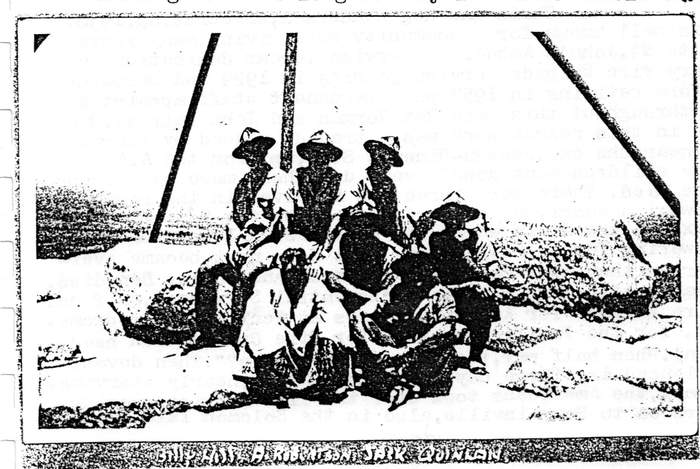 |
.Photos from Rex Norman, top left to right: Billy Hill, Alwyn Robertson, Jack Quinlan, Norm Gainsford, Ted Quinlan, Rex Norman with guide — on the summit of the pyramid. |
|---|
Reg and Chris Henderson
Reg Henderson, 1913, came to Rotorua as a baby, living in Rangiora St. at first. 1947 when he married Chris they lived in Holland St. but finally built in Old Taupo Rd. 1957 next to the new Girls’ High School. His childhood home was cnr. Tutanekai–Pukaki Sts. nearest the lake. Their son Barry died at 3 years, Brett owns ‘Holdfast Products’ Hamilton. Chris later occupied herself at Ken Heaton’s business – 13 yrs. tea lady. Reg grew up in town with his grand-parents and parents, his mother being one of 18 children in their family, so perhaps it is no wonder his Grandmother was said to be about the first midwife in Rotorua.
His grandfather was a keen bandsman joining Rotorua’s Brass Band. The Band, started in 1890s, was a very popular form of entertainment in Rotorua, especially at festival times, always in demand. He remembers how his father, every Christmas, went to Mamaku to work on Dutch Ovens in which surplus timber was burnt for the boilers, giving steam power for the engines. Another tough bricklaying job was replacing the bakers’ oven bases or ‘soles’ made from soft Omaru stone slabs which wore down when shovelling the bread with long handled heavy wooden peels. The ovens were several metres long, half as wide, with arched brick top shaped over packed sand, cement & water in the V gaps. Bricks were made in multiples of 9, e.g. 9 x 4¼ x 3.
Newspaper clipping — Fifty years of marriage.
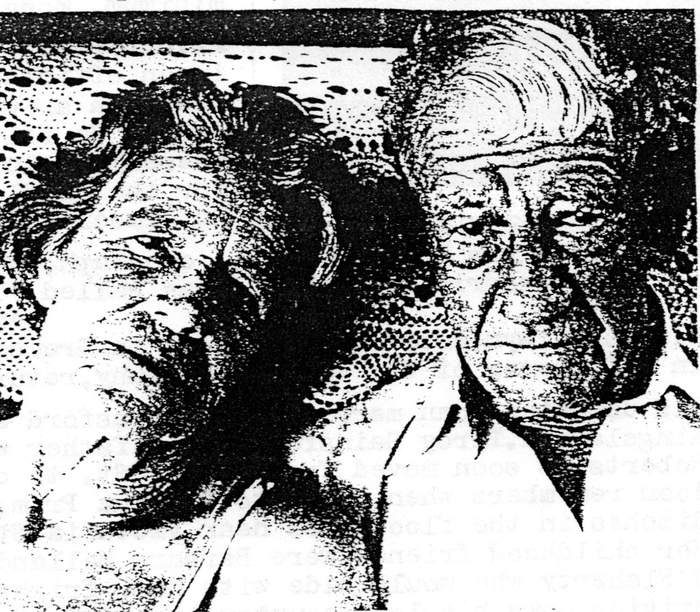 A Rotorua couple plan to spend their golden wedding anniversary tomorrow with their best man and bridesmaid.
Reg and Chris Henderson of Old Taupo Road, both 76, were married in the now demolished St John’s Presbyterian Church in Rotorua on March 23, 1940.
Like many couples of their generation, they met through dancing at the Ritz Hall in Rotorua, where Pak ‘n Save now is.
It was to be five years though before Reg and Chris finally took the plunge and got married. According to Reg, it was not through want of trying. “She kept turning me down,” he joked.
It was not roses all the way either. “We have had our ups and downs. There is no two ways about that,” said Reg. Chris agrees, “It is better to have a jolly good argument sometimes.”
The loss of one of their two sons in infancy was a bitter blow to the couple, but both firmly believe that it helped strengthen their relationship, as did a philosophy of working together, going out together and meeting friends together. “We both helped each other,” says Chris. “That was important.”
They believe one of the reasons why so many modern marriages fail is because of the easy availability of credit. “It creates tensions,” says Chris. “We struggled. If we did not have the money, we saved, but we appreciated everything we had.”
They hope to spend tomorrow sharing a few drinks with Chris’s bridesmaid Kath Duff, and Reg’s best man, John Fairlie, a close friend from their days together in the Rotorua fire brigade.
Reg Henderson was well known for community work, giving many years of weekend time to St. John’s Ambulance service. Great dedication was given in voluntary Fire Brigade Service, joining in 1929 and becoming Deputy Chief before retiring in 1957 when permanent staff appointed. His great mates throughout this were Rex Norman and John Fairley. His worst experience in this rescue work was a tragedy caused by thermal poisonous fumes near the cnr. Fenton–Hinemoa Sts., up from the A.A. One evening three children went down a very deep hole made by a Council job. All three died. There were three men involved in the rescue. 1. Ambrose Te Kowhai, a Maori, who went right down to the bottom nearer running water next to the drain where his head rested, lessening the effect of overpowering fumes. 2. Ben Shaw went down next, became overcome. 3. Reg Henderson then went down with gas mask and ropes. Ben died.
W.W.2, Reg was retained in Rotorua’s ‘Essential Services’, as 2nd. in command of Fire Brigade for Airforce planes at Fenton St. aerodrome. 1943, he left N.Z. for the Pacific war zone for Fire Crew action headed for Guadalcanal. When half way, they asked, “Why there?”. Then devastation was experienced in, ‘Three days on a Hell Ship’, nearly starving. Once at Guadalcanal, the Americans took over the fire service, sending the New Zealanders on to Bougainville, also in the Solomon Islands.
The Guadalcanal Campaign — 50th Anniversary
Daily Post, July 1992. Extracts from article on the Pacific W.W.2 N.Z. Forces.
New Zealanders will next month join in commemorations marking the 50th anniversary of the World War II Guadalcanal campaign. Catriona Maclennan of NZPA reports from Honiara on New Zealand’s role in the conflict.
HONIARA. — New Zealand camp, where the New Zealand Army was based on Guadalcanal during World War II, is now a flat stretch of grassy land. 500 New Zealanders killed during the Guadalcanal campaign. Each of the three New Zealand services took part in the campaign, which began in 1942 and lasted until the Japanese surrender in August 1945.
Japanese forces advancing across the Pacific in early 1942 aimed to isolate New Zealand and Australia by controlling island bases standing in the path of communications lines with the United States. The first prong of the operation was to be the seizure of Port Moresby, together with landings at Guadalcanal and Tulagi in the Solomon Islands. The follow-up phase was to involve invasion of New Caledonia, Samoa and Fiji. However, following the Battles of the Coral Sea and Midway in mid-1942 the plan was abandoned and on August 7 the first United States Marine Division landed on Guadalcanal and Tulagi. The battle for Guadalcanal lasted for more than six months, comprising fierce naval and air actions as well as fighting on the island itself.
Strength — New Zealand Defence Force research officer John Crawford in a paper on the Guadalcanal campaign said the bulk of the Royal New Zealand Navy’s strength was at one time or another engaged in the Solomon Islands campaign.
The first New Zealand ship to take part in the campaign was the light cruiser HMNZS Leander, which in September joined a force of cruisers and destroyers known as Task Force 64 at Espiritu Santo in Vanuatu. Leander crew member Jack Harker in a 1971 book described the devastation on board after the ship was hit by a torpedo at the Battle of Kolombankara on the night of July 12, 1943. “Great hole in our port side through which water gushed to mix with oil from Leander’s tanks. Lockers smashed. Deck buckled and fissured. Damage control parties were everywhere, extricating our dead and wounded, running emergency power and communication lines, endeavouring to discover the extent of damage. Amid the maze of destruction it was strange that everyone should appear so calm.”
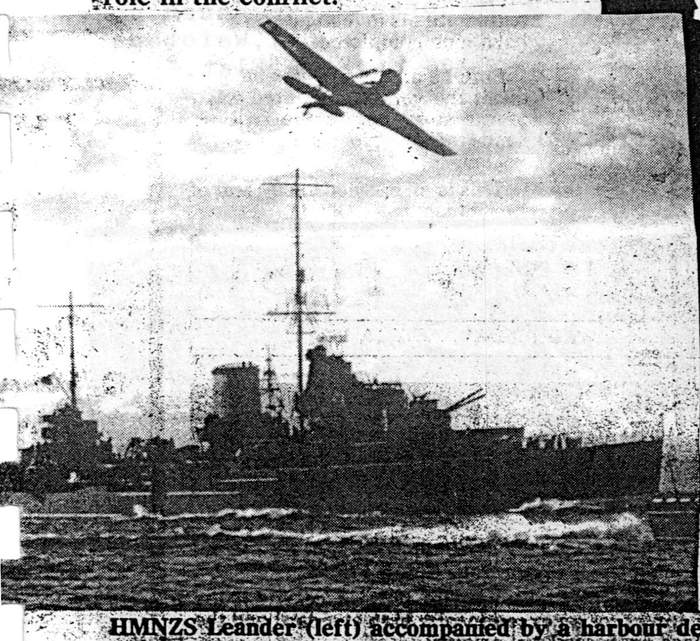
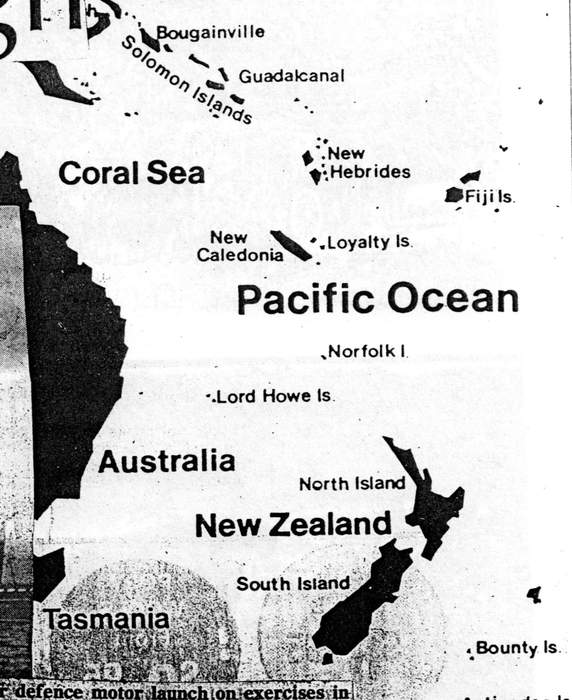
HMNZS Leander (left) accompanied by a harbour defence motor launch on exercises in November 1943. A RNZAF Harvard flies overhead.
Clearing — The 3 New Zealand Division in August and September 1943 was given the task of clearing and securing Vella Lavella in the central Solomons, fighting a number of sharp minor actions before the Japanese navy evacuated most of its troops. In October 1943 the New Zealand 8 Brigade carried out the first opposed landing by New Zealand forces since Gallipoli, attacking Mono and Stirling Islands with support from the RNZAF and United States aircraft.
New Zealand will be participating in commemorations of the campaign on August 7 on Guadalcanal, joining what is expected to be a large contingent of veterans from the United States returning to the Solomon Islands.
Arthur (Sonny) Atkinson — Early Coach Driver
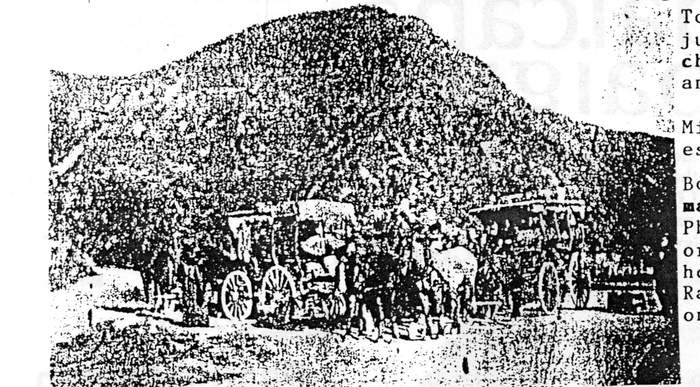
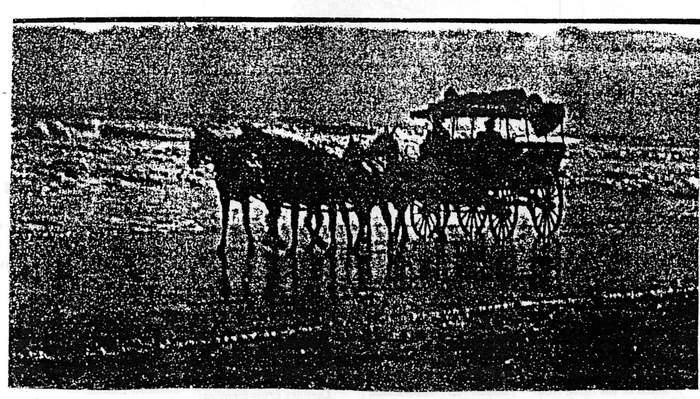
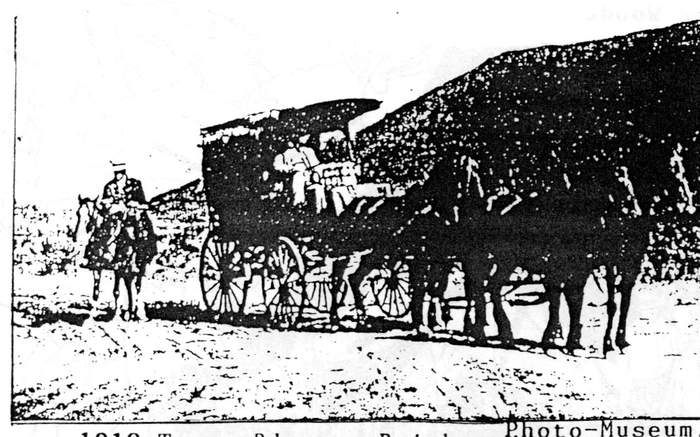
Arthur (Sonny) Atkinson, early horse-drawn coach driver on Whakatane, Opotiki, Rotorua–Taupo runs. Atkinson family gave photos – Rot. Museum.
 |
 |
|---|
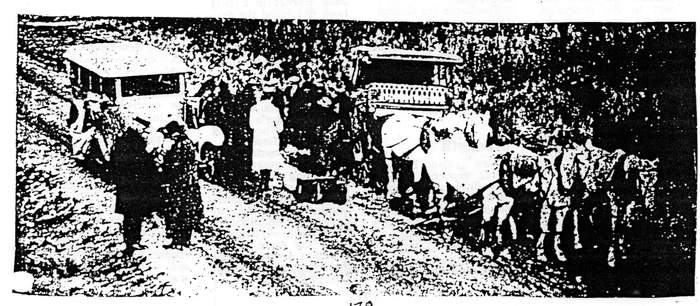
Top: Whakatane–Opotiki junction, by Ohiwa River, changing passengers and the mail service. Middle: coaches used beaches towards Opotiki. Bottom: horse to motor era, mainly 1917–early 20s — changing Taupo motor passengers to Rotorua horse-drawn coach, near Rainbow Mt., Waiotapu, on Hickeys Flat.
Coaching in Rotorua — Robertson, Atkinson and the First Motor Cars
 Arthur (Sonny) Atkinson, married his Whakatane bride in that town. They lived in Opotiki for awhile which at that time had a connecting horse-drawn coach run. In 1907, this had been developed by Rotorua Motor Co. Ltd. with accommodation houses either side of the Ohiwa River. This company had taken over, in 1903, Edwin Robertson’s Coaching Stables in Rotorua – biggest in district for giving employment.
1896, Richard Blackett Atkinson became Edwin Robertson’s chief driver, of 1895’s new coaching venture, ‘E. Robertson and Company’ with extensive new stables under construction, covering almost half a block bounded by Hinemoa, Tutanekai, Pukuatua and Amohia streets. Robertson had acquired the business from W.K. Carter, known as ‘King Carter’, that great coaching pioneer operating Auckland to Rotorua, preceding the railway in all its stages. 1894 the railway reached Rotorua.
1895, Dec., Robinson Bros. operated tours from stables in Pukuatua St.
1896, C. Atkinson, (late mail contractor between Pipiriki and Tokaanu) took charge of Robinson Bros. new coach service, in conjunction with the Spa Hotel Coaching Company of Taupo, through to Rotorua.
|
Figure Crowther’s Atiamuri Hotel at the turn of the century. In 1873, when the coach road was completed from Taupo to Ohinemutu (with the bridge over the Waikato) it was a two-day trip with a stay overnight at Atiamuri. The hotel at that stage was a more primitive building. Later, the Aiamuri Hotel the lunch and horse trading stage. This photograph is a recent acquisition to Rotorua Museum from Miss Crowther, Waikanae, the proprietors niece. “Ted Atkinson’s copy — 16-10-82 (1882)”, |
Figure Atkinsons’ 1928 Xmas camp at Wairaki |
|---|
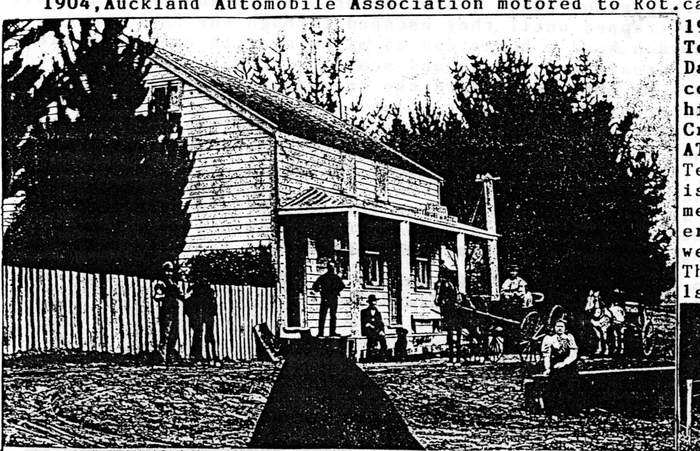
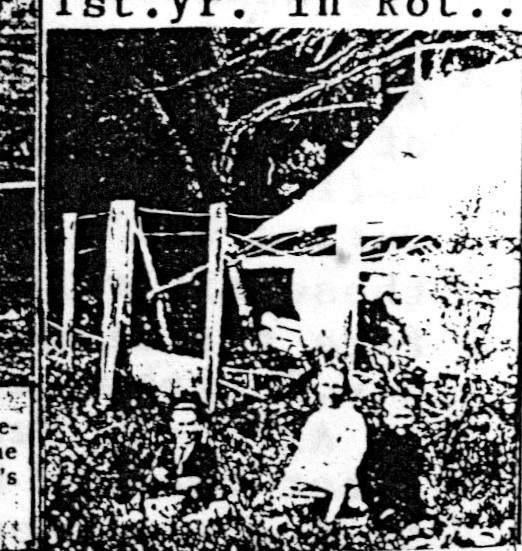
1902, first arrival of a MOTOR CAR in Rotorua, in contest to reach Rotorua in two days from Auckland. George Henning won, soon followed by Dr. and Mrs. H. Haines, Jan. 30 1902, taking the two days. Nearly 2 yrs. later, one day contest from Auckland to Rotorua by both Dr. Haines and Mr. Hamilton Grapes, the latter in 11hrs. 21mins. deducting stops. Next day Mr. Grapes returned to his home town, Tauranga via Oropi Gorge without difficulty except in two steep places.
Mr. Grapes, in next few days, inaugurated a motor service, Tauranga–Rot. 1904, Auckland Automobile Association motored to Rot. carnival in Feb.
1925, at 3 yrs., Ted Atkinson’s Dad drove him by coach to visit his aunt & uncle Crowther who ran Atiamuri Hotel. Ted now says it is his earliest memory. His mother & Mrs. Crowther were related. This was Ted’s 1st. yr. in Rot.
Mr. Crowther of Taupo, for a time operated sight-seeing coaches as well as maintaining a mail run, Taupo–Rotorua. Mrs. Crowther, 1902, ran Grand Vue Hotel, Hinemaru St. Rotorua
Ted Atkinson Marries Betty Wood — the Wood Family of Waimunga
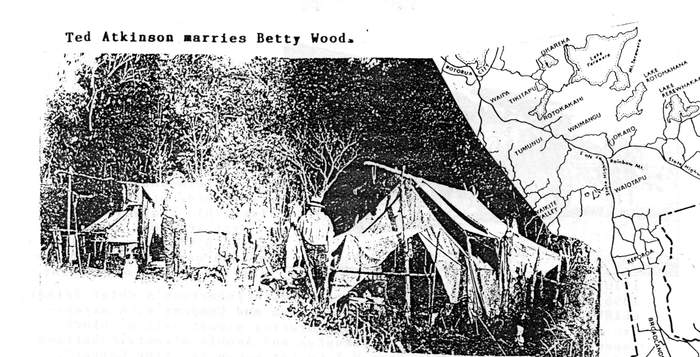 Caleb Wood with sons, Gordon on left, pioneering farmers, Waimunga. 1910, Caleb Wood was probably 1st. land holder south of Rotorua.
Living first in tents, Wood and his family developed a productive farm which had a reputation for breeding good horses. Eventually sold to the Crown, this farm, together with others similarly acquired, became the Rotomahana Farm Settlement. (1955, the Evans family won ballot for farming this land. Mrs. Norma Evans, when she retired into Rotorua became very well known for her remarkable collection of memorabilia now shown at ‘Norma Evans Te Amorangi Trust Museum,’ at Holden’s Bay.) Gordon & Mrs. Wood took over from Caleb, bringing up their 3 children on this land, Betty, later Mrs. Ted Atkinson, Bonny (Middleton), & Selwyn. By this time they had close neighbour friend on ‘Highlands Station’ in Allen Ford with his growing family.
 1917, Waimunga Geyser exploded into a devastating eruption, showering Waimunga accommodation House where the McCormicks and their 2 small children were trapped until they escaped through the back door and headed for Gordon Wood’s homestead 2½ miles away, in only thin clothes. They suffered dreadful injuries and scalding from the hot mud and steam. At 6 a.m. Mr. & Mrs. Wood heard the tremendous explosion and saw black mud and steam over 2000 ft. high rising above Frying Pan Flat so they saddled the horses and rode to the rescue, the tracks obscured by debris. They found Mrs. McCormick & child a mile from their destroyed home, in a dreadful state, and Mr. McCormick with son on back, a half mile back. Mrs. Wood went for her horse and buggy, Gordon galloped 15 miles in 50 minutes to Rotorua for help, before returning to try rescue his mud covered sheep and found his assistant had 2000 safe. The following night Mrs. McCormick and child died from the scalding.
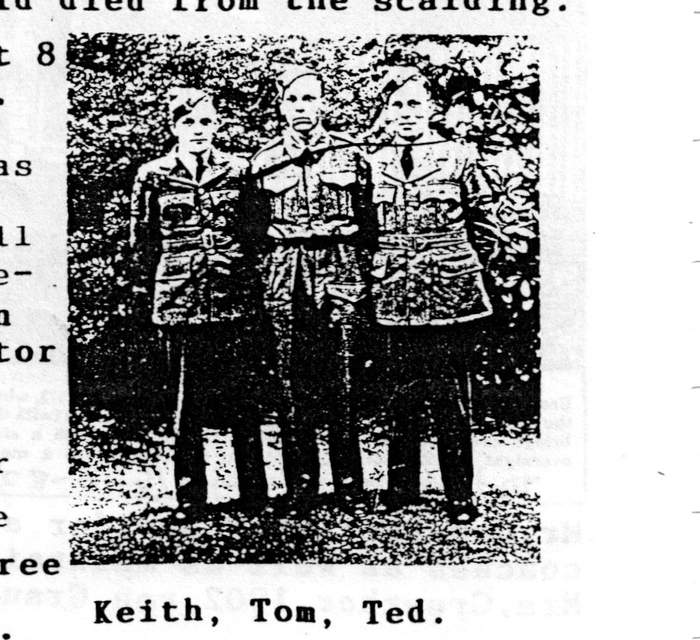
 Ted Atkinson, first visited Woods family at 8 years old, with the Morrisons of Grand Vue. At 14 yrs. he went to work for Fred Hickey of Waiotapu Flats who also had that Hotel as well as 2 dairy farms and other blocks. During Ted’s 2 yrs there, he hunted over all those big run-holdings for pig and deer before training as a plumber in Rotorua. When W.W.2 broke out he became wireless operator in Airforce, Europe, Middle East, Burma, etc. After the war he became a plumber, having trained previously with ‘Hardware & Plumber Co.’. His friends Tom Lodge and Corbett were also plumbers.
The Atkinson Family of Glenholme
1925, Arthur O. Atkinson, known as Sonny, came to Rotorua with his wife and first two of a young family which finally grew to seven. They moved several times within the Glenholme area, close to Fenton St., 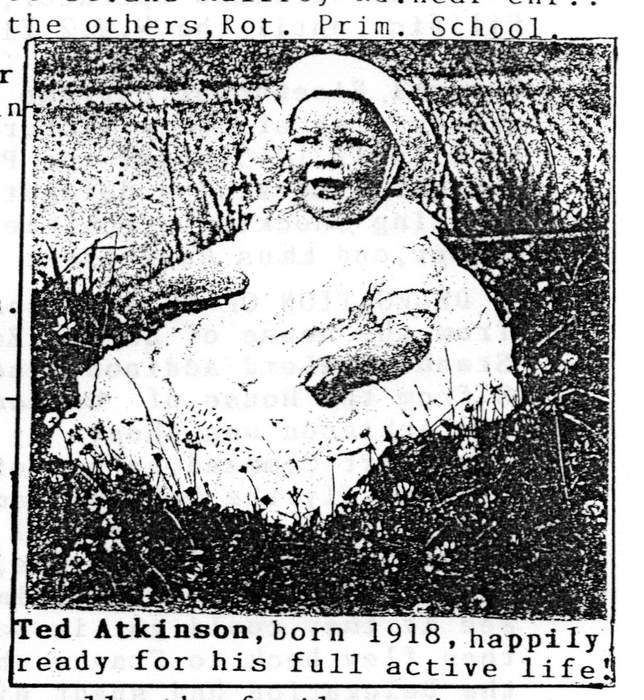 moves being upper Fenton St., Pearce St. and Malfroy Rd. near cnr. Dick & Ted attended Whaka School but the others, Rot. Prim. School.
Arthur was a horse-drawn coach driver for the Rotorua Coaching Co. He retained his job throughout the Depression. Despite this, life was a struggle. His main run was the Rotorua–Taupo drive and often away for days at a time on tours to the coast and Opotiki. Their stables were where the central P.O. is. He was a popular ‘coachie’ with his stories and jokes. His brother Tom, on Te Ngae Rd., a keen Highland Band player, added fun to their family life. Arthur later, with the advent of cars, drove tour buses out to Wairaki etc.
His daughter, now Ola Dawson of Otonga Rd. remembers the trout he sometimes brought back from tours and smoked, also the huge crayfish from the coast which appeared greyish on arrival, but puzzlingly red when cooked! Ola also recalls the family excitement when the annual circus came to the lake-front. They would take corn stalks down to the railway yards nearby to feed to the elephants as that was where they were watered. Their parents provided much of the food from a sizable garden, fruit trees, hens & ducks for eggs & meat. No one wasted in those days, sharing what they could with neighbours. Their mother cleverly sewed or altered their clothing, often making use of big finely woven cotton flour bags. During W.W.2 she helped the Red Cross with soldiers parcels, also long nets of heavy twine.
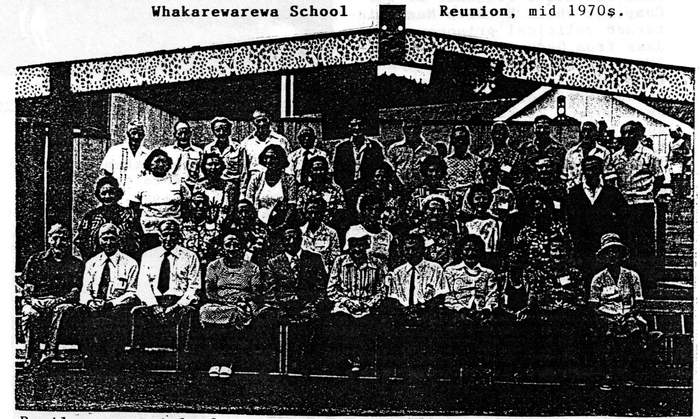
Whakarewarewa School reunion, mid 1970s — pupils came mainly from earliest Upper Fenton–Sophia–Devon Sts. area; from 2nd. left, Ted Atkinson, who entered 1925.