
-
Late 1920s, in charge of Atiamuri T.I.P. In 1930 dismissed, recession.
-
Perpetual Forests employed him in winter planting by gangs on Tahorakuri Block, Taupo. This was the hardest work ever, 2000 trees by each man daily or job lost to one of the many others wanting it.
-
Forest Service, Spring work preparing land for next winter’s planting, building roads and camps etc.
-
Then at Wairapukoa Camp, he was put in charge of tree Nursery.
-
Promoted to Ranger there, this being in charge of about 1000 acres of planted forest, a nursery of 4 camps. (over 2000 hectares)
-
In charge of Waipoua Forest 1944-45 during W.W.2 for 16 months. This Nth. Auckland kauri forest was of tremendous interest to him.
-
After the war more forests were planted, especially in Sth. Island. Promoted to establish new exotic forests in Otago, he became the District Ranger, Dunedin District, N.Z. Forest Service, supervising 1945 to 1959 when ill health forced him to retire.
-
In retirement, he devoted much time to his many interests as botanist until his death, especially in collaboration with the Naturalist, Dr. John Child.
He was survived by his three daughters, Mrs Leona Coatsworth, Mrs Avis Jack and Mrs. Dorothy Robertson.
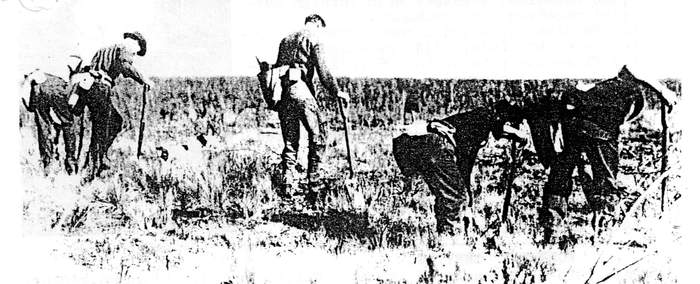
Early forestry planting of radiata pine, Kaingaroa, 1920s & 1930s.
In this part:
- Survival Days in the Depression — the Wilson Family
- Trevor and Phyllis Taylor
- Edgar and Aileen Hemmings
- The Hemmings Family of Mamaku
- Mamaku Families Move to Rotorua
- Noel Pachoud, Nurseryman and City Councillor
- Harry Lapwood, M.P., and Family
Survival Days in the Depression — the Wilson Family
1925, Mr. & Mrs. WILSON lived in Holland St. with their several children including Sancha (Failey), Cynthia (Upton) called Bunty, Selwyn, Josie (Dudley). They recall growing up when their parents were struggling desperately to survive the hardships of the Depression. Mr. Wilson worked on the West Coast, Sth. Island in land valuation, moved to try for work in New Plymouth, Thames, Taupiri, then by the Waikato River, living in tents and old shack when working at the Dairy Factory, finally coming to Rotorua in 1924. Bunty was in Std. 4.
State Forest Service had seasonal tree planting for unemployed, so Mr. Wilson worked there living away from home, in awful conditions. These are described by Don Stafford in his book, ‘The New Century in Rotorua’, quoting BILLY KUSABS, the brother of Charles and Roger; ‘He spoke of men leaving the tents in the early morning in cold and damp conditions and walking two or three miles (5 kms) carrying a back-load of seedlings, ready to begin work at 7.30 am. Often (until they had earned a little money) they would be wearing only their street shoes and a suit – all they possessed. In the late afternoon they would tramp back to the camp and drop exhausted, often wet through, into their bunks. In 1929 conditions improved when board floors and walls were added and a corrugated-iron fireplace and chimney installed. During the 1930s wooden huts replaced the tents.’
Ken Allison stated he had to plant 2,000 daily or be dismissed. Mr. WILSON, after serious accident ruining his calf muscle became redundant and his family without support. Their wonderful friend, Mrs. Holland nearby in Carnot St. often gave them great pots of soup, as well as such food as scones. Auckland grand-parents sent some money.
Mrs. Wilson, musically talented, always loving and sweet, would give happiness to the children and their great friends, the Bertram chn., by having a B.B.Q. in the nearby ti-tree when she could afford the sausages. They loved these occasions. There was Aubertins house at the Ranolf cnr. otherwise ti-tree right to Whaka Rd. where they played cowboys and Indians, dug traps for eachother, invented lots of fun! Once Dr. Bertram returned from visiting Canadian relatives bringing back cowboy rig-outs for his children who came galloping down their hill to Holland St. When Bunty had an accident here causing her to use crutches, she had to walk all the way to school using them.
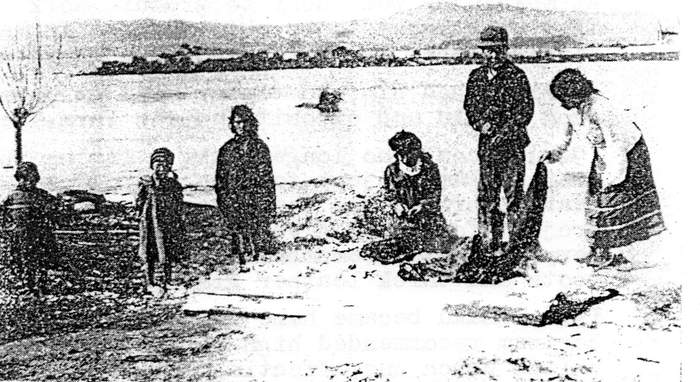 With Mr. Wilson now out of work, they moved down to Ohinemutu to the old vicarage cottage near the old rickety bridge over the Utahina where it flowed out into the lake. It was in front of Iri Kingi, he was at the back and the Morrison family too. They had hot pool baths on the Ohinemutu side of the river, across it was a big pool so they could run easily from freezing cold Utahina water to the hot thermal baths. They made a tin canoe which gave them endless amusement. Their wealthy Auckland cousins enjoyed it all so much when on holidays that they were quite envious.
To have the lake and the shore as well for their amusements made it a popular place with friends. It was fascinating to see the Maoris using the steam holes for cooking food or for hangis. Some evenings were enchanting with steam rising, a moon, flight of birds, and song and laughter. Being a musical family and always singing, they felt happy in this atmosphere. It was sad to leave.
They moved to Maida Vale St. off Fenton St. opposite Devon St. into a little cottage, later moving to a bigger one on Fenton St. corner. This overlooked the first aerodrome that was being formed and here Mr. Wilson helped clear the airstrip, getting this Relief work for 15 shillings a week, scrub cutting. They stayed here 5 or 6 years.
When they could not afford lunches to take to school, they would decide to walk home and maybe find something like, perhaps cucumber. During their worst times, their mother’s parents in Auckland would pay the grocer who would therefore give some credit. Their uncle, also Remuera, was Chairman of the Education Board, T.U. Wells, and he helped with Sancha’s education, but Bunty left school after Form 4 to work in a photographer’s shop, Trout & Clark, in Tutanekai St., but he himself had a little hut at Whaka.
They had wonderful holidays in Auckland with their grand-parents who took them to Waiheke Is, bought them clothes and sometimes the grandmother would give them a special treat. They would go to lunch at fashionable Milne and Choice in Queenstreet, a film in afternoon, then go to the cinema (motion pictures) in the evening, then when back home, Grandmother would play beautifully till about 11 p.m. on her Grand Piano. They always dressed for dinner. Their mother was helped to go to Auckland several times a year for advanced violin lessons. Their Gt. Gt. Grandfather was a fine artist at the time of Turner, Eng.
Bunty Wilson married Stan Upton, 1939. He had come to Rotorua earlier in the 1930s as manager of the popular Self Help Store. Their home is in Pretoria St. off Ranolf St.
The day Stan first arrived in Rotorua, he was astounded at the scene. It seemed like a Western film at first glance until he realised. There was a great procession of cars moving slowly along through the street, everything stopped as they passed and people stood in silence, men’s hats off. At the rear followed a great number of neat riders on well groomed horses under good control, obviously from Hunt Clubs. He was later to know that this was Rotorua’s expression of great sorrow for an exceptionally fine, vital and popular young lady, Betty Bertram, who died unexpectedly after a short illness.
Trevor and Phyllis Taylor
1928, Mr. TREVOR TAYLOR and his wife Phyllis (nee Proust), Ranolf St., came to Rotorua with three young children, Beryl and June, (still in Rotorua), and Doug whose leg was badly affected in polio epidemic. The Depression had forced him to leave Mamaku in search of work.
His career began in the Dept. of Agriculture Wellington, having gained his Diploma in Levin. He joined the Army W.W.I, but on his return he found his job taken by someone else, so he searched for work.
At Mamaku he was lucky to procure work at Gammon’s Timber Mill. They were lucky to be able to live in Mamaku township itself, as his wife’s mother helped finance the house with 7 acres of land.
Later he had his own timber mill at upper Otoroa Rd. several miles from Mamaku and opposite Muir’s farm. They became great friends.
1928, he could no longer make a living there so moved to Rotorua. Arapuni Dam project for the Hydro Power Station on the Waikato River near Cambridge was the nearest work available. He stayed with that project for about 4 years, his children attending Rotorua Prim. Sch.. Beryl and June remember his comings and goings with his great heavy boots and thick leather gloves for protection from handling hot tar.
1934, Mamaku became home once more, returning to their house, as Dr. Bertram recommended high altitude climate for June’s chronic bronchitis which was affecting her schooling. During the change over they stayed 2 years in Elizabeth St.
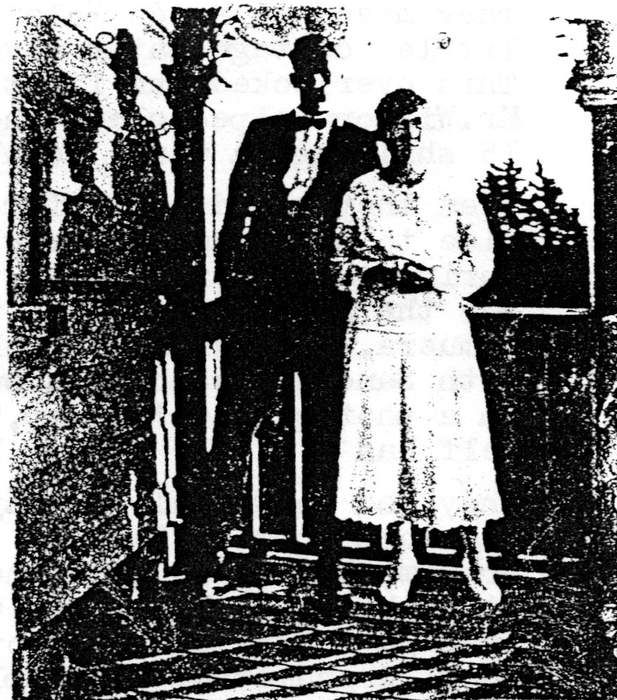 JUNE TAYLOR, born 1921, married Brian Wills, educated, with a career in the Waipa Mill office. Lives 70 Otonga Rd. Her sister BERYL JARLOV, 50 Eliz. St. recalls early incidents with June;
They lived in tents for 3 months between leaving Mamaku for Rotorua. Their father leased a Tarawera Mill for 3 months to supply a timber order to a Rotorua Furniture Firm, only to find when completed, that they would not or could not pay him. His solicitor managed to get him a token amount which helped him move into Ranolf Street’s rented house. This was opposite the Devon St. shops.
June’s highlight here was a prized birthday doll’s pram which she paraded out on the footpath. Peter Bexley, the shop-keepers teasing son whizzed it about in glee with June screaming. She was soon in great trouble from her strict mother for going outside the gate! Another time, this wee pram was lent to the friendly neighbours, Mr. & Mrs. Mason who needed wheels to transport a heavy parcel to the railway station. Their daughter Joyce, now Cresswell, is still a great friend of June’s.
Mr. Taylor had a wonderful young mare called Star which the family loved as their father had trained it from a foal. It had a wonderful temperament, was reliable and adaptable in riding situations and work. June recalls one day, while living in Elizabeth St., that Star refused to behave. Olga Millet, daughter of family friends from Mamaku and now Quarry Rd. off Fairysprings Rd., was a keen hunts-woman. This particular day her horse was playing-up so badly, refusing to be ridden, that she called in to ask to borrow Star. Incredibly, Star was the same!
Unbeknown to Olga at that same time, up the rough covered scrub slopes of their small farmlet bordering George Ford’s farm, (now called Selwyn Heights) an amazing disturbance was going on in the bird world with such a cacophony of bird calls as from quail and pheasants in particular, that George, working near, was bewildered! It was realized later that these creatures and the horses were well aware, before we humans, of the earth’s disturbance that day which caused the disaster of the Napier earthquake, flattening the city, the after waves reaching Rotorua with severity, making a vertical crack in the front wall of the Boys’ High Sch. and evacuation of pupils – 1931.
Star became a most treasured help and companion to Mr. Taylor in his bush work when, in 1934 he returned to Mamaku, working with the big State Mill for a time till he was able to establish himself in a successful post and batten business, supplying the Auckland firm of Rosenfeld and Kidsons who sold to the increasing numbers of farmers for fencing. This pony would pull sledge loads of posts split by Mr. Taylor, out through the bush to the loading base. Here he loaded them on Gammon’s flat waggon which was hauled in the early days by horses, bullocks, to the Railway Station, but later by a bush locomotive – ‘LOKI’! Before the timber left the bush, a Forest Ranger assessed the amount for paying royalty to the State owners of the bush. When pony Star, had pulled out her last sledge-load for the day, Mr. Taylor would give her a ‘Well-done’ slap on the rump and say, “Home”, while he rode on the waggon. Star always found her way back through the bush.
 One day, Mr. Taylor, on arriving back home, pulled from his pocket just a new born piglet, a wild Captain Cooker which his son Doug adored and nurtured so well that at times he was allowed to feed it from a plate on the hearth. Even his mother tolerated this until she found that she needed to wear boots to protect her ankles from its rough affection. One day when piggy was big, the children all went for a picnic and there-after could not understand what had happened to their pet, even when bacon became plentiful for breakfast!
When June started school at five her father had his Otoroa Mill near the main road turnoff a few miles from the Mamaku school and just past Tarukenga Maori Marae and its few railway houses. Because of her bronchitis, permission was given for her to travel on the bus for Maori children. In blackberry time it also helped Maori women to and from their picking areas with their 4 gallon kerosene tins. It took these to the railway, freighting the berries, for hot and tired women, to Thompsons & Hill in Auck. for jam. It was hard but well paid work.
Mrs. Taylor was a delightful and talented musician so the family had a happy social life as communities made their own entertainment in those days. Mrs. Taylor loved her beautiful grey cat which frequently caught small birds, then presented them to her to pluck before it would eat them. Over the years she kept all the softest feathers. When Beryl married and had Taylors’ first grandchild, the crib and pram mattresses were of this cosiest down.
Edgar and Aileen Hemmings
1943, EDGAR & AILEEN HEMMINGS from Mamaku, made 6 Lytton St. home till recently when Aileen, widowed, moved to 19 Toko St. with her son Jim. 1935, these two young Mamaku people married, staying there in Edgar’s parent’s homestead for three years before moving nearer to Taupo to work at Maroa saw mill for several years, then Rotorua, three houses up from Malfroy Rd. in Lytton St. This lovely home with beautiful lead lights, belonged previously to the town clerk, McLean. When Hemmings sold to the builder Bradley, he moved it to Ngongotaha, behind where the Milk Factory used to be. They had two sons, Ross & Jim and one girl.
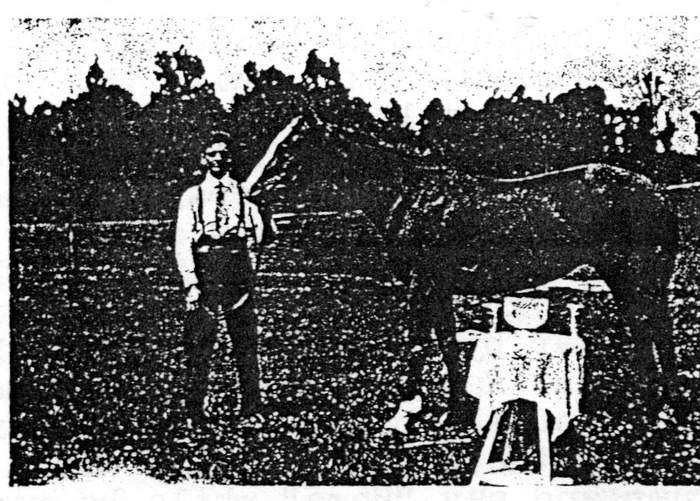
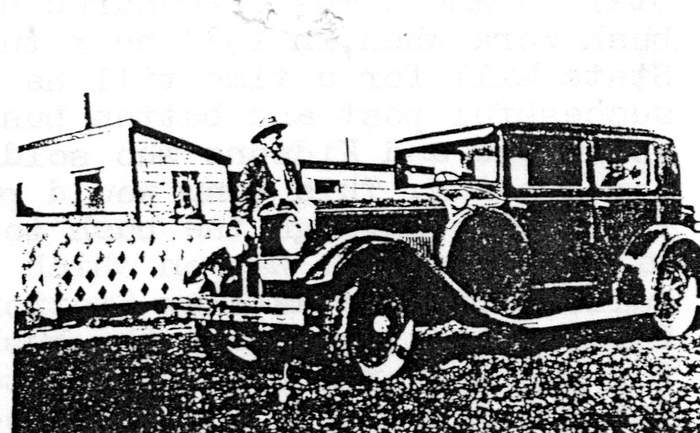
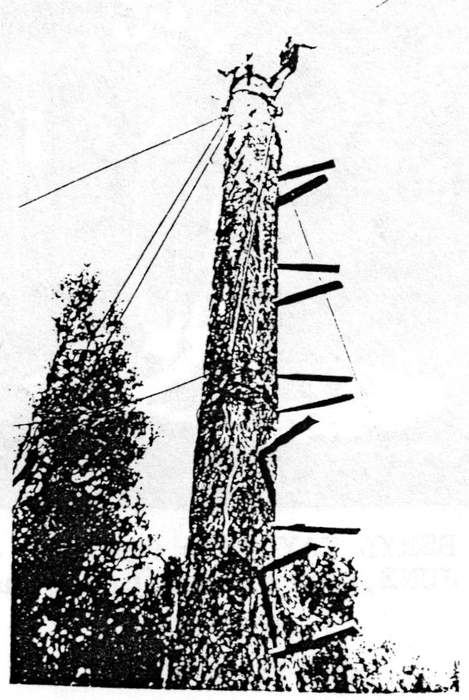
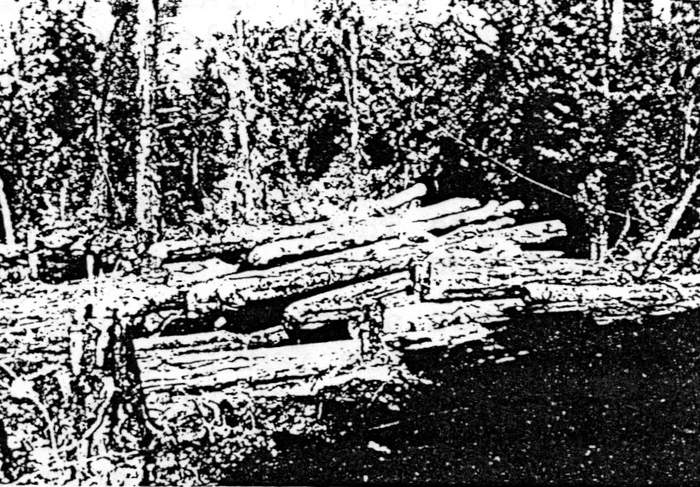
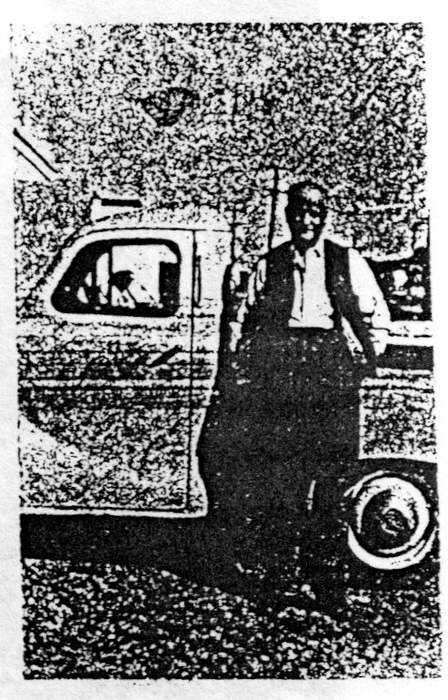
1931, Edgar Hemmings wins Rotorua cup for the Point to Point Steeplechase. 1930s, Albert Hemmings, at Mamaku by his Hudson car. Albert Hemmings & sons Edgar and Vernon did timber contracts for the Mountain Rimu Timber Company — left, ingenious construction using a cleared great tree and wires to swing logs across too steep a gully for other transport; right, same tree in clearing with pile of logs ready for moving.
This Heavy-weight Steeplechase was held at Arawa Park Race Course. The presentation was made by Mr. Hardcastle at the Hunt Ball that evening, the big social event of the year. To get to the Hunt Ball from Mamaku, Edgar and his riding mates rode down on their horses, and back afterwards. Edgar’s girlfriend went down by train and was kindly taken back by Edgar’s parents in their big Hudson car, much to the delight of Aileen Dawson, his future wife. Aileen’s father, Jack Dawson worked in the Mamaku Mills, later managing Cecil Hemmings’ farm, on the Dansey Rd. once cleared of milling timber, for beef cattle.
Edgar’s father Albert Hemmings, and uncle Cecil Hemmings (bachelor), owned land within Mamaku itself, as well as timber felling interests.—
The Hemmings Family of Mamaku
When Cecil Hemmings was on the Rotorua County Council, 1914-1916, to attend meetings he would ride horse-back down from Mamaku, stopping at George Ford’s farm on Fairy Springs Rd. that night before returning. He was a fine friend and man in the Mamaku community.
Edgar and Aileen Hemmings lived at their Lytton Street home from the 1940s. Edgar did private hauling work with his tractor in the Bay of Plenty. When at Hart’s Mill, Rotoiti, Aileen would drive him there in the Ford. He lived in the shack during the week while Aileen returned to her three children. When Edgar’s father died at Mamaku, he left them 30 acres which they sold in 10 acre sections.
JIM HEMMINGS, 54 yrs. and brought up mainly in Lytton St., Rotorua and now Toko St., has a career working for the Forestry Service, now in the group training scheme. He has always been a keen deer stalker.
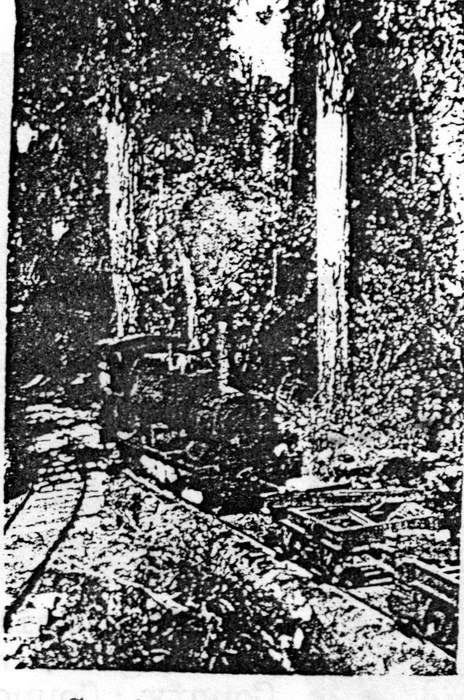
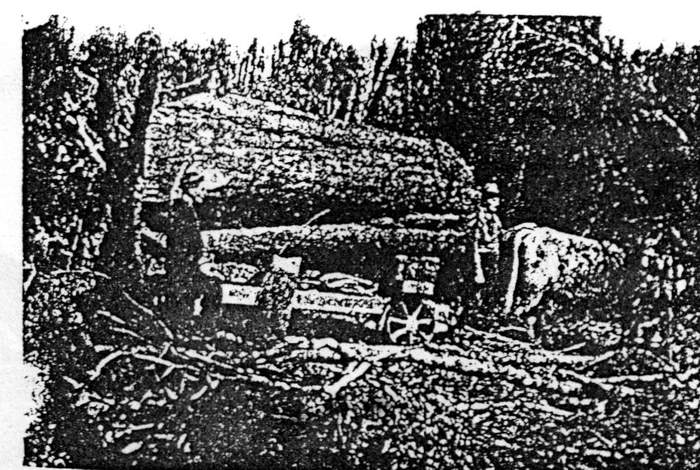
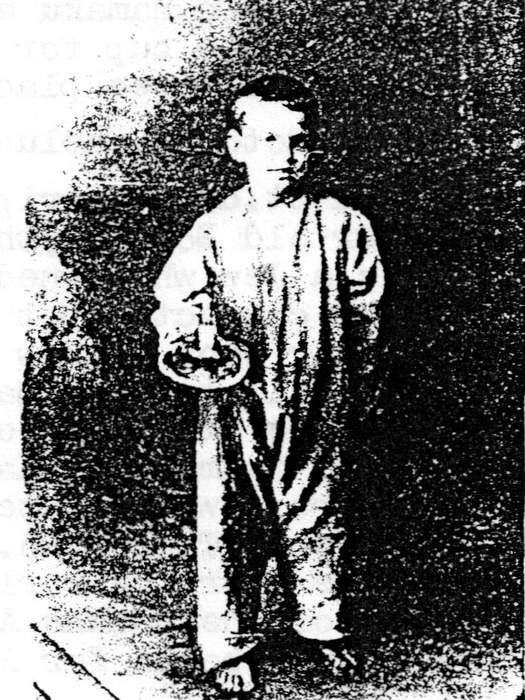
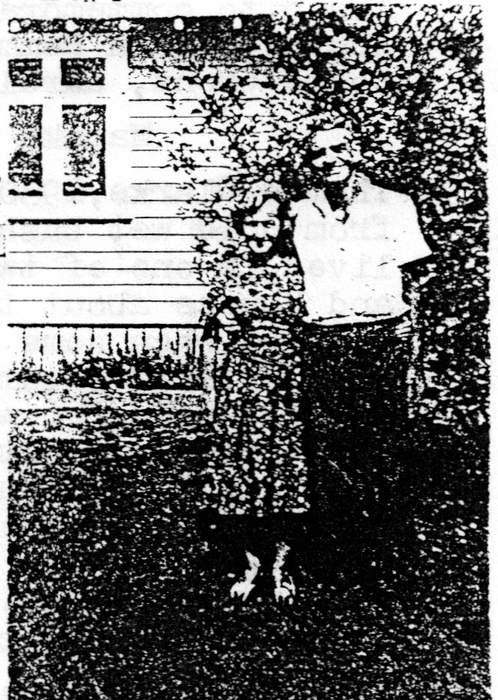
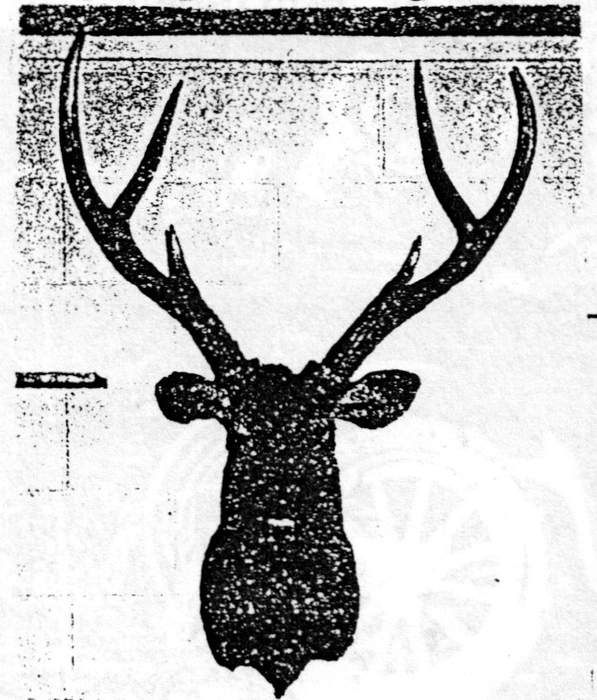
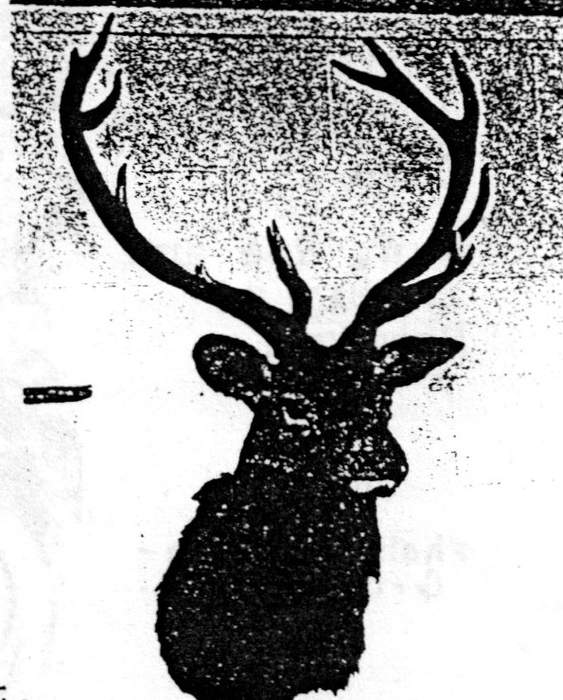
Top: a bush tramline through the timber, and one log on hauler pulled by a team of six bullocks – they have great power. Left: the bush locomotive (LOKI) then hauls logs along the lines to the mill; the land had to have a suitable grade. Right: Edgar and Aileen Hemmings at their Lytton Street home; “Bedtime by candle-light” – son Jim at Mamaku, left. Right: 1971, Jim won the N.Z. Deerstalkers Assoc. cup for N.Z. trophy of 12-pointer Red Deer. Left: Sambar Deer – trophy head of 6 points, the maximum for Sambar deer; 1907, the Tourist Dept. had two and Mr Benn a further six, and these were released at Galatea – they are no longer seen in the Rotorua district. 1905, Mr Benn, Lake Okareka, first introduced Red deer to the Rotorua lake areas.
Mamaku Families Move to Rotorua
In 1931, the Hemmings families donated this cup to the Mamaku Sports Assoc. to commemorate Cecil Hemmings’ close association in Mamaku affairs. Aileen Hemmings, 1993, was invited to present this cup for the horse event, hurdling, and place ribbons for the first three places.
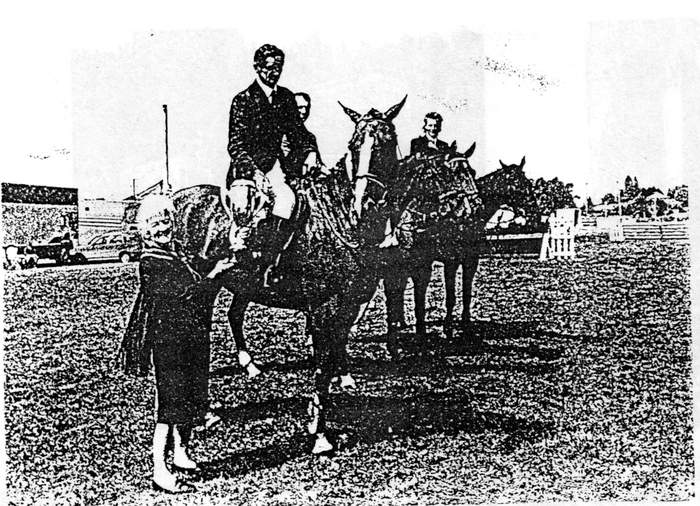 |
Figure 960’s, Cecil Hemmings; he was County Council member, 1914-1916, for Rotorua. |
|---|
Mamaku families gradually moved down to Rotorua, including:
Thomas Clarke, 1930, moved to Malfroy Rd. near Lytton St. due to crippling from cold, wet bush work. With his wife and the year-old Dorothy, they lived in one of two houses belonging to Mr Kravis, a Jew who owned land and houses about the district and was a well-known character. Dot remembers when some boys hit a golf ball through their back window and when Mr Kravis came to mend it, he wanted the golf ball towards paying for expenses. Dot went through Rotorua schools, winning athletic cups. They later moved to Devon St. by Fenton St., two doors from Chas. Karl. 1945, Jim Fugill and Dot Clarke married, Jim doing bush work. Later their son continued this interest, working for National Timber Co., Ngongotaha. Dot Fugill always retained her keen interest in the sporting world, winning many cups. She became a Foundation Member of the Womens Arawa Bowling Club and president 1952-1977. Jim also played bowls for Arawa.
A.W. Roe, Mamaku, was a well-known identity, operating a fine mill. Mrs Roe and her daughter lived later at the corner of Victoria and Ruihi Sts. Miss Roe lived there a long time, knowing many old friends.
Mr Cecil Clinkard, Mamaku builder, became a Rotorua tourist driver. 1923, elected as first Mayor of Rotorua, then Member of Parliament for many years. Clinkard Ave., off Old Taupo Rd., is named for him.
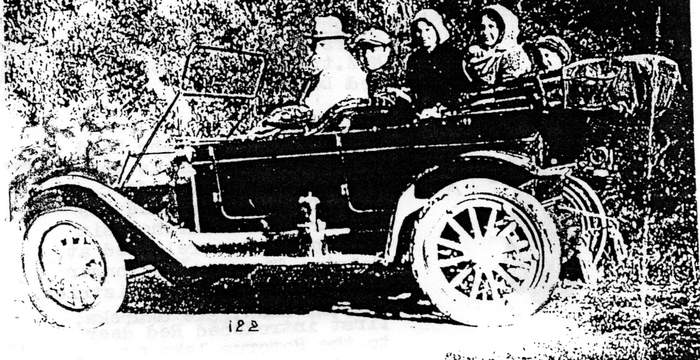
A.W. Roe and family at Mamaku (Photo – Museum, G. George Coll..
Noel Pachoud, Nurseryman and City Councillor
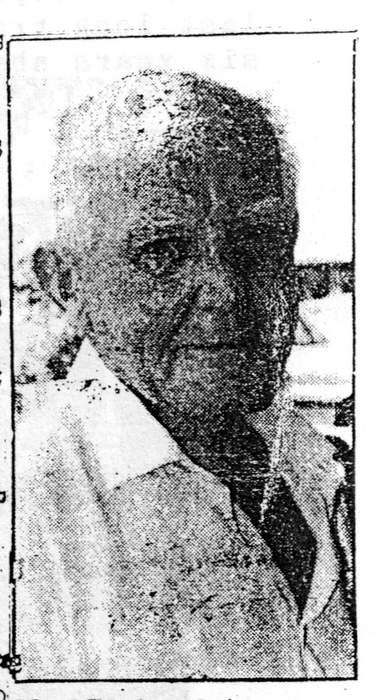 Noel Pachoud, 1934, came to live in 34 Grey St. for a career involving plants, nursery work, then managing the Wychwood Florists, Hinemoa St., for many years. This suited Noel’s warm, smiling personality as he enjoyed contact with the public, making many real friends through sharing their times of joys and sorrows being expressed through flowers. Through community involvement he worked hard for this growing town. 1971-1979, he served on the Rotorua City Council, then when it changed, 1980-1986, on the Rotorua District. For services he was awarded the BEM. 1988, in the Queen’s Birthday Honours, he was awarded the OBE.
Noel, from 2 to 15 years of age, lived in Mamaku, his father a well-known bushman who in the very early 1900s worked at Arahiwi Mill, owned by snr. Alf Jackson and 3 Ford Bros. who before 1920 became early settlers in Rotorua – Harry of Fordlands, George of Selwyn Heights, Tom of Rainbow Farm. Noel loved this bush world, the thriving mill-town atmosphere with its social life.
1934, Rotorua, he began his life’s work at Sophia St. nursery, owned by Mrs G. Urquhart, where in a few years he was joined by June and Les Hadley, the 3 of them forming a partnership after W.W.2 and leased land at Sophia-Ranolf St. cnr., then bought McHales’ 3 acre nursery below Mrs Urquhart’s.
1950, they bought Willmott’s land at the top of Otonga Rd., establishing the popular Wychwood Nursery with its Florist Shop in Hinemoa St. which Noel managed.
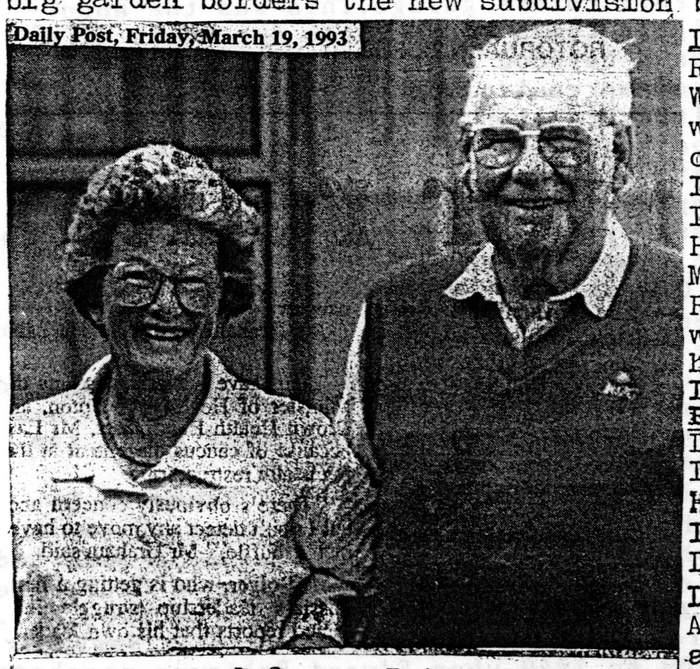
Noel recalls the dirt track of Otonga Rd., mainly in farmlands, and heavy rains made it almost impassable. There were no housing blocks noticeable between there and the mountain, Western Heights area. Below them, two big Sequoia trees marked the back entrance to Goudies’ older nurseries, the main entrance a track in from Taupo Rd. which is now Moncur Ave., named after Mr A.T. Moncur, M.P. for Rotorua 1935-1943, Mayor 1947-1953. On the south side of it was the town dump. Goudies’ nursery was on both sides of Kiwi St. of the late 1950s. In retirement, Noel enjoys his magnificent view overlooking the town, Ngongotaha Mt., and lake, from his home in Willmott Pl. off Wychwood Cres. where his big garden borders the new subdivision below, of 1993, Foley Drive.
 Harry Lapwood, M.P., and Family
1940s, H.R. (Harry) Lapwood of Robertson St., Rotorua, returned a W.W.2 soldier with arm and leg wounds, became well known in the community. He was elected onto the 1953-56 Borough Council and in 1960-78 Member of Parliament. He strongly supported M. Linton, Mayor, and Council, promoting Rotorua from a town to a city, as well as the rural areas, as had his predecessor, Ray Boord, M.P.
1978, Harry Lapwood’s successor, Paul East, grew up near the Devon-Davidson Sts. corner and is still, 1994, the National Party M.P. His father Ted East was partner, 1948, in the law firm with Les Dingle. Now, with Paul, it is the Law Firm of East and Brewster, Arawa St., next to Nairn Fisher accountants. Don Fisher and Jean, great community helpers, lived on Otonga Rd. opposite the school.