
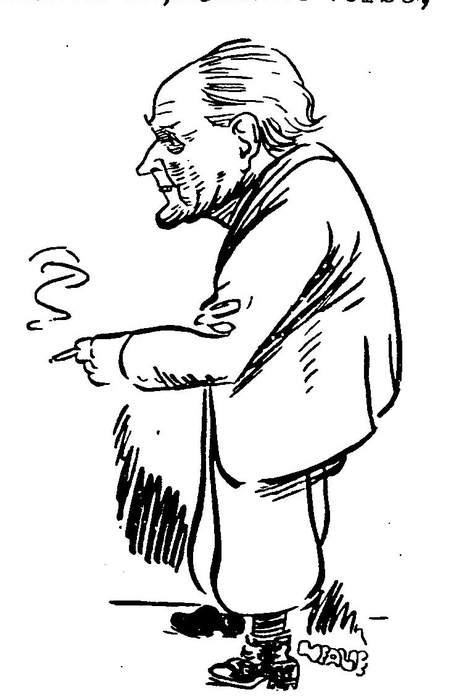
C.H. Worthington (Chas.) was one of Sophia St.’s earliest residents. He was an English gentleman and popular character of Rotorua, editor of the local newspaper, later becoming a well known wine maker. His home, next to the Golf Course, was by No. 5 green. Les O’Connor recalls the occasion when an elderly Englishman hit his ball out of bounds which Charles retrieved and returned. The player put his hand in his pocket and gave C.W. one penny (less than 2 cents). C.W., never at a loss for words, bowed and thanked him most graciously. Les bets that C.W. dined out and made the most of that one!
Mid 1900s, the local Post printed a booklet ‘Rotorua Personalities’, Nealie, the local barber, did many fine caricatures, L. Smith – Verse, C.H. Worthington, the following;
|
Introduction It is wisdom to look back over the years and from the past learn the cause of our success or failures: to give credit where due and profit through errors. Readers of this book in years to come may then appreciate the debt we owe to those whose names are now almost forgotten. Fifty years ago, Rotorua was a thinly-populated area subsisting mainly on the patronage of tourists and the Government. Timber production from native forests was the chief source of internal revenue. Agriculture was in its infancy. The insistent repetition of the slogan: “Poor pumice land” stifled enterprise, and the problem of bush-sickness was still unsolved. Rail transport had just superseded the coach service. Main roads were almost impassable in bad weather, and country roads mere goat tracks barred to wheel traffic. Thermal activities, bush and lake scenery and Maori life and customs were the sole attractions. Times have changed! Rotorua now supports a population of approximately 8000. The town lives by the country, its farms and the vast exotic forests that cover hundreds of square miles around it. It is well to remember the old pioneers of production, the hardships they endured and the service they rendered to posterity. Space forbids extended reference, but of the many, the Carl brothers—Charles, Jack and Vincent—who settled in Oturoa 62 years ago. True pioneers, the Carls held a Crown grant in 1863 for service in the Waikato wars, at Ohaupo which they farmed with conspicuous success. The three brothers migrated over the ranges and carved their holdings out of the bush and wilderness, carrying their supplies by back or by hack to Otowha. The seedless Barbary Hedge is one of their gifts to posterity. On the high plateau, the Steeles, the Kusabs, Rowe and others worked the splendid stands of native bush, opening the way to the great operating companies of the present age. The State Forest Service had come into being and to-day forms the main milling industry of the district and of New Zealand. The potentiality of the soft woods industry is illimitable, and remember that this is sprung from poor pumice land, regarded at that time as worthless. Coaching continued long after the rail had reached Rotorua and provided some of the most colourful history of the early years of the 20th century. They were stout and hardy men who kept the roads open. The companies took great pride in their turn-outs and the standard of coach and horse challenged Australia’s best. Of the many the names of Charlie Crowther, John Falloona, Carr and Walker, Edwin Robertson, Goodson brothers, A. Smith and Son are a few remembered. |
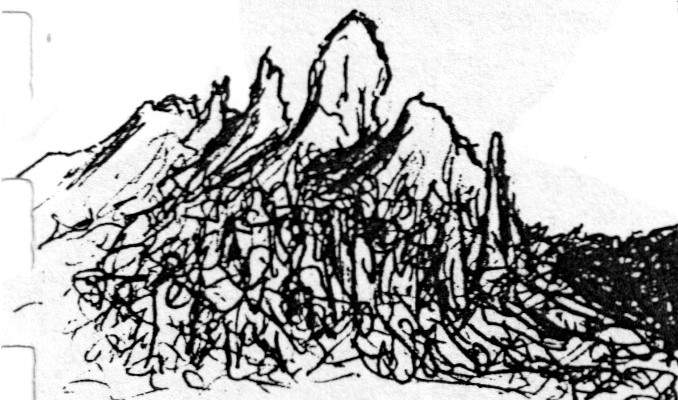
Figure Caricature captioned ‘Sporting Saga: Sophia St.’ (C. H. C. Worthington). SPORTING SAGA: SOPHIA ST. THE GOLF SLAVE’S DREAM To Bernie’s Bar I’ll make my way Some passed into the mechanical era, when motors superseded the horse and ushered in the age of speed and accident. Few of the old drivers remain, but Charlie Willmot, a veteran of the wars who drove transport waggons in 1914 in France still lives among us, as does Tom Atkinson, and Dick Garlick renews his youth at the wheel of a taxi. At the close of the century, business was gradually shifting from Ohinemutu to the present area. The era of individualism had not passed to the mass-production stage. Rotorua could boast of many fine craftsmen. Some yet survive. In bootmaking, Jerry Larkin, J. P. Lawrie and James McKay were craftsmen saddlers; Tattesall and Stewart made to order and made it well. The smiths of that time covered all branches of their trade. |
|---|
 Coaching companies commanded much service. Horses to be shod and vehicle construction; repairs—a big item—kept them busy and the farmers’ needs were becoming insistent. The Corbetts, Alec and Jack Munro, Jimmy Morrison and Tom Anderson were pioneers who opened the way to the great machine shops of the motor era.
Rotorua had two full bands, and a string orchestra played in the Gardens. The Munro’s, Jack and Alec, were the mainstay of one, and Horace Stewart of the other.
Stores removed from Ohinemutu. Theirs was a trade; invention had not yet created the unlimited necessities of 1948. Main, Kirk and Saunders, Sherriffs, father and sons, George Vaughan set up a standard of meat supply which has never slipped, and Rotorua still maintains a record for quality and service.
But it has not been all progress. In 1900, the lakefront was a scene of constant activity. McDonald and Boord operated launch services to all parts of Rotorua and Rotoiti lakes. They connected with coaches at Te Ngae. Boats made regular trips to Hamurana, Waitete and the lovely beaches and bays of Rotoiti. Picnics and holiday excursions were arranged.
Boat building was a flourishing industry, and many fine craft, both sailing and power, were built and launched from McDonald’s slipway, where the sulphur scows from Mourea discharged their cargoes. Mr. Charles Robinson, the shipbuilder, still carries on, maintaining a sound reputation for good designing and craftsmanship. Powerful arc lights illuminated the old mole. The Gardens were flood-lit.
Big regattas, with the best of Auckland craft competing, were held. Maori canoes attracted Dominion-wide interest.
This important sporting feature of Rotorua life is happily being renewed by the 30,000 Club and promises again to prove a source of progress, pleasure and profit.
|
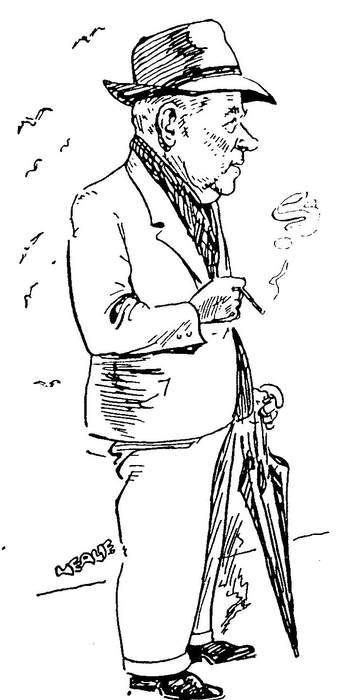
CROWNER’S QUEST (W. L. Richards) The woodheap marks the closing in of day, But other matters oft his duty call; |
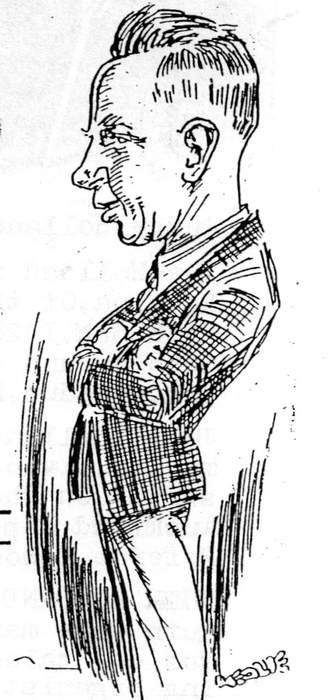
A WORTHY CITIZEN Appointed a J.P. in 1923, he also took over the duties of Acting Coroner, and nine years later he was appointed Coroner. This position he has filled with conspicuous ability and tact, winning warm approval from high quarters. In sport, as patron and participant, he has ever been to the fore. Founder and first president of the Citizens’ Club; first president of the Rotorua Swimming Club; reviver of the Rod and Gun Club and also its president; and enthusiastic outdoor sportsman, he has stalked deer in many districts. As a racehorse owner he has been very successful. Genial and approachable, a fluent speaker on many topics, he commands a wide circle of friends. |
|---|
W.L. Richards, 1914, lived near Arawa St. before moving to Kowhai–Devon St. area with his wife Alice, (sister of Mrs C. Doggett), their son Keith also built in Kowhai St., but now moved to Carlton St. The Richards lower Arawa St. business – Wood, Coal Merchants & Carriers, was later sold to Goodsons by Keith. Both Keith & W.L. were keen race horse men.
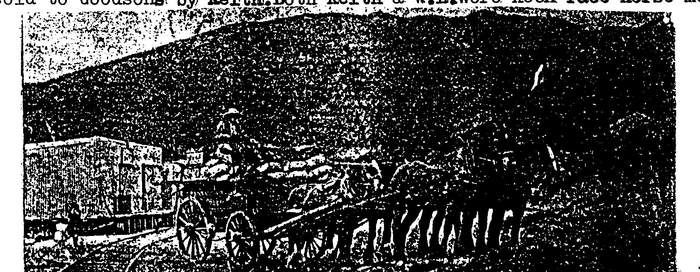
Photo: Goodsons Carrier Service — Keith Richards sold out to Goodsons. (Museum.)
Sophia St.: whole block owned in 1912 by Urquharts, became Nursery until late 1940s when sold and subdivided for homes (almost one hectare), the later subdivided sections passing to D. Hurd, A.P.C. Leslie, P.B. Allen and H.A. Goudie.
Handwritten annotation in original (shown in blue), within the sketch plan of the Sophia St. block: ‘A fine big orchard area which was often raided at fruiting season, George Urquhart, yet still sufficient, leaving.’ Also noted on the plan: ‘Lytton St. ended here, before the subdivision.’
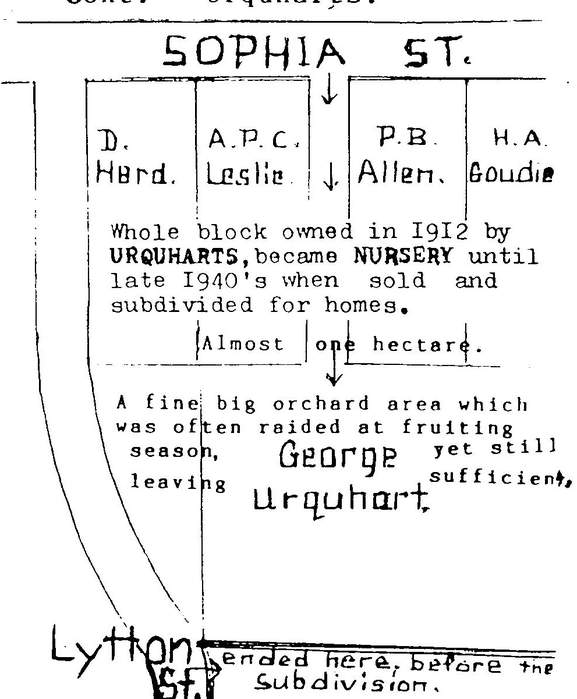 1912, George Urquhart’s family home was built in Sophia St. near Fenton St. Mrs. Urquhart later developed these grounds into a nursery for Rotorua.
1919, George Urquhart’s Law Firm was joined by Eric Roe, 2nd Lieutenant in W.W.1 for the Royal Flying Corp. in Britain, 1914-1918. The Firm was now called Urquhart & Roe. 1944, when George Urquhart died, Eric Roe was joined at end of W.W.2 by Jack Keane, 1945, a pilot of R.N.Z.A.F.
1917, E.M. (Betty) Urquhart was born in Rotorua. In 1934, Betty became Girls’ Dux at co-educ. Rot. High & Grammar Sch. after receiving Prim. education at Whakarewarewa Sch. In 1939, LLB from Auck. University, then work with her father’s firm until 1944 when she became the first woman lawyer in the Hamilton & Rotorua District to open her own law practice. 1980, Betty retired as Rotorua’s longest practicing lawyer. Betty served 21 yrs. on Rot High School Board of Governors and Deputy Mayor for 8 yrs. Betty has given much enthusiastic time to community associations and was 1981, presented by the Queen with MBE medal.
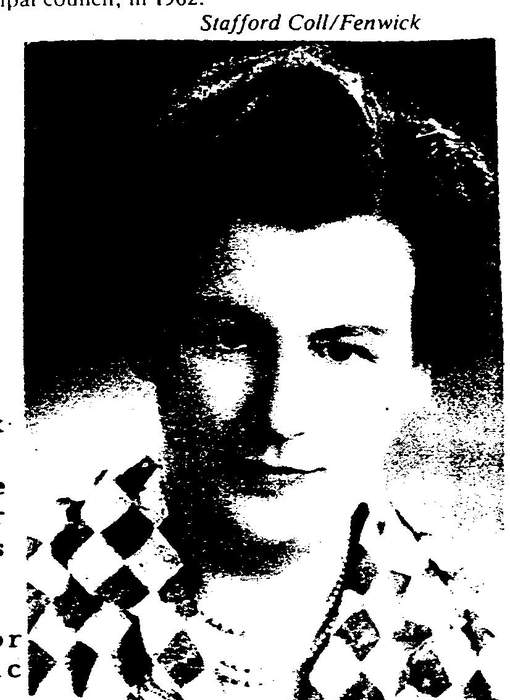
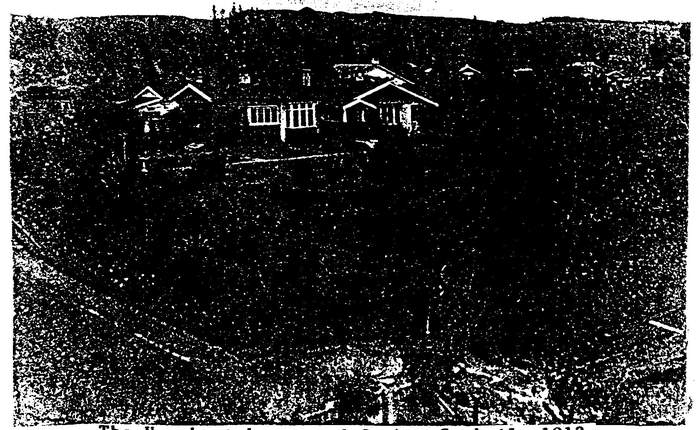
E.M. (Betty) Urquhart, Deputy Mayor from 1963 to 1971. With Enid Tapsell she was one of the first two women elected to a Rotorua municipal council, in 1962. (Stafford Coll./Fenwick.) Right the Urquhart homestead, Sophia St., built 1912.
In this part:
- George and Bertha Urquhart
- Herbert and Eileen Graffe — Graffe's Bakery
- Ernest T. Johnson — "Johnson's Corner"
- Joseph Bates and the Woolliams Family
- Judge Holland and Family
George and Bertha Urquhart
George Urquhart, born Scotland 1880, came N.Z. 1886, Rotorua 1904. He married Bertha Rees in 1905. By 1912 their Sophia St. home was built. This was near Fenton St. There were very few other houses to be seen. This lovely big home with 3 chimneys, had a bedroom fireplace extra. Bertha Rees (Bertie), was born in India, coming to N.Z. early 1880s, as a little girl, her father becoming Headmaster at the sole-charge school of the Scottish settlement at Whangarei Heads. The school house was on the seafront of the harbour, beneath towering Mt. Manaia.
1886, both Bertha & George, as children of about 6 yrs. but not yet met, experienced a result of the Tarawera Eruption, leaving lasting memories. George was in a sailing ship off the shores of Bay of Plenty en route to settle with his parents at Lawrence out from Dunedin. The crew and passengers became puzzled by so much ash falling on deck. Bertha was alarmed by deep booming sounds reverberating off Mt. Manaia. There was great apprehension that Auckland was being bombed by Russians!
Bertha grew up to be a fine capable person who, once her 2 chn. were older became keenly interested in her garden. Of independent nature, she extended this to a much needed nursery for Rotorua, employing Mr. & Mrs. Les Hadley till 1940s.
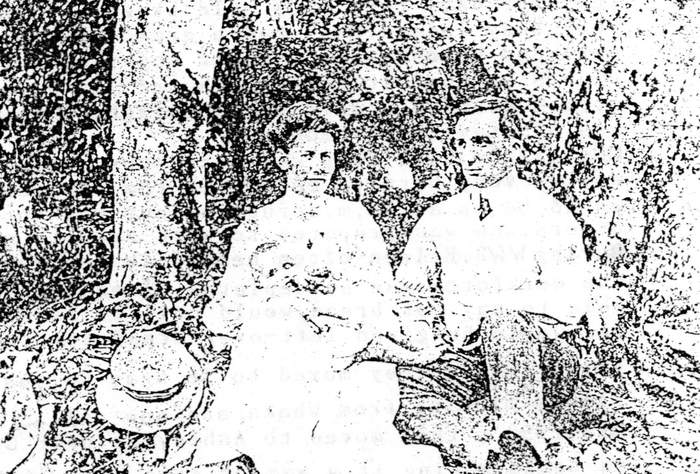
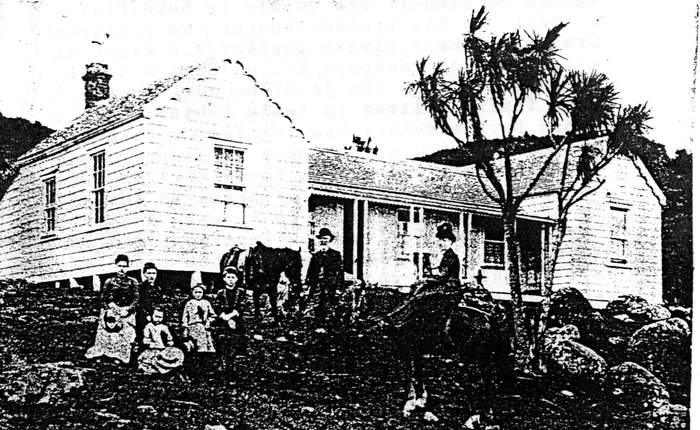
 1904, George Urquhart began his Rotorua career as a barrister and solicitor. In 1906 he started his own Law Firm, this was 2nd. Firm in Rotorua. He arrived in Rot. on Guy Fawkes Day and is said to have had such vitality that sparks livened up his meetings & community. His Maori Land Court wk. affectionately earned him the name ‘Hori.’
The Teacher’s House, McLeod Bay, 1886. Sole teacher, Mr John Rees and family. Mrs Bertha Urquhart as a child at home, Whangarei Heads
. Right Mrs Bertha & George Urquhart at Rotorua home with their son. Later, Betty was born, becoming a solicitor as was her father. The Urquhart family became one of Rotorua’s best known families for their individual careers.
Herbert and Eileen Graffe — Graffe’s Bakery
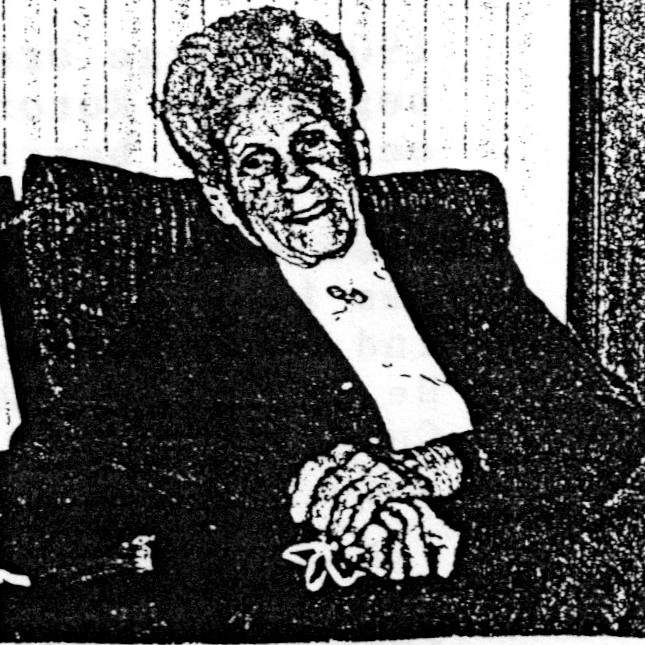
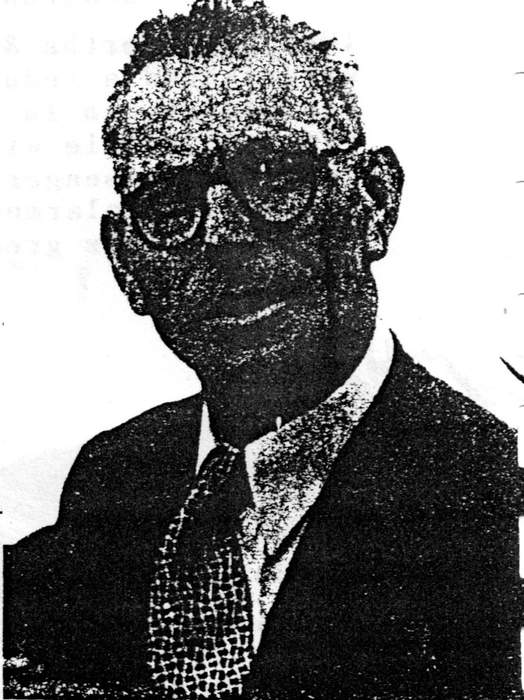 HERBERT GRAFFE, before 1920, at 18 yrs of age, came to Rotorua. In 1931 he married Eileen Tooney; in 1932 had a home cnr. Fenton-Malfroy Rd. Eileen, an attractive vital lady of 90 yrs. in 1992, vividly recalls her life in Rotorua with her husband Bert and his parents in early Rotorua bakery. Their 2 chn., Douglas and Elaine, also helped.
CARL GRAFFE, Bert’s father, left Denmark at 17 yrs. to become a hairdresser in England. There he married Maude and with 1 girl & 4 boys came out to N.Z. by sailing ship. When in Takapuna, 3 sons learnt bakery business. Carl set up a bakery business in Rotorua though he himself was unable to bake. Finally Bert and his brother bought the business. Graffe’s Bakery, always popular, was first at cnr. Tutanekai-Haupapa Sts. on Palace Hotel side with Aitkin the jeweller next door. Both families lived in tents behind their shops. Bert’s mother had to climb in through the back window of the shop to start so early. The street was just a rough dirt road in those days. Bert delivered bread to houses by horse and cart for 3 to 4 pence a loaf. Bert’s father Carl was an impatient man but hard worker. If Eileen handled the bread at all roughly, he would get annoyed.
 When Bert & Eileen’s 1st. baby arrived, 1931, they struggled to get a loan, buying their own home Fenton-Malfroy area next to the grocer, then the butcher. Loans were mainly available from places such as Hale’s motor firm which would foreclose if mortgages not met regularly, there-by owners losing all. They were fortunate to get better conditions through the Building Society.
When Grandfather Carl opened this first shop before 1920, they also opened a cake shop with tearooms. Carl realised providing basic cooked food would be a wise investment both for European tourist trade and the Maori population. The second shop, when they moved across the street in present-day position, as well as selling bread, they now had confectionery and icecream. This, despite the Depression, was worthwhile, for by staying open late at night, the young picture goers liked to come in for sweets etc. after the picture shows, Wed. & Sat. nights. In later days they just sold bread and were very busy indeed. Carl had a gramophone with an extended horn-shaped speaker and played this at nights so that it could be heard way down the street drawing people in. “Moonlight & Roses” was his favourite record.
Costello’s Fish Shop was next door. Mrs. Costello worked very hard to establish the business and would be up at 6 a.m. scrubbing out the shop. Like others, she was prepared to work hard to get on. During WW2, Eileen often helped in the bakery as the workforce was so depleted. Often people, unable to pay for bread, would call at late night and would be given left-over bread for the chn.
Early 1940s they moved to Te Ngae Rd., just over the bridge by the stream flowing from Whaka, and now called ‘Santa Marie’. Mid 1950s they moved to Ashley St. near Glenholme. Both became keen on bowls, making it a way of life. Bert died earlier from lung trouble.
Ernest T. Johnson — “Johnson’s Corner”
ERNEST T. JOHNSON, 1922, came to Rotorua, buying property at the cnr. Pererika-Ann Sts. from Edwin Robertson. His lovely big villa home was a landmark, known as Johnson’s Corner. He came to Rotorua from Australia to get thermal treatment at the Rotorua Sanitorium which was situated at the present Orchid Gardens site in the Govt. Gardens. He came in a wheelchair, crippled with arthritis, and was cured.
1929-1946 Ernie Johnson served on the Rotorua Borough Council at the time when Thomas Jackson was Mayor up to 1941. He was a Deputy Mayor.
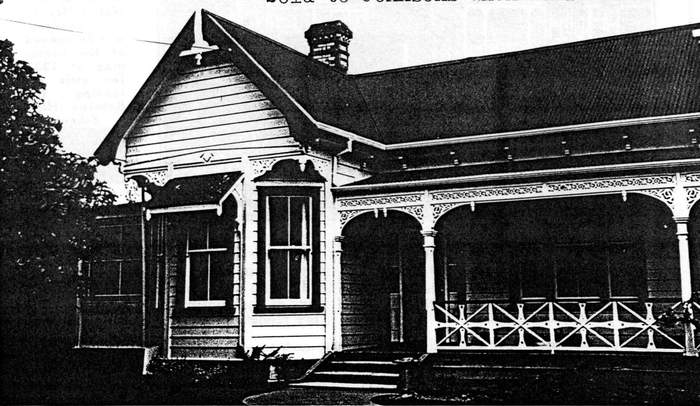 Mr. E.T. Johnson bought up considerable areas of land near the town, not to be farmed by himself but to be sold to others through his land agency business. Some of the buyers were Mr. Sloane & Mr. Lewis. These areas have become suburbs of the township.
1920 Rotorua Town Lands Act enabled land to be freeholded from the Crown. The Crown had purchased Rotorua lands from the Ngati Whakaue when leases, due to the 1880s Depression, couldn’t keep up payments.
The Johnson family of five were, Treacy, Jim, Bina, Jean & Dorothy. 1992, some attended the Rotorua High School reunion, including their eldest, Treacy, a foundation member in 1927, now 83 years of age. Bina married into a well known Rotorua family – to Ray Spedding and have a son in Rotorua, Colin, also nephew of Frank Spedding. Jean Johnson married Jack Robinson, a land agent living in Whaka Rd. from the mid 1930s. They married 1940, spending their wedding night at the old Palace Hotel, (now Lakes Health Care) cnr. Tutanekai and Arawa St. and remember there were still horse hitching posts outside.
Mrs. Johnson was a kindly person greatly appreciated by a young High School teacher when able to get board and lodging with her as she treated them as one of the family and had ample room space. One teacher Isobel Street was given her wedding from the Johnson home when she married a popular fellow teacher, Paddy Webb.
Some of the other teachers were less fortunate as few people wished to provide board unless badly hit by the Depression. This usually resulted in having to share a room and stint on basic essentials like having sufficient hot water for baths, very little winter heating in the house and none in bedrooms where teachers tried to do their work at night with very poor lighting as electricity time was restricted. Wire-wove with iron railing beds often supported old mattresses so thin that even layers of newspapers beneath did not stop the chill.
“WESTVALE”
Pererika Street :: Rotorua. As advertised in High Sch. magazine.
|
Figure The advertisement’s photograph of “Westvale” is labelled ‘stables’, with an arrow pointing to the building at the rear of the property |
This residence, under the control of Mrs. E. T. Johnson, will be opened at the beginning of 1931 for girls attending the Rotorua High School. |
|---|
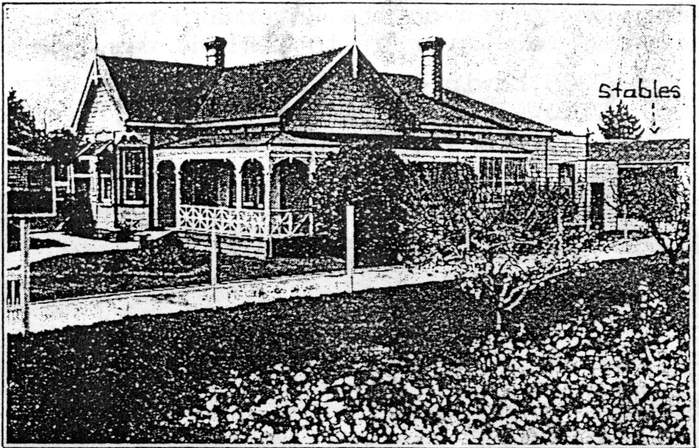
Handwritten annotations on the pasted advertisement: “Tennis Court” with an arrow pointing to the court shown in the photograph, and “1931” written beside the announcement of the opening year, apparently added for emphasis.
| SITUATION: “Westvale” is situated on three-quarters of an acre of high ground, well laid out with tennis lawn, orchard and shrubberies. It is adjacent to the High School Grounds | FEES: £20 per Term (including laundry), payable in monthly instalments, or reducible to £19 if paid within 21 days of the beginning of a Term. Day Girls’ Dinners: .. £3 per Term. |
|---|---|
|
Current Expenses:—For current expenses during each term such as pocket Money, church collections, stamps, occasional amusements, parents should send in advance £3 to Mrs. Johnson, who will render an account of its expenditure at the end of each Term. Parents are advised not to allow girls to be in possession of a large sum of money BOARDERS’ EQUIPMENTS:—BOARDERS ARE EXPECTED TO PROVIDE:— |
|
| List 1—The Regulation girls’ uniform as required for the Rotorua High School, and including:—Tunic, coat, 3 blouses, tie, shoes (black walking, plain house shoes or slippers, plain evening, white gymnastic shoes), 3 prs. plain black stockings, 3 nightdresses, 2 prs. bloomers, 2 sets underwear, 12 handkerchiefs, swimming costume, navy blue costume (for Sunday wear), 1 plain evening dress. | List 2—1 serviette ring, 1 linen bag. List 3—1 hair brush, 1 tooth brush, 1 comb, 1 clothes brush, 1 nail brush, 1 boot polishing outfit. Each article must bear the owner’s name clearly marked. |
| Control:—The general control of the girls boarding will embody a sympathetic supervision of their work and interests combined with discipline that will ensure their development along the best lines. | Reference—The Headmaster of the Rotorua High School will be pleased to give parents any information and advice with regard to prospective pupils for 1931, but application for enrolment as boarders should be made directly to Mrs. E. T. JOHNSON, “Westvale,” Rotorua |
1927, Rot. High & Grammar Sch. opened in temporary hospital buildings. 1928, the new school opened, between Pukuatua St. and Pererika Street just opposite Edwin Robertson’s villa. An upsurge in housing took place over his land with its family street names, Ann, James, Elizabeth. The High Sch. was built on part of the gifted Ngati Whakaue endowment land of 1880, Blocks 43-47, which gave great financial regular help. Mr. Ryder, foundation Headmaster, established a fine school based on N.Z. Grammar Sch. tradition which he experienced as pupil of Christchurch Boys’ High and Auckland Grammar Sch. In 1927, Major A.R. Ryder formed Cadet Battalion, a strong force in the school life, with many lads and some masters later serving overseas in W.W.2. In 1960 the school War Memorial Hall finally opened, a dream of Mr. W.G. Harwood’s (2nd. Head.) since he came in 1931. In that hall, the Rolls of Honour name long lists of those who died, including Major W. Evans (Bill), foundation Master.
Joseph Bates and the Woolliams Family
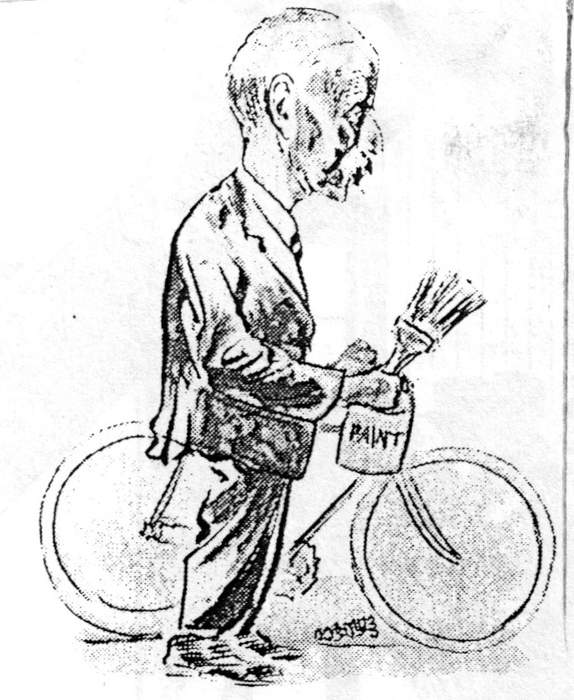 Joseph Bates, trained English painter, arrived in N.Z. 1906, established in 1920, Rotorua’s main painting firm, after living in Auckland, then a number of years in the cottage on McGregor’s property where he was the caretaker before the fire which destroyed the big home – Ron Main now owns this property by lake at Kawaha Point. Before 1920, Joe Bates, built his own home just off Elizabeth St., in James St. WOOLLIAMS FAMILY, from 1900, have been prominent citizens of Rotorua.
 He and his son Harold had painting contracts for schools, hotels, then after WW2, won State Housing contracts like the Waipa State Mill’s new village. 1920s, bike transport for all gear & ladder, 1930s, Essex car, then truck. Joe, when painting, was immaculate in collar & tie and polished boots!
LES WOOLLIAMS, fine old gentleman now in his 80s, remembers when the Woolliams family owned the block extending several shops along Tutanekai St. towards railway station on the west side from Eruera St. cnr. Les established an electrical business there, where Star Appliances now stands. On the corner in about 1900, Louis Woolliams had Thirwell House built by Mr. Sloane, with a grocery shop at street level. Then in 1909, just round in Eruera St. (about Hemingways) was Mansion House for guests and where his family lived, which was probably also built for him by Mr. Sloane. Les and his parents lived there. Les remembers his two uncles, Tom and Frank Woolliams who later lived in Pererika St. near the railway line, one of their jobs as Pound Keepers being keeping animals off it.
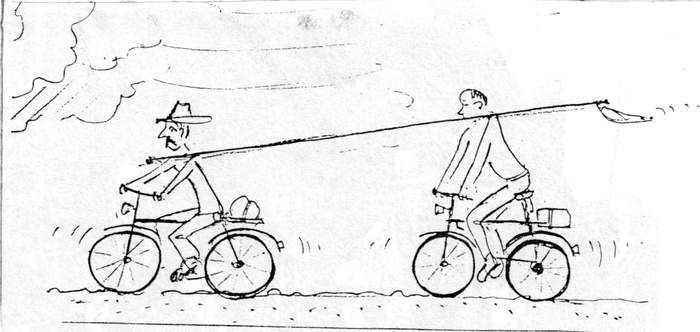
Late 1920s, Les Woolliams left school determined, despite the Depression, to get some training then struggle to own an electrical business. At first he had a horse and vehicle for his equipment. To cut costs for feeding horses, he tried bicycles, finding them more manoeuvrable and quicker but requiring considerable skill when he and his apprentice shared a pack of conduit pipes over pot-holed roads to H. Ford’s farm.
ROTORUA COUNCILS well served by WOOLLIAMS families.
1. First Rotorua Borough Council, Louis Woolliams, 1923-39
2. Les Woolliams, Borough Council, from 1947 to 1953.
3. Ray Woolliams, CITY COUNCIL (proclaimed 27-4-1962) 1968-1979. Mayor 1977-79. Ray is Les’s son, Wylie St.
4. Ray Woolliams, 1979-80, on 1st. Rot. DISTRICT COUNCIL, amalgamating Rot. CITY and COUNTY COUNCILS.
Judge Holland and Family
1924-1935, JUDGE HOLLAND of Carnot St., was in office which involved him in the early Maori Land claims of the area such as Maketu. 1935, he retired early from position of Judge for Rotorua, cutting his term short because he was unable to be paid due to the Depression. The family remained in Carnot St. (Note. Holland St. is 3 blocks away.)
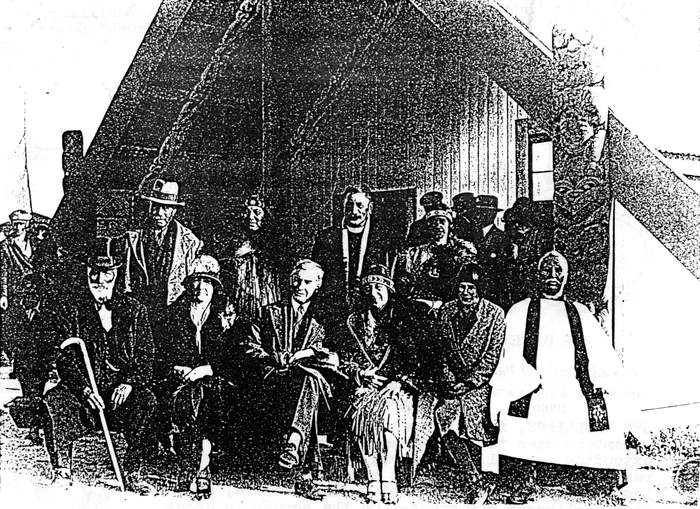 The Holland family played a prominent part in the affairs of early Rotorua. Of the six children, Wallis was the only son. He attended Rot. High Sch. 1928-1929 before Private Sch., proving himself a brilliant scholar and engineer. Ruth and Barbara were very popular throughout Rot. co-educ. High Sch. particularly in the sports field during 1930s.
Judge Holland encouraged sports within his family and also the community, giving much time to Youth Groups in retirement, when he also served on the Borough Council during 1938-1941. He had been a keen Auckland Rep. cricketer, was a Rotorua Life Member of the Rugby Referee Assoc., and Life Member of the Tennis Association.
RUTH HOLLAND was also a Life Member of the Tennis Association. Ruth gave many years of invaluable service to the community with her musical talents, particularly to the Operatic Society as well as being organist for the Anglican St. Luke’s Church. When she became Mrs. Miller and moved to the East Cape area she was sadly missed.
BARBARA HOLLAND during W.W.2 was Sports Queen in the fund-raising carnival for soldiers, her bridesmaids being Enid Clark, Vera Ormond, Ruth Holland and Mavis Leyland. Other Queens were June Quinlan for soldiers, Erina Bertram for town and Loena Ford for country. It was at this carnival that Barbara first met Bob Nairn at her home, 1940. Bob Nairn was in the army, W.W.2 having broken out, September 1939.
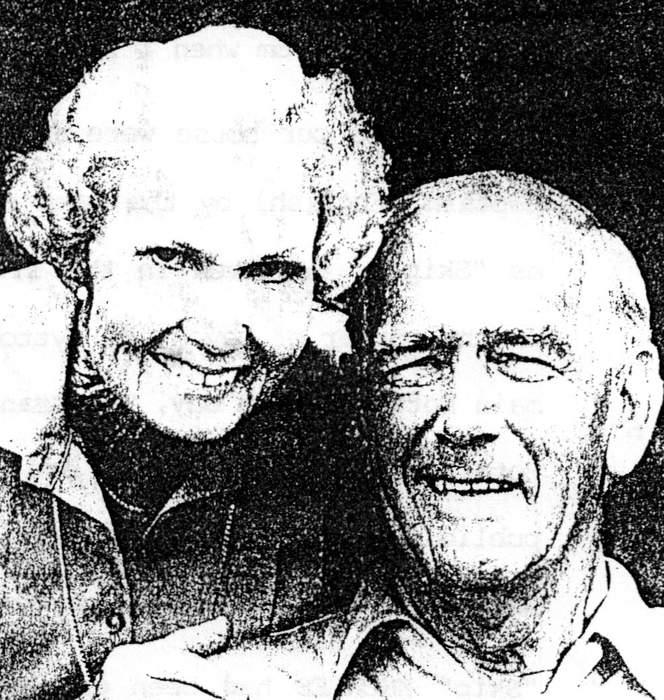 1944 Barbara Holland m. Bob Nairn. 11-1-1994, GOLDEN WEDDING.
W.W.2, Bob Nairn served 5 yrs. in the army – Egypt, Italy and Tonga. After the war, he worked in the Nat. Bank for 2 yrs. while studying for Accountancy, then into a practice. Since 1986 when he retired, he has enjoyed the sporting world with Barbara and his three daughters.
They still enjoy their game of tennis and a round of golf, as well as the walking club outings. All the family go water skiing, boating and fishing. Ballroom dancing has been a great interest. Both are elders in the Presbyterian Church and have done a great deal with church youth groups as well as school committees and for Barbara also, the Plunket Society and National Council of Women. Barbara and Bob Nairn attribute their happy marriage to the church and sharing similar interests.
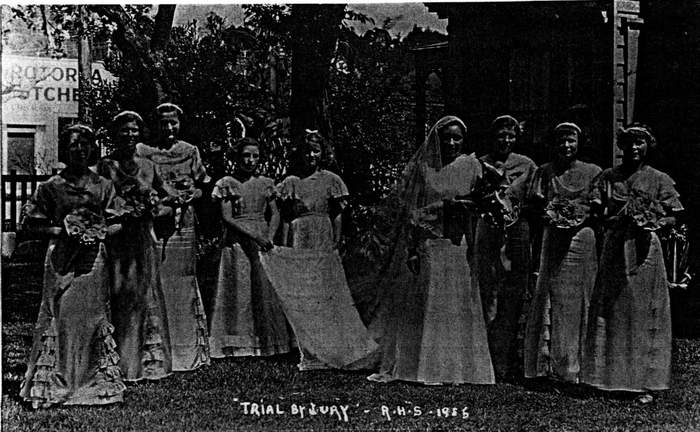
1935 Opera, Rot. High Sch., ‘Trial By Jury’ — from left: Doreen MacAdam, Beryl Clark, Ruth Holland, Erina Bertram, Leslie G?, Joyce Mason (bride), Nita Steel, Barbara Holland, Peggy Ford; Miss McDonald trained them. (The photograph itself is inscribed “Trial By Jury – R.H.S. 1955”, while the typed caption beside it gives the year as 1935.)
JOYCE MASON sang the leading role as bride in ‘Trial By Jury’ opera. Joyce had a beautiful strong voice for this popular performance.
Joyce Cresswell-Mason was brought up mainly in Glenholme area, Ranolf St. but had previously lived at Koutu Cnr. by Painton family, then at Pererika St. near Brookers, Burgess, Shields, Budds, and towards Ranolf St. cnr. were Nortons, Rev. Randerson – Presbyterian, then Moreland’s shop. From James St. towards Old Taupo Rd. – Johnstons’ big home at Ann St. cnr. with Pomeroys on opp. cnr. then Chambers. Around cnr. of Old Taupo Rd. were Callinghams and Keyworths.
Joyce Mason, was born in England towards the end of W.W.I. Her father was invalided back to N.Z. to Rotorua Hospital and his English wife helped nurse him. Their two sons were born in N.Z., all the children going through the Rotorua Primary Sch., within walking distance. Pererika St., so near the railway, had the fascination of steam trains.
Dorothy de Lacy Collins — Childhood Memories of Devon Street
My name is DOROTHY de LACY COLLINS (nee Smith) and my earliest memories are from when I lived at 12 Devon St. Rotorua about 1929.
Next door to our house were market gardens, tended by a retired Army Captain (English) by the name of KNOWLES. He was always referred to as “Skip”. He lived in the little cottage which still stands today on the corner of Devon and Lytton Sts. He grew flowers for the three main hotels of the day, The Grand Hotel, Brents Hotel, and the Geyser Hotel, tomatoes, lettuce and beans were also available for the public. It seems the only fertilizer he used was a 44 gallon drum of watery horse manure which gave wonderful results.
“Skip” KNOWLES had been gassed in the first World War and was very ‘wheezy’ – quite often he had to stop and give himself an injection.
As a child I watched in fascination as he sterilized his spoon in which he dissolved a little white tablet, over a small burner, before drawing the liquid up into the syringe, all the while gasping for breath. It was such a relief when he began to breathe easily again.
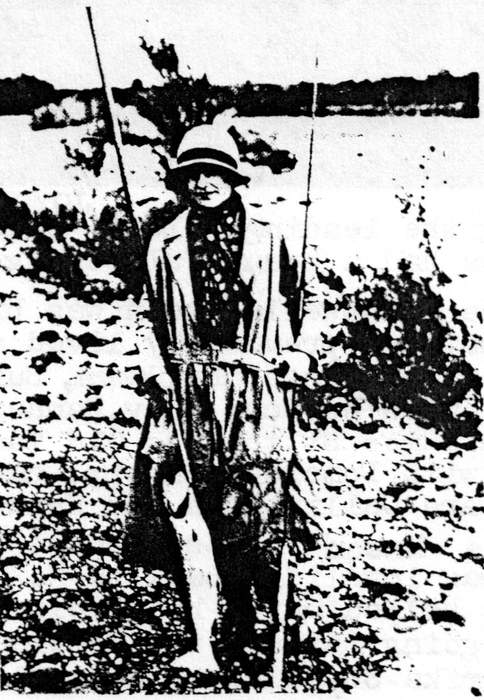 “Skip” was a perfect gentleman and always called my mother “Mater”. Another thing I remember about him – I must have followed him around. He had a small press with which he blind embossed his own note paper, the design was a small elephant with the motto “Semper Paratus” (always ready).
During the visit of the, then Duke and Duchess of York (later to become King George 6 and Queen Elizabeth (now Queen Mother) he was their ghillie when fishing in this district. He had photos of this time on his walls.
My parents, CYRIL & DOROTHY SMITH, were very keen on riding and very early in my life I was put on a horse on the front lawn in Devon St. where we had a high hedge, and just at that moment the paper boy threw the paper over the hedge, the horse shied and off I came – that was the beginning and end of my career with horses.
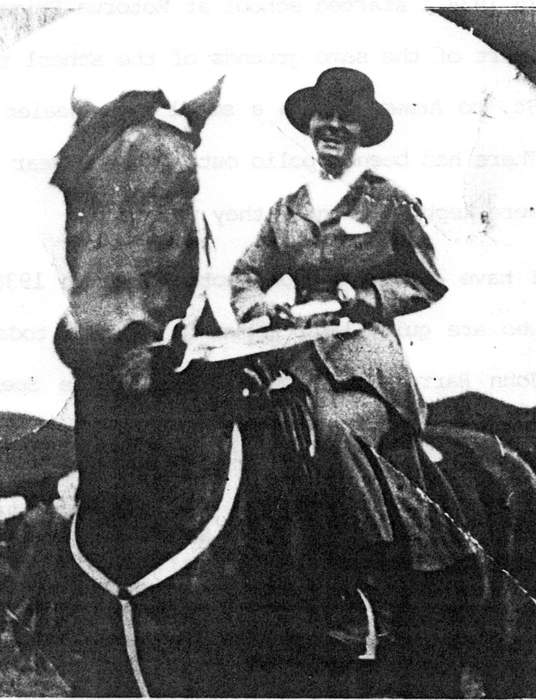 My mother loved horses and was always so gentle with them, putting the bit in the horses mouth seemed to be sheer bravery! Not to mention ducking underneath to tighten the surcingle. They used to ride on Dr. Bertram’s property and also at Charlie Managh’s place at Ngongotaha. The hounds were kept at Tommy Jackson’s farm in Otonga Rd.. I think he was the milkman and the Mayor.
One day I saw a dead horse being dragged on a sledge down Devon St. in a cloud of pumice dust to be fed to the hounds. (The race horse had broken a leg at the races and had been shot.) I often saw the hounds being fed – they were always so ferocious, with much barking and jumping up at the wire when they smelled raw meat.
Because my mother was such a good horsewoman she was often asked to ride other horses and once she rode a horse and led two others out to Reporoa for a farmer who had bought them.
DEVON ST. HALL (now known as ST. CHAD’S) on the corner of Devon and Fenton Sts. was the first Sunday School I attended and in those days a Mr. Carter and his wife were teachers there. Later came Rev. McCutcheon and during the collection we all sang with great gusto, “Hear the Pennies Dropping”. Dances were held there sometimes too with just a piano for music, all the girls sitting down one side of the hall and all the boys jammed into the doorway – true kiwi style.
In 1934 I started school at Rotorua Primary School in Rangiuru St. (part of the same grounds of the school today) and rode from Devon St. to Arawa St. on a small two wheeler solid rubber tyred bike. There had been a polio outbreak the year before so all 5 year olds were kept home until they were six.
I have an old school photo taken in 1936 with several people in, who are quite well known in Rotorua today. i.e. Hirima Tapsell, John Barrowman, Yvonne Pennell (nee Spens Black) Robin Morrison (nee Kingi) Puti Ransfield, etc. etc..
Written by DOROTHY COLLINS.
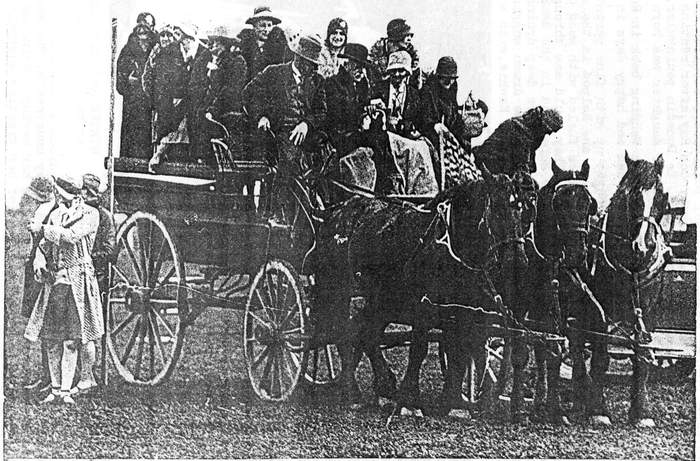 GEORGE BERTRAM recalls the Smith’s participation in horse events. Mr. & Mrs. Cyril de Lacy Smith, both keen riders, followed the Hunts. 1928, they came from Taumaraunui to Devon St, moving to 26 Grey St. 1932. Mrs. DOROTHY SMITH, was a very fine and popular rider contestant in GYMKHANAS and the OPEN COUNTRY POINT-to-POINTS, later at Arawa Park. George Bertram remembers riding in the last Pt.-to-Pt. in the open country out TeNgae at Copeland Smith’s Mission Farm about 1948. Competitors started all together from the first Point. Exhilaration took over as the gallop began with the thundering rhythm of horses’ pounding hooves, steadying as they jumped the hurdles set between paddocks in the fences or barbary hedges, over ditches, through ploughed fields etc., racing up hill and down dale, then stretching out in the final gallop to the last Point.
As these events became more sophisticated with thoroughbred horses, Steeplechases, where the course was set with obstacles took place at such places as Arawa Park Race Course. Here also the popular Gymkhana took place, using the centre, not the race track, for equestrian sport show-ring competitions like jumping rails, riders putting their horses through their paces (walk, trot & canter), dressage of rider and horse. These continued in smaller towns well after the war. These Arawa Park events became popular family gathering days with all sorts of attractions to make it a special day for children.
The RACE CLUB then grew out of the above gatherings, the horses all thoroughbreds trained for racing and spectators placing their bets. A POLO CLUB was formed by local lads late 1930s before the war. George Bertram recalls the Hunt club winter meetings over local farms, when the R.M. Comp. took out about six of their cars to the Hunt for visitors to follow across country, giving them a great day out, to finish up at the Hunt Tea, late evening, at a local house..