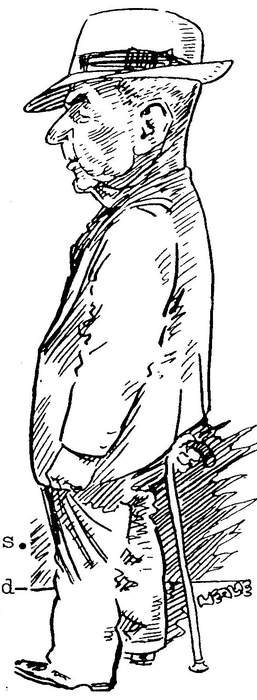
 Transport services in Rotorua, both passenger and goods, have passed through many hands. Many operating firms have gone, but the name of Goodsons has survived change. Mr. F. Goodson, when the railway head was still at Turakina, was then employed by the late Mr. T. Bird in carting sulphur from the spot known as Sodom and Gomorrah, the dismal area at the back of the racecourse to the railhead at Turakina.
After years of strenuous toil for others, Mr. Goodson struck out for himself, first in drays, then waggons and heavy transport. Switching to motor and traction when horsepower had become obsolete, over bad roads and through every difficult incident to pioneering work, the Goodsons steadily progressed. Practical knowledge combined with common sense-directing energy, they accomplished many remarkable feats of heavy haulage.
Transportation of launches, houses, big timber, apart from general goods, established a reputation that stands good up to the present time. Goodsons, Ltd., means a good job done.
As a man of affairs Mr. Fred Goodson has earned a place in Rotorua history. As chairman of the School Committee for 25 years, Fire Brigade chairman for the same period, close interest in all sports and good service to the Racing Club, Justice of the Peace and good fellow, he still works for posterity.
|
FIRE-FIGHTERS’ FRIEND (F. Goodson) Now with a wagon freighted with the stores |
Lived Ranolf St. 2nd. house down from the Wallace Cres. nearest the town side. 1. Wallace’s 1st. home, sold— 2. Nurse Naumann, sold to— 3. Fred Goodson, carrier. |
|---|
By 1920, William Galbraith was in Rotorua. He was elected to the first Rotorua Borough Council, 1923-1933, again in 1935-1938. 1921, he bought a store for selling grain in Pukuatua St. opposite the early St. John’s Presbyterian Church, with Mr. Percy Sherrif as manager and an assistant, Mr Norris. In this he was looking ahead to a business for his sons but eventually they had a Second-hand Furniture business in Hinemoa Street.
The Galbraith two-storey house was quite a feature of Pretoria St. at the end bordering Armer’s farm, now Malfroy Rd. Intermediate Sch. Doug Galbraith recalls his father as being a quiet pleasant man with vision, very entrepreneurial as were others of his time. Their property ran right along the back of King Street Hospital to Malfroy Rd., this mainly covered with a fine orchard, also garden.
1920, when the Rotorua Town Lands Act allowed Govt. Crown leasehold land to be freeholded, Galbraiths cut up into sections. He divided the Malfroy frontage, building three houses there from which he did very well indeed. Charlie Smith from Mamaku occupied one of these before moving to lease farmland from H.P. Ford on Malfroy Rd. and it was there that three of his children became afflicted by polio. Mr. Galbraith then extended his business enterprises further afield like a Steam Ship Co. on the Kaipara Harbour – Dargaville. He saw opportunities round the country for buying land, then selling.
Mr. Galbraith was a great man for cars, taking a keen interest in this modern marvel. He was fortunate to be able to afford such a luxury and enthusiastically changed cars often. Doug remembers his father’s Chander, and then there was the Essex Sixer. Coming in from Whaka in this big squarish car, they turned into Hinemoa St. too suddenly for the muddy conditions, skidded sideways, high, exciting!
Doug Galbraith’s Schooldays and Wartime Recollections
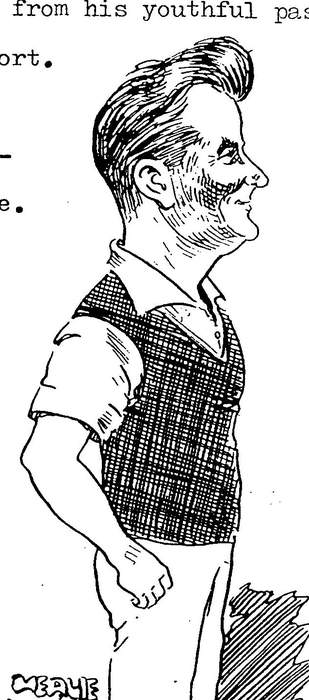 Doug Galbraith, now in his 70s, reminiscences about neighbours in his Pretoria St. area who went to Rot. Prim. Sch. with him, those life-long friends, both girl and boy who entered Rot. High School in the Intermediate Dept., 1930-31, their achievements in that school of such high standards both scholastically and in the world of sports, as well as the school Cadet Battalion which held its Annual Barracks week in the school grounds, and then those who went on to become mates in the battles of World War 2.
Doug’s pleasant mild nature enjoys most, tales from his youthful past. His nearby mates were Gordon Price, and Sam Hardie, from a well known family in transport. Sam was pleasant and polite. Doug recalls that as long as you were polite with adults, everything was alright in those days. Once Ginger Price, Sam and Doug went to an early Movie Picture called ‘The Three Live Ghosts’. From that time on, being inseparable, it became their name.
Tramping, biking and swimming were favourite pastimes during High Sch. years, pupils mixing in groups of both boys and girls for these. A favourite tramp was right up at the back bush of Tihiotonga hills. There they would cut the base of high climbing Rata vines and run back holding it, then swing out over the deep valley. Sausages were cooked on forked sticks over glowing embers, often falling in!
Bike rides with picnics were regular summer outings round the lakes, the Blue Lake being the favourite for swimming as well as the excitement of the long downhill speed-track coming home. There were few cars at that time.
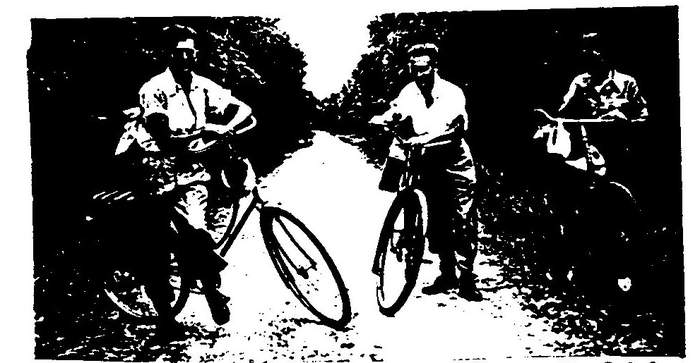 Raiding orchards was an irristable prank for boys. Doug, despite his home orchard, would go on forays with his venturesome lively mates, Andy Brown and red-headed Pat Farren. This dare-devil spirit took both of these fine lovely lads into the Airforce in W.W.2, both of them sadly, lost their lives. Doug looks back on one of their happiest escapades when they all went to the Fisheries at the Ngongotaha stream where the trout were lazy. Pat had a dab hand at tickling them, and once one was flipped out of the water, it was wrapped in wet newspaper, put on the waiting embers to cook slowly while they went walking. On returning, their lunch was perfectly cooked trout!
HORSES AND HAULERS
(Andy Hardie)
His horses may be neater
But his motor fleet is fleeter;
And you never hear him natter
When the former fail to flatter.
Under his great awning,
He brings the cream at dawning,
And forest giants are falling
Each day for his long hauling.
After W.W.2, Doug returned to N.Z., luckier than Andy and Pat. Doug left N.Z. in 3rd. Echelon, for Egypt but fought mainly in Greece where they were defeated. Doug was taken prisoner, sent to a German P.O.W. Camp up in Austria, an experience he likes to forget about, saying it had its moments! He was in prison, 4 years and 1 week.
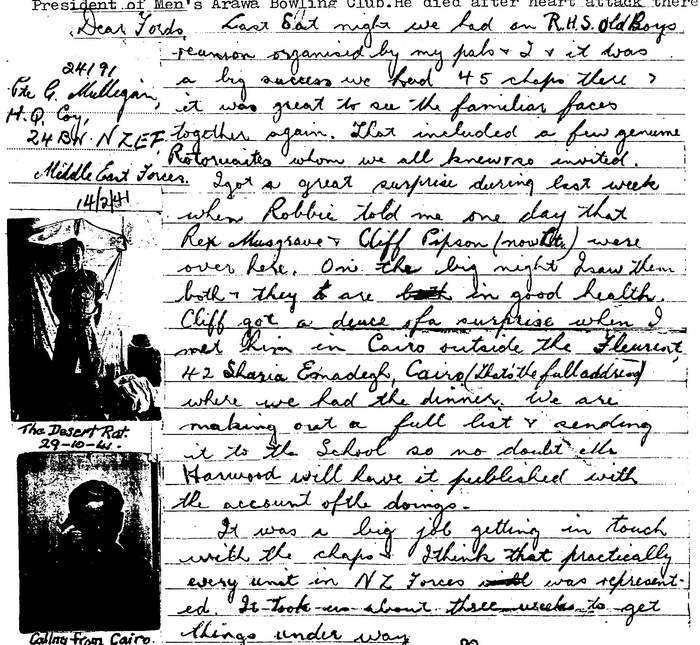
George Mulligan
George Mulligan, early 1920s, came to Rotorua straight from Scotland. His parents, with their three boys and one daughter, were in Malfroy Rd. near King St. for a while until they settled permanently in their Seddon St. West (now called York St.) home. Their daughter Chris became very well known, working in the Book Shop, lower Tutanekai St.
George was youngest, small for his age, and spoke in such broad Scottish accent that it was hard to understand him. At the corner of Ranolf and Malfroy Rds. he would get surrounded by groups of children all going home from Primary and Convent Schools and badgered into answering questions, just to hear and laugh at his funny accent. He had to learn early how to fight and stand up for himself and was helped by huge penetrating blue eyes and an irrepressible sense of fun and humour which made him lively company throughout life. When he completed High School with matriculation in the mid 1930s of the Depression, Mr. Harry Ford of Malfroy Rd., a Scotsman farmer, employed George despite his lack of size, because he admired George’s gumption and courage. He lived in as one of the family, becoming a life-long friend. He proved his worth in all walks of life.
After World War 2, he joined the Survey and Land Dept., becoming later the Superintendent of Land Development for the Northern part of Western Bay of Plenty, all land north of Napier – Taupo Highway and East Kaiangaroa. He was also in charge of a lot of Maori Land Blocks.
He was a very active R.S.A. member. In retirement he became 1984-85, President of Men’s Arawa Bowling Club. He died after heart attack there.
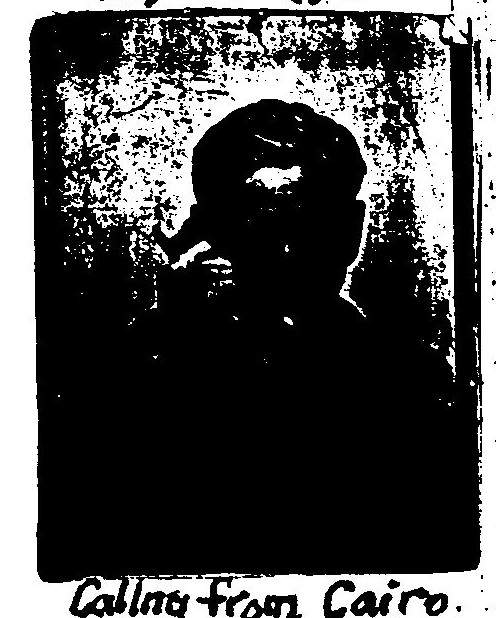
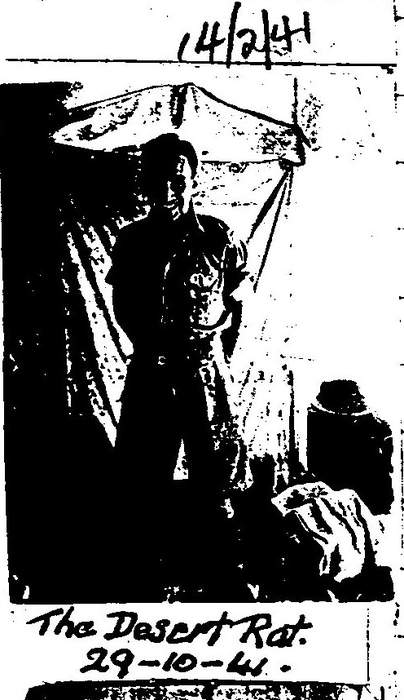 Handwritten letter reproduced in the original (shown in blue), addressed: ‘24191, Pte. G. Mulligan, H.Q. Coy, 24 Bn. NZEF, Middle East Forces. 14/2/41.’
Letter text: ‘Dear Fords, Last Sat night we had our R.H.S. Old Boys reunion organised by my pals & I & it was a big success, we had 45 chaps there & it was great to see the familiar faces together again. That included a few genuine Rotoruaites whom we all knew & invited. I got a great surprise during last week when Robbie told me one day that Rex Musgrave & Cliff Pipson (now Lieut.) were over here. On the big night I saw them both & they are both in good health. Cliff got a deuce of a surprise when I met him in Cairo outside the Fleurent, 42 Sharia Emadegh, Cairo (that’s the full address) where we had the dinner. We are making out a full list & sending it to the School so no doubt Mr Harwood will have it published with the account of the doings. It was a big job getting in touch with the chaps & I think that practically every unit in N.Z. Forces was represented. It took us about three weeks to get things under way.’