In this part:
- The Rotorua Motor Transport Company
- Dr. H. Bertram, E. La Trobe Hill, and Thomas Jackson
- Glenholme Villa and the 1927 Rotorua Races
The Rotorua Motor Transport Company
1930s, LEO C. RYAN (called L.C.) and his wife Rene, lived in 44 Grey St. L.C. very widely known in the world of Rotorua transport and in community affairs, served on Borough Council 1927-29 & 1941-1947.
1898, T. Ryan & Company, had been the first to go into competition with Boord & MacDonald in launch transport on the lake, procuring a new steam launch from Auckland, able to accommodate 70 passengers.
1910-1919, was the final era of horse-drawn coaches with the advent of motor cars which faced great problems with poorly formed roads. 1914, Mr. Norman Collett established a regular motor run, Tauranga-Rotorua, with L.C. RYAN, an accountant, and garage proprietor, to be agent in Rotorua. (Later L.C. Ryan became major shareholder.) 1917, Collett’s ‘ROTORUA MOTOR COACHING COMPANY’ added three Buick passenger models for the Whakatane-Rotorua run, connecting with the Rotorua afternoon train to Auckland. Some runs, still horse & coach, such as Tauranga via Oropi Gorge and the Paengaroa run, continued.
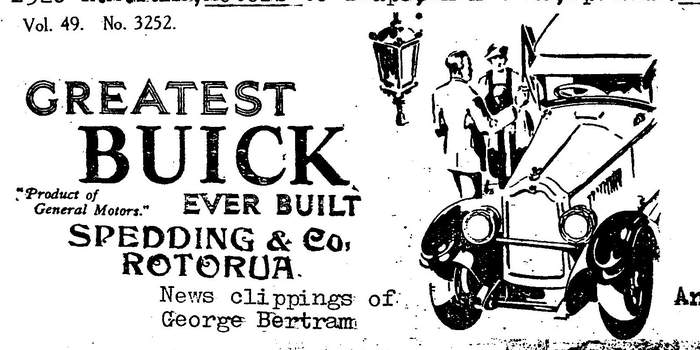
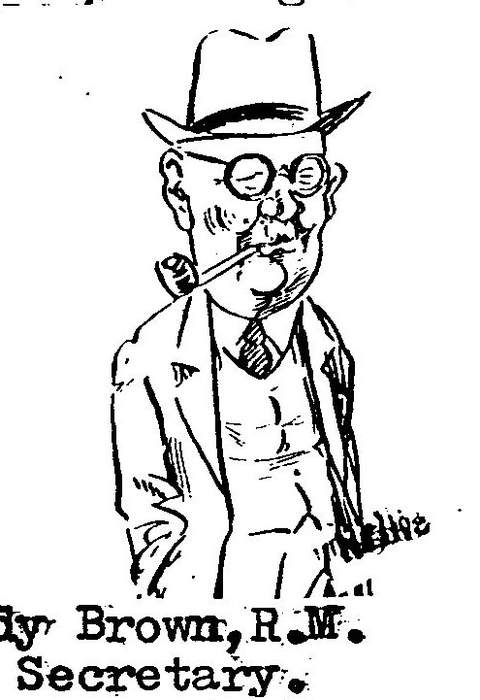
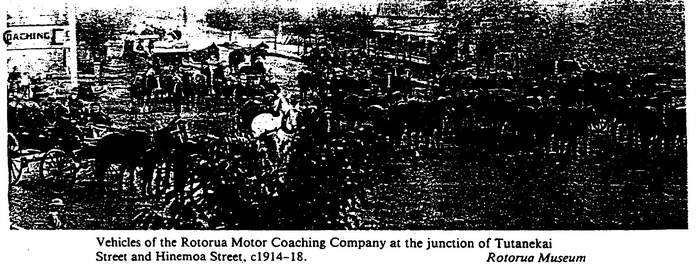
Newspaper advertisement clipping, Vol. 49. No. 3252.: “GREATEST BUICK — ‘Product of General Motors.’ EVER BUILT — SPEDDING & Co. ROTORUA.” Captioned: News clippings of George Bertram; Andy Brown, R.M. Secretary. Below: “Vehicles of the Rotorua Motor Coaching Company at the junction of Tutanekai Street and Hinemoa Street, c1914-18. Rotorua Museum”.
1920, financial problems due to roads, W.W.I with depression added, forced the Company into liquidation and a new company was formed which took over both the ‘Hot Lakes Transport Comp.’ operated by Norman Keane, and the ‘Rotorua Motor Coaching Company.’
1920 New company called, ‘Rotorua Motor Transport Company. LEO C. RYAN was major shareholder and Managing Director ANDREW BROWN was Secretary. They also took over SPEDDING’s GARAGE.
Note – Andrew Brown had no family but his nephew Andy Brown, a pilot W.W.2 over England-Europe was shot down, his neice Edith Brown married Jack Stafford, also in airforce, England W.W.2.
Note – Norman Keane settled in Rotorua, Toko St. and was manager of Yates Seed Merchants.
1919, R.M. Coaching Co. sold Paengaroa Stables to Mr. McDowell. 1920s-1930s, R.M. survived the Depression by replacing old vehicles. 1920 R.M. runs; Motors to Taupo, Whakatane, Opotiki. Coach, Tauranga.
R.M. Drivers; 2 quotes from Don Stafford’s bk. ‘New Century-Rotorua’.
DICK GARLICK, his life was devoted almost entirely to driving coaches and cars.
Reflecting on coaching days, Dick spoke of the excitement of starting the run. The spotless coach was brought out from the stables with two horses attached (two in the pole) and driven to the post office to pick up the mail. In the meantime, stable boys collected passengers from hotels and boarding houses in phaetons and took them to the starting point, where their luggage was stowed on the coach. Then a groom would bring out the three leading horses to make the team of five. ‘Gosh, that was one of the sights,’ said Dick. ‘As soon as they’d click on the last trace they’d be up in the air. Just like . . . thoroughbreds. . . . A lot of people used to come up just to see that alone, to see those horses starting off.’ The stables, sometimes housing eighty or more horses, were an attraction for visitors.
BERT GLEESON had experiences that today seem unreal. Bert Gleeson remembered when he was driving for the RM Company in the 1920s: ‘Breakdowns might have been with a broken axle or something, the idea of trouble with the motor was just not on — it didn’t occur in those days because they were the most marvellous engines that were ever put into vehicles. But you could run into a bit of ignition trouble or perhaps a puncture, or broken axle. The Cadillacs had full floating axles and we used to carry a spare, one for each side. All you had to do was undo three little grub screws on the hubcap, take the hubcap off and pull the axle out.
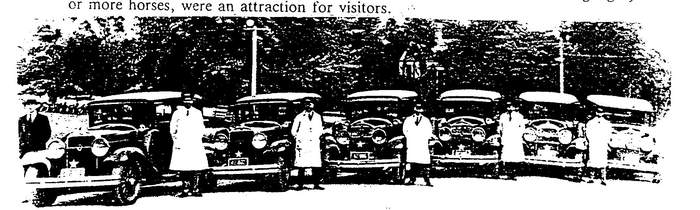
Figure art of the Rotorua Motor Transport Company (RM) fleet of passenger vehicles of the early 1930s. Rotorua Museum
We had a piece of No. 8 wire with a loop; push that through and fish for the broken end of the axle. Oh, you’d be no more than fifteen minutes at the worst in replacing that axle. If you got stuck in a mud hole, down on the differential and you couldn’t rock yourself out, we used to carry a piece of 3 x 2 heart rimu about six or seven feet long and use that as a fulcrum, and we’d carry blocks of wood to put down in the muck and sit the wheels on . . . the passengers would all help. The idea of getting their shoes dirty didn’t bother them a bit. They’d all be there helping. It was commonplace. We’d get stuck in a hole and I can truthfully say we’d be out of it again in ten to fifteen minutes.’
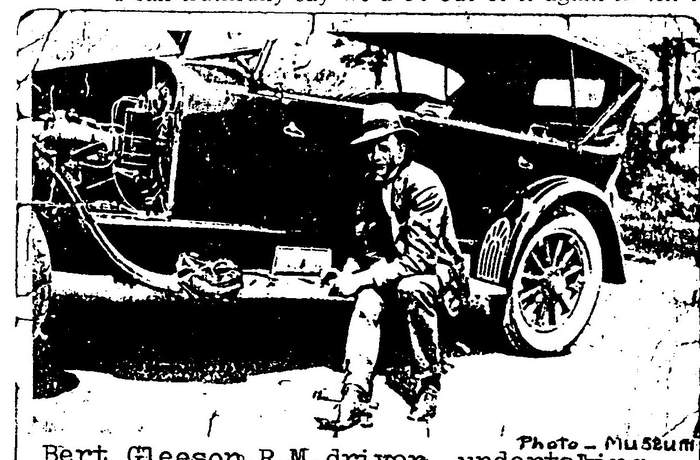 BERT GLEESON, now in his 90s grew up in Pererika St.. His sister worked for R.M. and told him of a vacancy if he could drive, and so began a career as driver which lasted well over 30yrs. with R.M. Through this he met many interesting visitors to Rotorua. The highlight was with the fleet of R.M. cars which went with the Royal Party to the fishing camp between Mt. Ruapehu and Taupo. In 1927 the Duke & Duchess of York who later became our King George 5 & Queen Elizabeth (now Queen Mother), were proudly driven by Bert to and from fishing pools and the camp.
Bert was given the task of making the ‘Billy-tea’. He felt like jelly, so scared of doing it wrongly! His Dad had taught him to put in a teaspoon of Mamuku leaves when brewed to give a wonderful flavour but he decided to lift the billy from above the fire with just tea!
| The photocopy scanned had no page 79 – Peggy has this as a footnote. |
|---|
Dr. H. Bertram, E. La Trobe Hill, and Thomas Jackson
Dr. H. BERTRAM 1880-1953, settled in Rotorua 1907, coming as assistant medical officer to Dr. Wohlmann at the Sanitorium for two years before beginning his private practice with special interest in surgery especially in thyroidectomies for goitres, so common in N.Z. inlands until introduction of iodised salt in 1930s. In 1924 he bought the 40 acre block (about 90 hec.), calling it ‘GLENHOLME’, where he brought up his five children, Mary, Joan, Betty, George, Erina.
Amongst his friends particularly in the racing and hunt clubs where Dr. Bertram was Race Club President for 25 yrs. as well as Master of Hounds for Hunt Club, were Thomas Jackson, Mayor, and Mr. La Trobe Hill.
Mr. E. La Trobe Hill designed ‘GLENHOLME’, so beautifully unusual, situated off Ranolf St. up on hill nearer Old Taupo Rd., with entrance by Glenholme Sch.. It took 3 yrs. to build. La Trobe Place commemorates his name where his home was by the Utahina R., Old Taupo Rd
‘Glenholme’ was finally sold by Dr. Bertram to Mr. Don Young, chemist, who about 1990 sold to Mike Gray who quotes from agent’s brochure when selling to Don, “It was built for a retired captain of Dragoon Guards. It was built 13 yrs. after Tarawera eruption (1886). After the death of his wife, Angus MacDonald went to Auckland, leaving it vacant for years. George Bertram remembers, as a child, seeing it in a shocking state, open to the weather and cows had messed the place up.
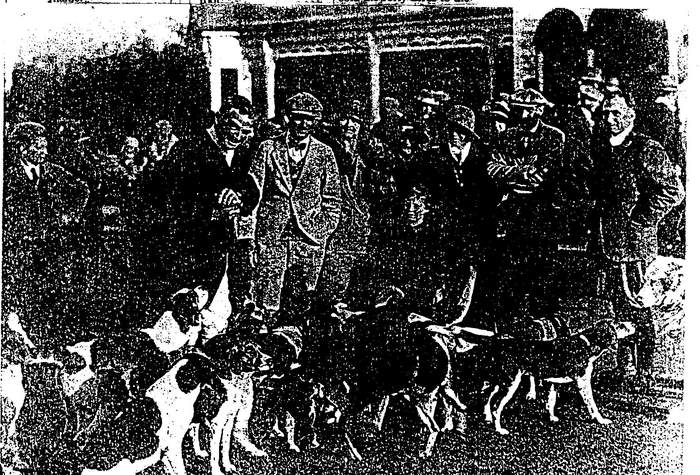
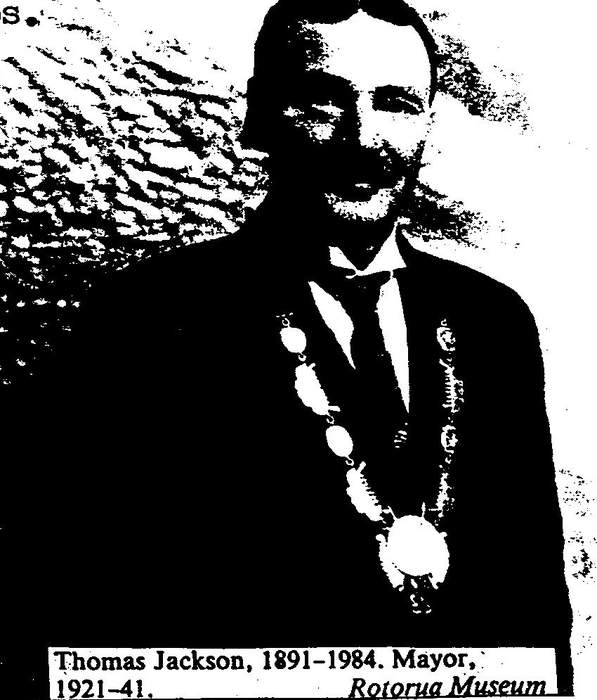
Mr. Thomas Jackson was a keen Hunt Club member and responsible with Dr. Bertram in 1927 for establishing the Rotorua Hunt Club and minding the kennels. Jackson’s farm was where Otonga Sch. is and Jackson Park with Kindergarten, and land right up Otonga Rd. to Tihiotonga Ngati Whakaue Tribal Lands. George Bertram as a boy was attracted up to Jackson’s kennels when the hounds were fed. Tommy Jackson had a vital keen personality serving a splendid term as Mayor 1921-1941. Rotorua benefited greatly from his determined dedication to promote the district in every way. Householders enjoyed his cheerful whistling milk delivery service by horse and cart, calling “Milko” and measuring out with dippers from cans. His horse knew the stops.
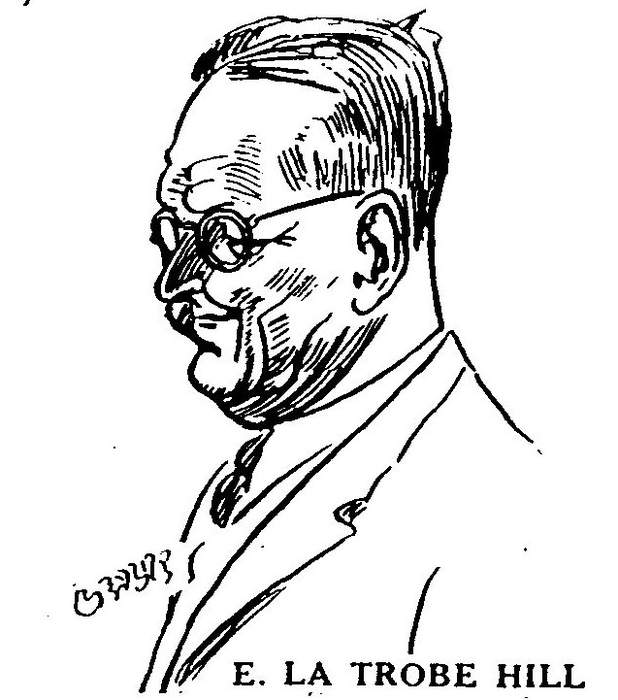 |
Without flourish of trumpets Mr. E. La Trobe Hill has filled a large place in the civil life of Rotorua. In thirty odd years he has steadily added to his reputation as a constructive businessman. Sound in judgment with capacity for taking infinite pains in carrying out any prospects which he undertakes, he commands respect. Of the many offices he has held, that of secretary of the Racing and Hunt Clubs brought him in closest touch with the public. Sporting bodies have been indebted to him. The golf house is one of his creations, also the High School and many other fine buildings testify to his architectural skill. As an all-round sportsman he has had his measure of success and it is said that racing may add to his activities. |
|---|---|
|
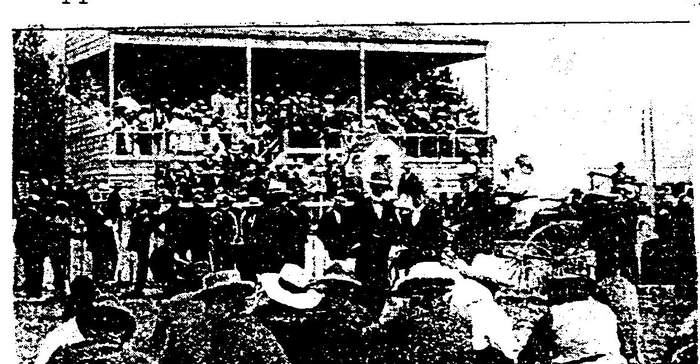
). Early 1900s Racing Club Grandstand at Arawa Park. Dr. Bertram President 25 years, La Trobe Hill Secretary, also for Hunt Club. Tremendous family fun day for district. Thomas Jackson, 1891-1984. Mayor, 1921-41. Rotorua Museum. |
E. La Trobe Hill (portrait sketch |
Glenholme Villa and the 1927 Rotorua Races
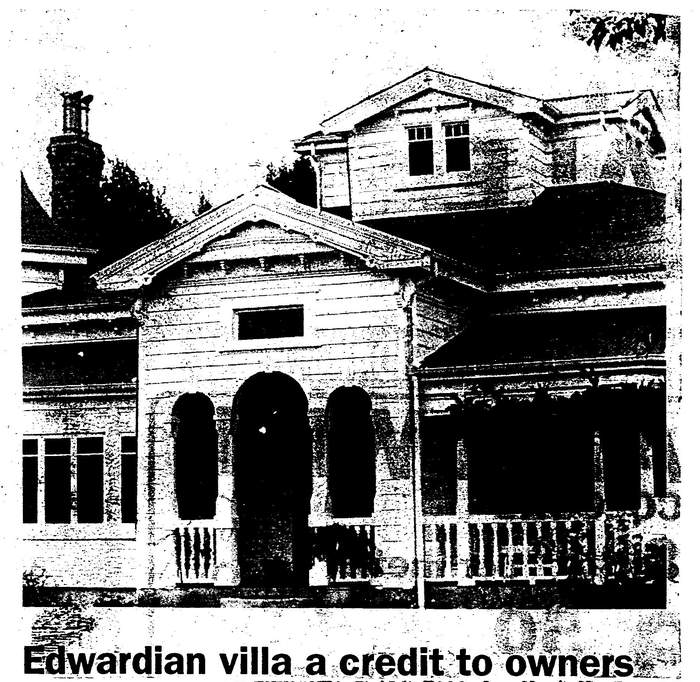 |
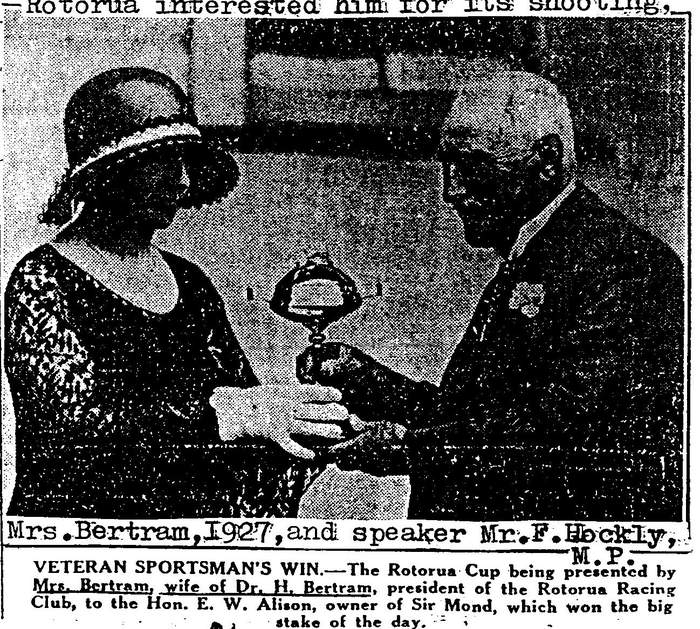
‘Glenholme’ built 1900 for Mr. A. MacDonald, who was interested in Rotorua for its shooting. Below: newspaper cutting ‘Rotorua Races — Splendid Success — Visiting Racegoers Delighted’, on the 1927 Rotorua Racing Club meeting. Photo caption: Mrs. Bertram, 1927, and speaker Mr. F. Hockly, M.P. — Veteran Sportsman’s Win: the Rotorua Cup being presented by Mrs. Bertram, wife of Dr. H. Bertram, president of the Rotorua Racing Club, to the Hon. E. W. Alison, owner of Sir Mond, which won the big stake of the day. |
|---|
Rotorua Review, Photo, 26-4-1994.
 ROTORUA RACES
SPLENDID SUCCESS.
VISITING RACEGOERS DELIGHTED.
The first day of the Rotorua Racing Club’s meeting of 1927 will go down as one of the most perfect in its racing history. Firstly on account of the weather and secondly for the close and exciting finishes, which may possibly constitute a racing record. Only in two races did the distance between first and third horses exceed a length and none exceeded a length and a half. It was a triumph of handicapping. The early promise of the morning was well sustained and by eleven o’clock numbers were flocking coursewards to get points of vantage for their motor cars. Numerous free seaters took advantage of the open west side, to park in the road and get racing and car accommodation for nothing. This is not fair to the club and excited unfavourable comment from both club members and visitors. By the time the horses for the first race were paraded the grand and members’ stands were filling fast.
Glorius Glenholme
Rotorua Review, 26 April 1994: ‘Edwardian villa a credit to owners’ —
One of Rotorua’s best kept secrets will never have to worry about the indignity of being enclosed in glass, redesigned, painted in culturally sensitive colours or being demolished or sanitised for tourist purposes.
No, glorious Glenholme, built for an ex dragoon, Angus McDonald, the near-on 1000 square metre residence was built nearly one hundred years ago and stands today, thanks to present owners, in all her glory.
Thankfully this glorious old residence was never designed by committee either, so with due care and attention, she will stand for another 100 years, a testament to her designer, La Trobe-Hill and her builders. The house took three years to construct and formed part of a 40 acre property which sat on a bare hill and overlooked the village of Rotorua.
Today Glenholme is situated in the middle of a high density housing suburb which, appropriately enough, carries the same name.
A drive up the narrow tree-lined drive-way reveals a house and grounds one would immediately acquaint with some parts of Auckland, Wellington or Dunedin.
The white painted wooden residence is a refreshing sight to a city hell-bent on attracting the tourist dollar. It is of a size and style which would gladden the heart of any timber merchant. Atop is an observation gallery and to the gallery’s left is a turret which would make Norman Bates, Jason and other horror house fans feel right at home.
Today the house is owned and lovingly cared for by fourth owners Mike Gray and Jeanine Bright.
The couple purchased the house three years ago and immediately got stuck into repainting the exterior and replacing most of the roof and spouting. Using old photographs they replaced long-discarded decorations including a crown atop the turret and finials either side of the roof.
They then moved inside and re-gibbed walls, took lowered ceilings back to their original height of 13 and a half feet, repainted pressed-metal ceilings, or replaced the wooden slats in some rooms with lime-washed rimu. Finally finishing the living areas by painting the walls. There is still work to do but there is now no hurry. The living areas are completed and it’s now a case of finishing the decoration one room at a time. The couple are going nowhere. They are perfectly happy to stay in the house forever.
The garden area is over an acre and consists of a tennis court and garden pool area which at the diving end is nigh on two and a half metres deep. At the rear are two greenhouses where the couple, amongst other things, propagate orchids? During the 1940s the house was owned by Dr Bertram and his wife. They had purchased the place from the original owners. The Bertram’s sold the forty acres to the Government and today, standing on most of the land are government designed and built state houses.
Back inside the visitor marvels at the octagonal hallway. All rooms to the house lead off from this ‘hall’ area. Chandeliers hang in two rooms and there are five fire places, made from imported marble in the living areas and warm kauri in the bedrooms.
The house has been designed for the sun and is well insulated against winter chill. This central city grand Edwardian villa is a credit to its present owners however her condition also reflects the care and attention lavished upon it by previous owners.
Visiting Glenholme is like a breath of fresh air away from the hurly burly of traffic choked everyday city life. This is a place which can honestly remind people of a bygone era. Long may she reign.