 Whakarewarewa Institute News, 1990s
The Daily Post, Monday, June 19, 1995. Tapsell calls for new Maori leaders to replace elders. New challenges as the yr.2000 approaches.
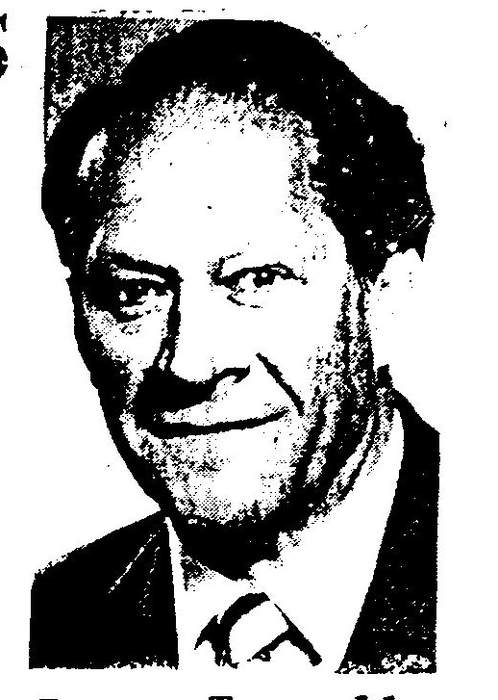
WELLINGTON — New Maori leaders are needed to replace elders and guide Maoridom effectively into the 21st century, Parliament’s Speaker, Eastern Maori MP Mr Peter Tapsell, said today. Mr Tapsell said Maori had come to expect “far too much of our kaumatua”. “They have a very important ceremonial role, but they cannot be experts in everything.” “To make progress we must come to rely on properly trained people, whether it be in business initiatives, health or employment,” he said.
Since the Second World War there had been a “dearth of Maori leadership”, he said. “We have not had the bold, vigorous, driving leadership that we once had at any level,” he said. Mr Tapsell said the same lack of leadership was also evident in the European world, with a few exceptions. “Nowadays public figures, whether they be politicians or local leaders, have been more inclined to say what they think the people want to hear rather than to take a lead.”
Mr Tapsell, who was speaking to the Taneatua Conference of Churches in Taneatua, said he had been bitterly disappointed with the role some clergy had taken when speaking on behalf of Maori. “I have yet to hear a preacher frankly setting out for us the ways in which we could improve our lot. We do not want pity, and we do not want sympathy. We need leaders who will tell us what we must do to stand on our feet. We do not want advocates who ask on our behalf for bigger and more comprehensive food banks. We need some leaders who will tell us to grow our own food.”
Maori for too long had also denied some very able women an opportunity to play a part. Mr Tapsell repeated his call for Maori to form regional organisations to deal with the problems of health, education and employment. “We must create new structures that will provide for the fact that our people have now expanded far beyond their old tribal boundaries.” He warned that preoccupation with reparation for past grievances was not in Maoridom’s long term interest because it encouraged a “wholesale march back to tribalism”. Mr Tapsell said there would be tremendous opportunities available to Maori in the next century, but changes had to be made to take advantage of those opportunities. — (PA)
A Challenge That Must Not Be Ignored
|
June 21, 1995 (editorial). Parliament’s Speaker, Eastern Maori MP Mr Tapsell, shows that if leadership in Maoridom is failing his people as he says, there are still individuals with the vision needed to get the drive for betterment back on the rails. His address to the Taneatua Conference of Churches was, in the style that has marked all his pronouncements on matters Maori, powerfully direct, not offering what people necessarily want to hear, but searchingly questioning the direction in which Maoridom’s drive for absolute equality is being driven. The Eastern Maori MP has a reputation for homespun wisdom when it comes to addressing problems of the day. For his people his message has always been that in a changing world of challenges there is little to be gained from a preoccupation with looking over the shoulder, to the past, for solutions. His Taneatua homily is an extension of that philosophy. At a critical time in terms of this country’s sense of nationhood he presents Maoridom, and Maori youth in particular, with a challenge which must not be ignored |
GISBORNE — Ngati Porou leader Mr Api Mahuika has accused the Speaker of the House and Eastern Maori MP Mr Peter Tapsell of being out of touch with the realities of Maori development and leadership. Mr Mahuika, chairman of Te Runanga o Ngati Porou, has responded strongly to Mr Tapsell’s statement in Taneatua that new Maori leaders were needed and that preoccupation with past grievances was not in Maoridom’s interests because it encouraged a wholesale march back to tribalism. |
|---|---|
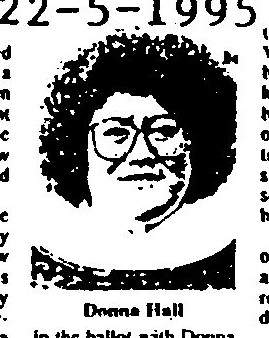
Outsider on Board22-5-1995, by Jill Nicholas. A Wellington-based lawyer has defeated a line-up of local people in the bid to represent Ngati Wahiao on the board of the New Zealand Maori Arts and Crafts Institute. Two, including the board’s current deputy chairman, withdrew before the ballot was held, leaving a three-way contest which was decisively won by Donna Hall, a former Fulbright Scholar and Churchill Fellow. However, her appointment has to be ratified by the Associate Minister of Tourism, Mr McCully, before it becomes final. Donna Hall was elected yesterday at a hui at the Ngati Wahiao wharenui (meeting house) at Whakarewarewa — a turning point for the Whakarewarewa village, said the chairman of the hui, Mr Robert Piripi, because it was the first occasion on which the traditional koroumatua selection system was replaced by a democratic vote. There was a high turn-out at yesterday’s poll, and Mr Piripi said the result was clear and decisive, an expression of concern for the leadership of the village. The people came out to vote for change,” Mr Piripi said, “and I read their vote as an expression of concern for the leadership of the village. The decision by the government to change the Act governing the Institute has caused a lot of upset in the village. It is the fundamental reason for the present occupation of the Rotowhio marae,” she said today. Her election had shown the desire of the tangata whenua (people of the land) not to be left out of the circle of responsibility relating to their village. Donna Hall was born in Rotorua and educated at Glenholme Primary School, Rotorua Girls’ High School and Western Heights High School. She spent time in Australia as an exchange student before going to Otago University where she obtained a BA in 1979. An LLB followed. In 1981 Donna Hall was the first Arawa woman to be admitted to the Bar — a ceremony performed in the High Court at Rotorua. She has been a policy adviser to the Director General of Social Welfare and in 1984 was appointed to the Commission of Inquiry into the Maori perspective of that department. In 1987 she joined the taskforce working on changes to the Children and Young Person’s Act. The following year she won a Fulbright Scholarship to study Tribal Courts in America. A Churchill Fellowship to Canada followed, where she studied customary law and Indian reservations. Last year she was the opening speaker at the United Nations General Assembly’s gathering to mark the Decade of Indigenous Peoples. |
Whaka Protest at an End
Figure 21 Paul East, MP for Rotorua 1-6-1995. Protesters at the New Zealand Maori Arts and Crafts Institute at Whakarewarewa today decided to end their occupation. The protest group, Te Roopu o Te Pohutu, called a press conference late this morning and said the occupation of the Rotowhio model pa would be called off. Senior Te Arawa kaumatua and members of the New Zealand Maori Arts and Crafts Institute were given written assurances by the [Minister] that the institute and the land on which it stands was not to be sold, Paul East, MP for Rotorua, said at the weekend |
Glenholme School pupils:
1. Paul East, still living in the area, as Rotorua M.P.
2. Donna Hall, LLB, 1st. Arawa woman to be admitted to the Bar. Donna (Hall) Llewell, LLB, attended Glenholme School with her teaching mother, Bonita Hall (now Morehu). Bonita, as a child, lived in Whaka village where her father Jo Hira had land by the bridge.
Herbert MacDonald, F. Moss Boord, and the Steam Launches of Lake Rotorua
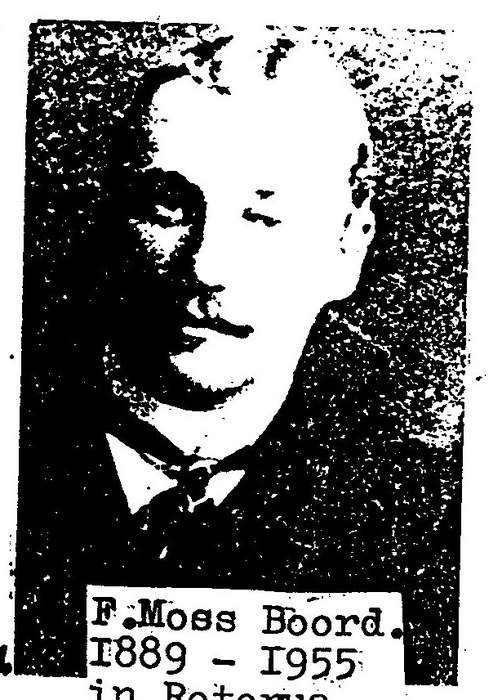
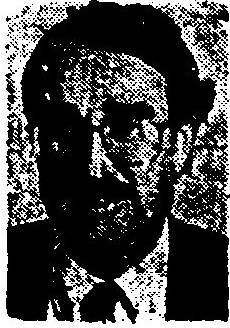
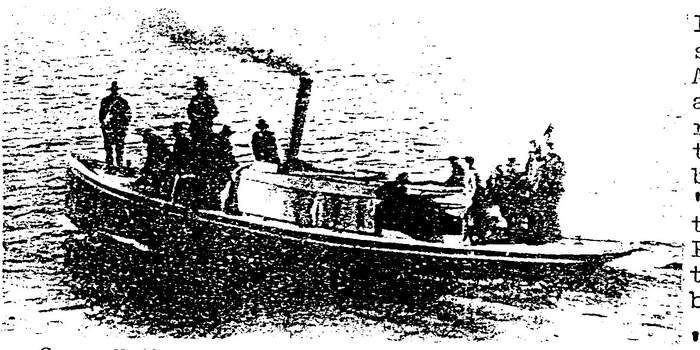 Herbert R. MacDonald, 1920–1923, Rotorua County Council. He became involved in tourism as a guide and captaining steam launches when in partnership with F. Moss Boord, who owned a farm opposite Glenholme across Old Taupo Rd.. 1889, H. MacDonald Snr. was a guide in Tarawera district after the eruption, in partnership with Alf Warbrick the boat builder. 1891, Boord and MacDonald’s partnership owned the first steam launch on the lakes, called “Alice”. 1892, a pontoon was procured also, so beginning a new enterprise in their business.
1889, Rotorua’s first steam launch, built in Auckland by Logan for him as a passenger launch, reached Mamaku by train, then the lake by bullock wagon. This ‘Alice’ was sold soon to Boord & MacDonald. Passengers were taken to Mokoia & Hamurana, by Capt. MacDonald.
‘Alice’ tugged their sulphur pontoon at Te Ngae to Rotorua wharf. The long tourist wharf was planned by Malfroy in 1895, but in 1894 Boord & MacDonald had their own small wharf and storage shed. ‘Hamurana’ was abandoned, as so large it hit bottom in shallow wharf waters.
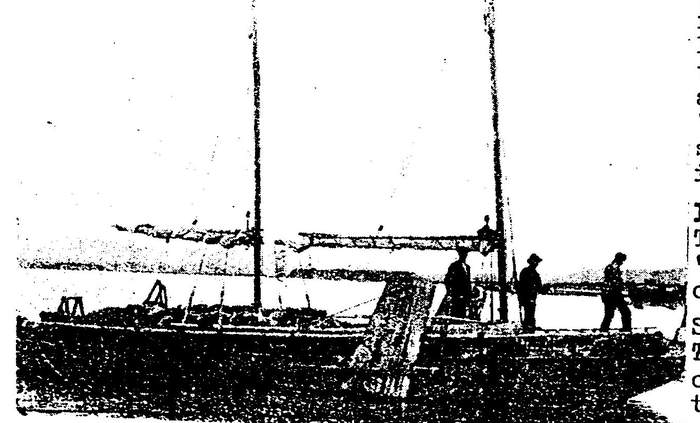
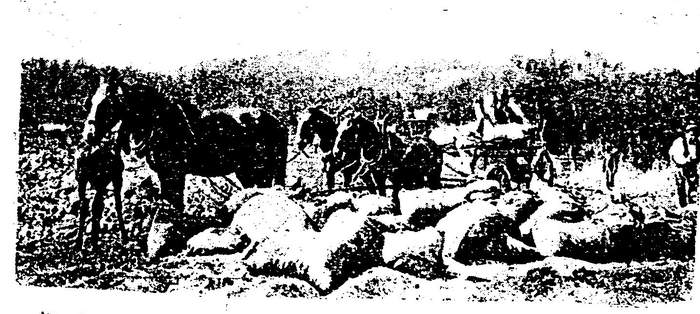
1898, amalgamated with T. Ryan and Co. when the new ‘Hinemoa’ was built to carry 70 passengers. Sulphur, bagged between Tikitere & Rotoiti, came by barge through the Ohau Channel.
|
Photo Museum, Stafford Collection |
Figure F. Moss Boord, 1889–1955, in Rotorua (Stafford Coll.). |
|---|